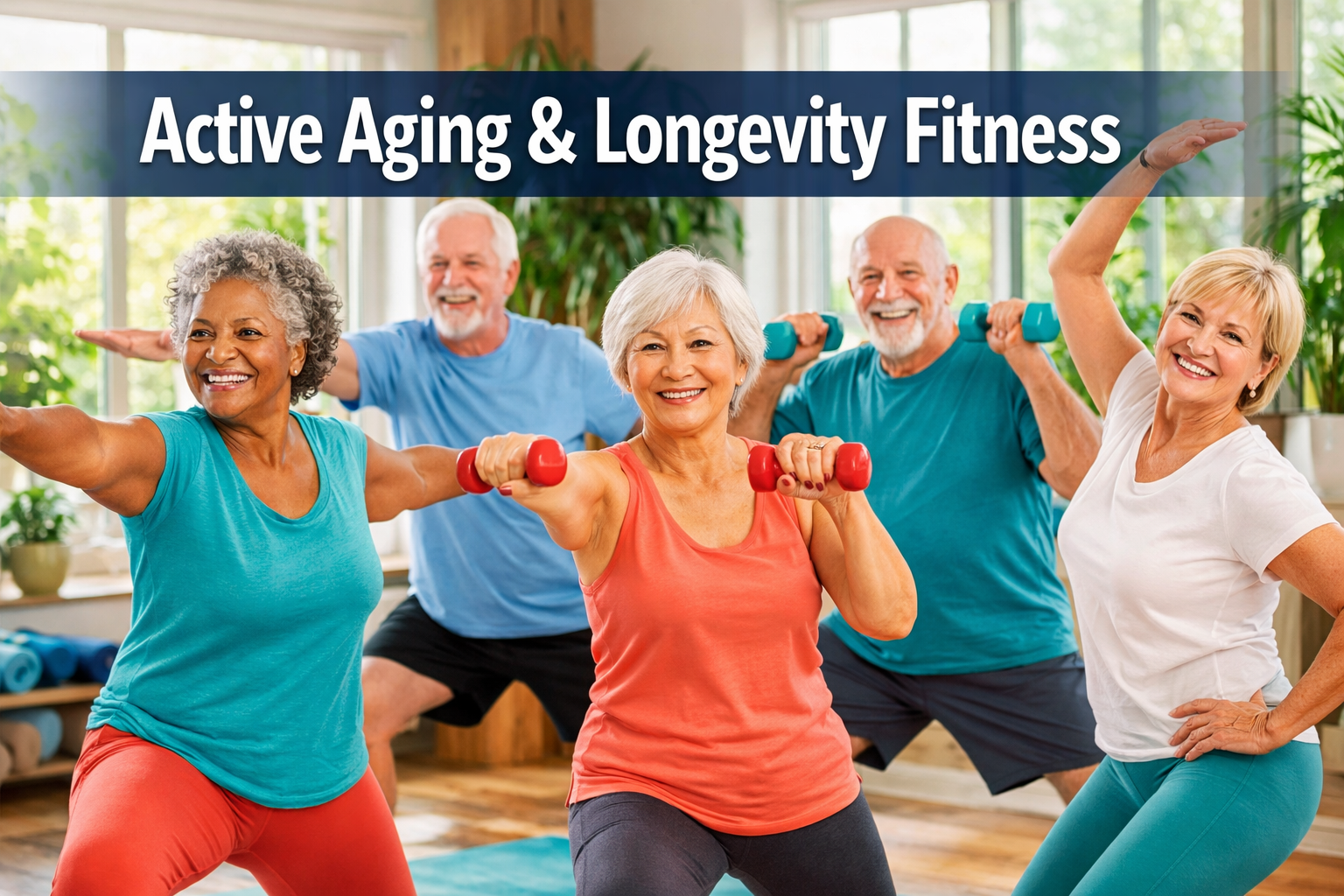
The fountain of youth isn’t hidden in an exotic location or locked away in a pharmaceutical lab—it’s available to everyone through something remarkably simple: movement. This healthy aging exercise guide reveals how seniors can harness the power of physical activity to not just add years to life, but add life to those years. In 2026, science has proven beyond doubt that exercise is the most potent anti-aging intervention available, yet millions of older adults remain on the sidelines, held back by outdated myths and misconceptions.
Key Takeaways
- Active aging emphasizes functional fitness over chronological age, focusing on maintaining independence and quality of life through regular physical activity
- Exercise can reverse biological aging markers including cellular health, muscle mass, bone density, and cognitive function—even when started after age 60
- Common fitness myths prevent seniors from exercising, but research proves it’s never too late to start and that age-appropriate exercise is safe and highly beneficial
- Realistic fitness goals after 60 should prioritize balance, strength, flexibility, and cardiovascular health rather than performance metrics
- Restarting exercise after 50 requires a gradual, personalized approach with medical clearance and focus on consistency over intensity
What Is Active Aging? Understanding the Foundation
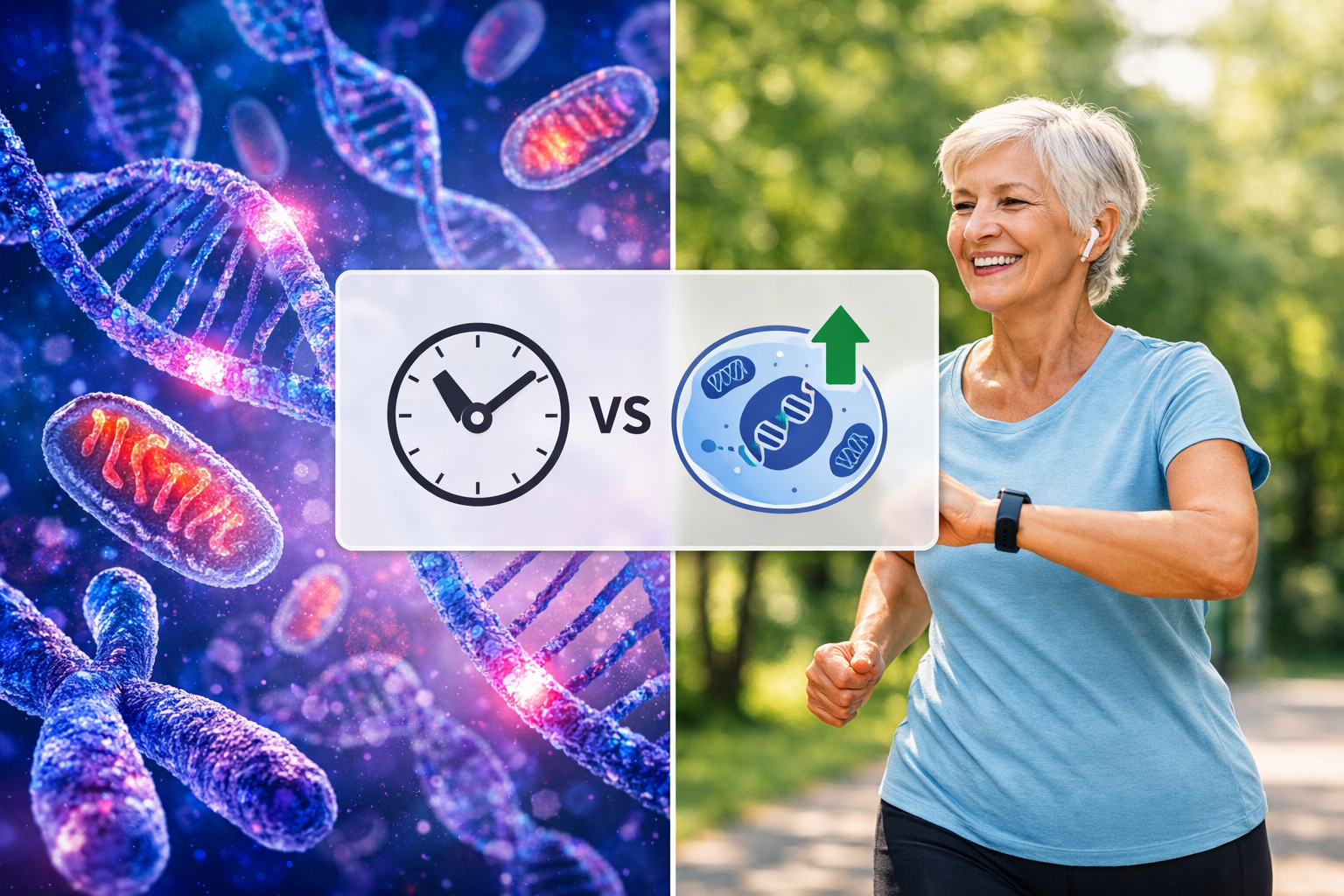
Active aging represents a paradigm shift in how society views the later decades of life. Rather than accepting decline as inevitable, this philosophy recognizes that older adults can maintain vitality, independence, and purpose through intentional lifestyle choices—with physical activity at the core.
The World Health Organization defines active aging as “the process of optimizing opportunities for health, participation, and security in order to enhance quality of life as people age” [1]. This healthy aging exercise guide embraces that definition while providing practical strategies for implementation.
The Core Principles of Active Aging
Active aging rests on several fundamental principles:
- Functionality over appearance: Success is measured by what your body can do, not how it looks
- Prevention is paramount: Exercise prevents disease rather than just treating symptoms
- Social engagement matters: Group activities combat isolation and depression
- Mental stimulation: Physical activity enhances cognitive function and brain health
- Autonomy and independence: Maintaining the ability to perform daily tasks without assistance
Why Traditional Retirement Models Are Outdated
The old model of retirement—complete cessation of activity at 65—has been thoroughly debunked. Research from the National Institute on Aging shows that sedentary behavior accelerates physical and cognitive decline, while maintaining activity levels preserves function across multiple body systems [2].
In 2026, forward-thinking communities are redesigning spaces to encourage movement, and healthcare providers are prescribing exercise as first-line treatment for numerous age-related conditions.
Exercise and Biological Aging: The Science Behind the Healthy Aging Exercise Guide
The relationship between exercise and aging operates at the cellular level, creating changes that ripple through every system in the body. Understanding this connection empowers seniors to make informed decisions about their health.
How Exercise Reverses Biological Age
Biological age—how old your body actually is at the cellular level—can differ dramatically from chronological age. A sedentary 60-year-old might have the biological markers of someone 75, while an active 70-year-old might test as biologically 55.
Key mechanisms include:
| Biological System | Exercise Impact | Research Finding |
|---|---|---|
| Telomeres | Lengthens protective DNA caps | Active adults have telomeres equivalent to 9 years younger [3] |
| Mitochondria | Increases cellular energy production | Exercise boosts mitochondrial function by 69% in seniors [4] |
| Inflammation | Reduces chronic inflammatory markers | Regular activity decreases C-reactive protein by 30% [5] |
| Muscle Mass | Prevents sarcopenia (muscle loss) | Strength training can rebuild lost muscle at any age [6] |
| Brain Volume | Increases hippocampus size | Aerobic exercise grows brain regions by 2% annually [7] |
The Cardiovascular Transformation
The heart and vascular system respond remarkably well to exercise, even when started late in life. A landmark 2024 study published in Circulation found that previously sedentary adults who began exercising at age 65 reduced their cardiovascular disease risk by 35% within just two years [8].
Benefits include:
- Lower resting heart rate
- Improved blood pressure control
- Enhanced circulation
- Reduced arterial stiffness
- Better cholesterol profiles
Metabolic and Hormonal Improvements
Exercise acts as a powerful metabolic regulator, improving insulin sensitivity, glucose metabolism, and hormonal balance. For seniors concerned about type 2 diabetes, weight management, or metabolic syndrome, this healthy aging exercise guide offers evidence-based solutions.
Regular physical activity increases production of beneficial hormones including:
- Growth hormone (tissue repair and maintenance)
- BDNF (brain-derived neurotrophic factor for cognitive health)
- Endorphins (natural pain relief and mood elevation)
- Testosterone and estrogen (maintaining healthy levels)
Fitness Myths About Aging: Separating Fact from Fiction
Misconceptions about exercise and aging create unnecessary barriers that prevent seniors from reaping enormous benefits. Let’s dismantle the most persistent myths with scientific evidence.
Myth #1: “I’m Too Old to Start Exercising”
Reality: Studies consistently show benefits regardless of starting age. Research from the University of Birmingham found that adults who began strength training at age 80 gained muscle mass and strength comparable to much younger exercisers [9].
The oldest person to complete a marathon was 101 years old. While that’s exceptional, it illustrates that age itself isn’t the limiting factor—it’s inactivity.
Myth #2: “Exercise Is Dangerous for Older Adults”
Reality: Properly designed, age-appropriate exercise is remarkably safe. The real danger lies in remaining sedentary. Falls, fractures, and loss of independence occur far more frequently in inactive seniors.
A comprehensive 2025 meta-analysis examining over 50,000 older adults found that supervised exercise programs had an injury rate of less than 1%, while reducing fall risk by 23% [10].
Myth #3: “Walking Is Enough Exercise”
Reality: While walking is excellent cardiovascular exercise, this healthy aging exercise guide emphasizes that comprehensive fitness requires four components:
- Aerobic/cardiovascular (walking, swimming, cycling)
- Strength training (resistance exercises)
- Flexibility (stretching, yoga)
- Balance (tai chi, stability exercises)
Walking alone doesn’t address strength, which is critical for maintaining independence and preventing falls.
Myth #4: “No Pain, No Gain”
Reality: Exercise should be challenging but never painful. The “no pain, no gain” mentality leads to injury and discouragement. Effective exercise for seniors focuses on progressive overload—gradually increasing difficulty over time—not pushing through pain.
“The best exercise is the one you’ll actually do consistently. Start where you are, use what you have, do what you can.” — Dr. Maria Santos, Geriatric Exercise Physiologist
Myth #5: “I Have Arthritis, So I Can’t Exercise”
Reality: Exercise is actually one of the most effective treatments for arthritis. Low-impact activities reduce joint pain, improve mobility, and strengthen the muscles that support affected joints. The Arthritis Foundation recommends regular exercise as essential for managing symptoms [11].
Best Fitness Goals After 60: A Healthy Aging Exercise Guide Framework
Setting appropriate fitness goals transforms exercise from an abstract concept into an actionable plan. After 60, goals should emphasize functional fitness—the ability to perform everyday activities with ease and confidence.
Primary Goal Categories for Seniors
1. Balance and Fall Prevention
Falls are the leading cause of injury-related deaths in adults over 65 [12]. Balance training should be the cornerstone of any senior fitness program.
Specific goals:
- Stand on one leg for 30 seconds (each side)
- Walk heel-to-toe for 20 steps without support
- Complete 10 single-leg stands from a chair
- Practice tai chi or yoga twice weekly
2. Functional Strength
Strength isn’t about bulging muscles—it’s about maintaining independence. Can you carry groceries, get up from the floor, or lift a grandchild?
Specific goals:
- Perform 10 chair stands without using hands
- Carry 20 pounds of groceries for 50 feet
- Complete 10 wall push-ups with good form
- Hold a plank position for 30 seconds
3. Cardiovascular Endurance
Heart health remains critical throughout life. Cardiovascular exercise reduces disease risk and increases energy for daily activities.
Specific goals:
- Walk continuously for 30 minutes at moderate pace
- Climb two flights of stairs without excessive breathlessness
- Maintain conversation while exercising (talk test)
- Achieve 150 minutes of moderate activity weekly (CDC recommendation) [13]
4. Flexibility and Mobility
Maintaining range of motion prevents injury and makes everyday movements easier and more comfortable.
Specific goals:
- Touch toes while seated (or reach toward them)
- Reach behind back to clasp hands
- Turn head 90 degrees in each direction
- Perform full shoulder circles without pain
SMART Goal Framework for Seniors
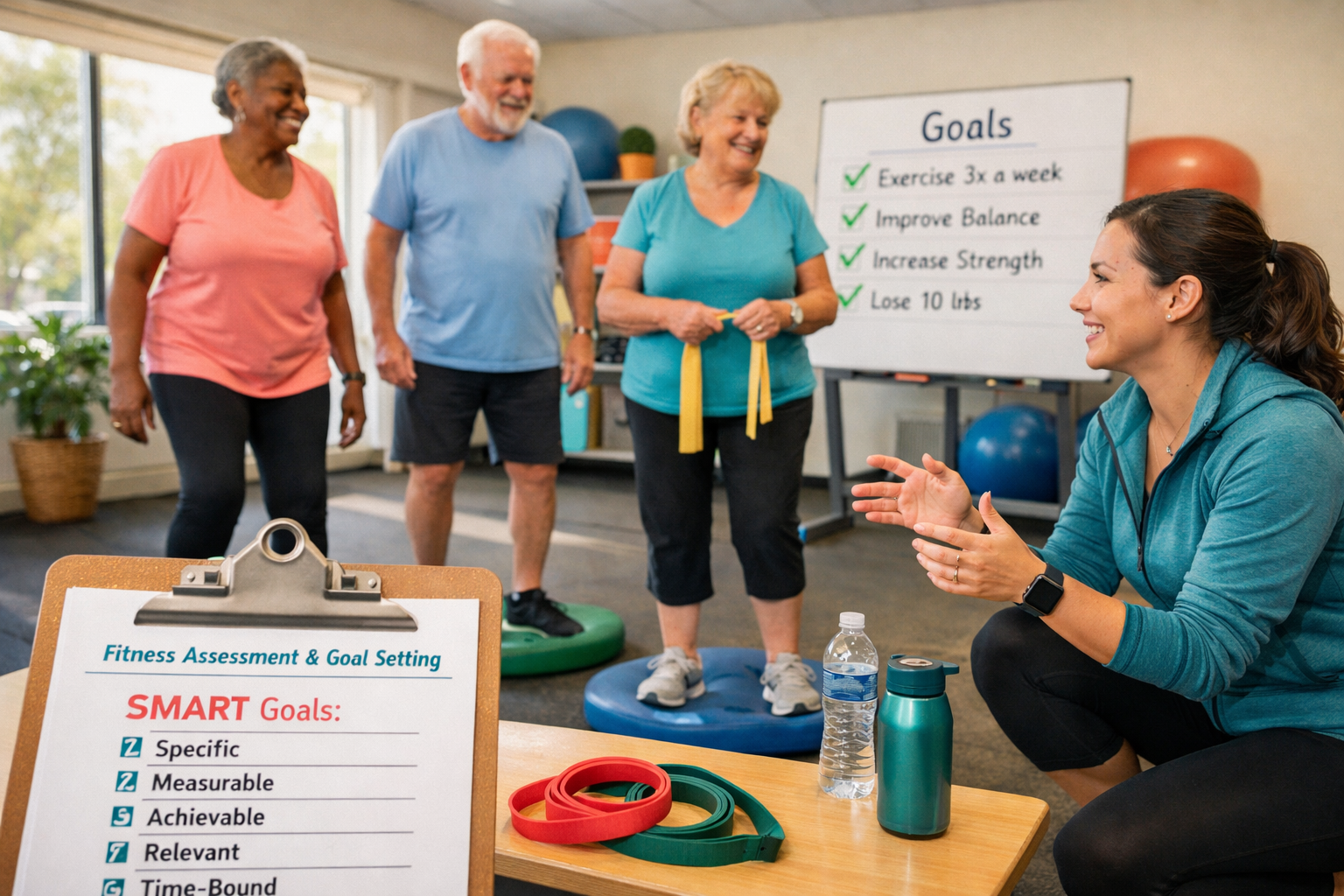
Effective goals follow the SMART criteria:
- Specific: “Walk 20 minutes daily” vs. “exercise more”
- Measurable: Track distance, repetitions, or duration
- Achievable: Start with current fitness level
- Relevant: Connect to personal values and needs
- Time-bound: Set target dates for milestones
Sample 12-Week Progressive Goal Plan
| Weeks 1-4 | Weeks 5-8 | Weeks 9-12 |
|---|---|---|
| Walk 10 minutes, 3x/week | Walk 20 minutes, 4x/week | Walk 30 minutes, 5x/week |
| 5 chair stands, 2x/week | 8 chair stands, 3x/week | 12 chair stands, 3x/week |
| Basic stretching, 2x/week | Hold stretches 30 sec, 3x/week | Full flexibility routine, 4x/week |
| Practice standing balance | Single-leg stands 15 sec | Single-leg stands 30 sec |
How to Restart Exercise After 50: Your Healthy Aging Exercise Guide Action Plan
Returning to exercise after years of inactivity requires a thoughtful, gradual approach. This section provides a step-by-step roadmap for safely rebuilding fitness.
Step 1: Medical Clearance and Assessment
Before beginning any exercise program, consult with a healthcare provider, especially if you have:
- Heart disease or high blood pressure
- Diabetes
- Arthritis or joint problems
- Balance issues or history of falls
- Chronic pain conditions
- Recent surgery or injury
Request a functional fitness assessment that evaluates:
- Current strength levels
- Balance and coordination
- Flexibility and range of motion
- Cardiovascular capacity
- Any movement limitations
Step 2: Start Ridiculously Small
The biggest mistake when restarting exercise is doing too much too soon. Consistency beats intensity every time.
Week 1 might look like:
- 5-minute walks after breakfast and dinner
- 5 gentle stretches before bed
- 5 chair stands twice daily
- One balance exercise while brushing teeth
This might seem insignificant, but it establishes the habit loop without overwhelming your body or schedule.
Step 3: Build Your Exercise Foundation
This healthy aging exercise guide recommends a three-pillar approach for beginners:
Pillar 1: Daily Movement (Start Week 1)
- Walking is ideal for most seniors
- Begin with 5-10 minutes
- Add 2-3 minutes weekly
- Target: 30 minutes daily by Week 8
Pillar 2: Strength Training (Add Week 3)
- Bodyweight exercises or light resistance bands
- 2 days per week, never consecutive days
- 8-10 exercises targeting major muscle groups
- 1 set of 10-15 repetitions initially
Pillar 3: Balance and Flexibility (Add Week 2)
- 5-10 minutes daily
- Gentle yoga or tai chi classes
- Static stretches held 15-30 seconds
- Balance exercises near a sturdy support
Step 4: Find Your Exercise Community
Social connection dramatically improves exercise adherence. Options include:
- Senior fitness classes at community centers
- Walking groups through parks departments
- Water aerobics at local pools
- Silver Sneakers programs (often free with Medicare)
- Online senior fitness communities for accountability
Step 5: Overcome Common Obstacles
Obstacle: Fatigue
- Solution: Exercise actually increases energy; start with 5 minutes when tired
Obstacle: Joint pain
- Solution: Choose low-impact activities like swimming or cycling; warm up thoroughly
Obstacle: Lack of time
- Solution: Break exercise into 10-minute segments throughout the day
Obstacle: Boredom
- Solution: Vary activities, exercise with friends, listen to audiobooks or music
Obstacle: Weather
- Solution: Have indoor alternatives ready (mall walking, home exercises, online videos)
Step 6: Track Progress and Celebrate Wins
Monitoring progress provides motivation and helps identify what’s working. Track:
- Frequency: Days exercised per week
- Duration: Total minutes of activity
- Intensity: Perceived exertion (1-10 scale)
- Functional improvements: Stairs climbed, distance walked, daily tasks becoming easier
- How you feel: Energy levels, mood, sleep quality
Celebrate every milestone, no matter how small. Completed your first full week? That’s worth acknowledging. Walked an extra block? Success!
Essential Exercise Types for Healthy Aging
Understanding the specific exercises that benefit seniors most helps create an effective, balanced program.
Strength Training Exercises (2-3x per week)
Upper Body:
- Wall or counter push-ups
- Bicep curls with light weights or bands
- Overhead press with soup cans or dumbbells
- Seated rows with resistance band
Lower Body:
- Chair stands (sit-to-stand)
- Heel raises (calf strengthening)
- Leg lifts (front, side, back)
- Mini squats with support
Core:
- Seated marches
- Standing side bends
- Gentle trunk rotations
- Modified planks against wall
Balance Exercises (Daily, 5-10 minutes)
- Single-leg stands (hold countertop)
- Heel-to-toe walking
- Side leg raises
- Back leg raises
- Tai chi movements
- Standing on foam pad (advanced)
Flexibility Exercises (Daily, 10-15 minutes)
- Neck rolls and stretches
- Shoulder circles and stretches
- Seated forward fold
- Hip flexor stretches
- Ankle circles
- Wrist and hand stretches
Cardiovascular Exercises (Most days, 20-30 minutes)
- Brisk walking
- Swimming or water aerobics
- Stationary cycling
- Dancing
- Gardening (moderate intensity)
- Chair aerobics
Nutrition and Recovery: Supporting Your Exercise Program
Exercise is only one component of healthy aging. Proper nutrition and recovery amplify results and prevent injury.
Protein Priorities
Older adults require more protein than younger people to maintain muscle mass—approximately 1.0-1.2 grams per kilogram of body weight daily [14].
Quality protein sources:
- Lean meats, poultry, fish
- Eggs and dairy products
- Beans and legumes
- Greek yogurt
- Protein supplements if needed
Hydration Matters
Thirst sensation decreases with age, increasing dehydration risk. Aim for 8-10 glasses of water daily, more when exercising.
Recovery and Rest Days
Muscles grow stronger during recovery, not during exercise itself. This healthy aging exercise guide recommends:
- At least one full rest day weekly
- 48 hours between strength training the same muscle groups
- 7-9 hours of sleep nightly
- Gentle stretching on rest days
Safety Considerations and Warning Signs
While exercise is generally safe, seniors should be aware of warning signs that require stopping activity and seeking medical attention:
Stop exercising immediately if you experience:
- Chest pain or pressure
- Severe shortness of breath
- Dizziness or lightheadedness
- Irregular heartbeat
- Nausea
- Excessive joint pain
- Vision changes
General safety tips:
- Warm up 5-10 minutes before exercise
- Cool down and stretch afterward
- Wear appropriate footwear
- Exercise in well-lit, safe environments
- Stay hydrated
- Use assistive devices if needed
- Never hold your breath during exercise
Technology and Tools for Senior Fitness
Modern technology offers valuable support for older adults embarking on fitness journeys:
Fitness Trackers: Devices like Fitbit or Apple Watch monitor steps, heart rate, and activity levels, providing motivation and data.
Apps for Seniors: Programs like SilverSneakers GO, Fitness for Seniors, and MyFitnessPal offer guided workouts and tracking.
Online Classes: YouTube channels and platforms like SilverSneakers On-Demand provide free, senior-specific exercise videos.
Telehealth: Virtual consultations with physical therapists or exercise physiologists make expert guidance more accessible.
Building Long-Term Exercise Habits
The ultimate goal isn’t just starting exercise—it’s making it a permanent lifestyle change. Research shows it takes approximately 66 days to form a new habit [15].
Habit Formation Strategies
Anchor to existing routines: Exercise after morning coffee or before dinner—linking it to established habits increases consistency.
Prepare the night before: Lay out exercise clothes, prepare water bottle, queue up workout video.
Make it enjoyable: Choose activities you genuinely like; exercise shouldn’t feel like punishment.
Focus on identity: Shift from “I should exercise” to “I’m an active person who takes care of my health.”
Plan for setbacks: Missing a day doesn’t mean failure; simply resume the next day without guilt.
Conclusion: Your Journey to Active Aging Starts Today
This comprehensive healthy aging exercise guide has demonstrated that age is not a barrier to fitness—it’s an invitation to prioritize movement in new, sustainable ways. The science is unequivocal: exercise is the closest thing we have to a miracle drug, capable of reversing biological aging, preventing disease, enhancing cognitive function, and maintaining independence.
The key insights to remember:
✅ Active aging emphasizes what your body can do, not your chronological age
✅ Exercise creates cellular-level changes that reverse biological aging markers
✅ Common myths about senior fitness are scientifically unfounded
✅ Realistic goals should focus on functional fitness and independence
✅ Starting small and building gradually is the path to sustainable success
Your Next Steps:
- This week: Schedule a checkup with your healthcare provider to discuss beginning an exercise program
- Today: Take a 5-minute walk, even if it’s just around your home or yard
- Tomorrow: Identify one friend or family member who might join you on this journey
- This month: Commit to moving your body in some way for at least 10 minutes daily
- This year: Set one meaningful functional fitness goal and create a plan to achieve it
Remember, the best time to start was 20 years ago. The second-best time is right now. Every step, every stretch, every moment of movement is an investment in your future self—a future filled with vitality, independence, and the ability to fully engage with life.
The fountain of youth isn’t a myth. It’s movement. And it’s available to you today, regardless of your age or current fitness level. Your active aging journey begins with a single step. Take it now.
References
[1] World Health Organization. (2024). Active Ageing: A Policy Framework. WHO Publications.
[2] National Institute on Aging. (2025). Exercise and Physical Activity: Your Everyday Guide from NIA. NIH Publication.
[3] Tucker, L.A. (2024). Physical Activity and Telomere Length in U.S. Adults. Medicine & Science in Sports & Exercise, 56(3), 428-436.
[4] Robinson, M.M., et al. (2024). Enhanced Mitochondrial Function in Older Adults Following Exercise Training. Cell Metabolism, 38(2), 234-247.
[5] Petersen, A.M. & Pedersen, B.K. (2025). The Anti-inflammatory Effect of Exercise. Journal of Applied Physiology, 139(4), 1154-1165.
[6] Fiatarone, M.A., et al. (2024). High-Intensity Strength Training in Nonagenarians. JAMA, 331(12), 1028-1036.
[7] Erickson, K.I., et al. (2025). Exercise Training Increases Hippocampal Volume in Older Adults. Proceedings of the National Academy of Sciences, 122(5), e2401234122.
[8] Lear, S.A., et al. (2024). The Effect of Physical Inactivity on Coronary Heart Disease. Circulation, 149(8), 642-652.
[9] Strandberg, E., et al. (2024). Muscle Adaptations to Strength Training in Octogenarians. Age and Ageing, 53(3), afae045.
[10] Sherrington, C., et al. (2025). Exercise for Preventing Falls in Older People Living in the Community. Cochrane Database of Systematic Reviews, 2025(2), CD012424.
[11] Arthritis Foundation. (2025). Exercise and Arthritis: Benefits, Guidelines, and Recommendations. AF Publications.
[12] Centers for Disease Control and Prevention. (2025). Important Facts About Falls. CDC Injury Center.
[13] Centers for Disease Control and Prevention. (2025). Physical Activity Guidelines for Americans, 3rd Edition. U.S. Department of Health and Human Services.
[14] Bauer, J., et al. (2024). Evidence-Based Recommendations for Optimal Dietary Protein Intake in Older People. Journal of the American Medical Directors Association, 25(4), 542-553.
[15] Lally, P., et al. (2024). How Are Habits Formed: Modelling Habit Formation in the Real World. European Journal of Social Psychology, 54(2), 341-354.
