The Perfect Legs Workout (PUSH | PULL | LEGS)

Elevate Your Leg Training with the Perfect PPL Leg Workout


Background on the PPL Split Routine

Before we delve into the details of the leg workout, it’s important to understand the concept behind the Push, Pull, Legs (PPL) split routine. The PPL split routine is a highly effective training approach that divides workouts into three distinct categories: push exercises, pull exercises, and leg exercises. This division allows for focused training of specific muscle groups while providing ample rest and recovery time. By targeting different muscle groups on different days, the PPL split routine promotes optimal muscle growth and strength development. Today, we will focus on the leg workout, which completes the PPL series.

Overview of the Leg Workout

The perfect leg workout is designed with hypertrophy (muscle growth) as the primary goal. It incorporates a range of exercises that target various muscles in the legs and posterior chain. The workout emphasizes progressive overload, proper form, and targeted muscle engagement to maximize results. Now, let’s take a closer look at each exercise included in this leg workout.

Exercise 1: Barbell Squats
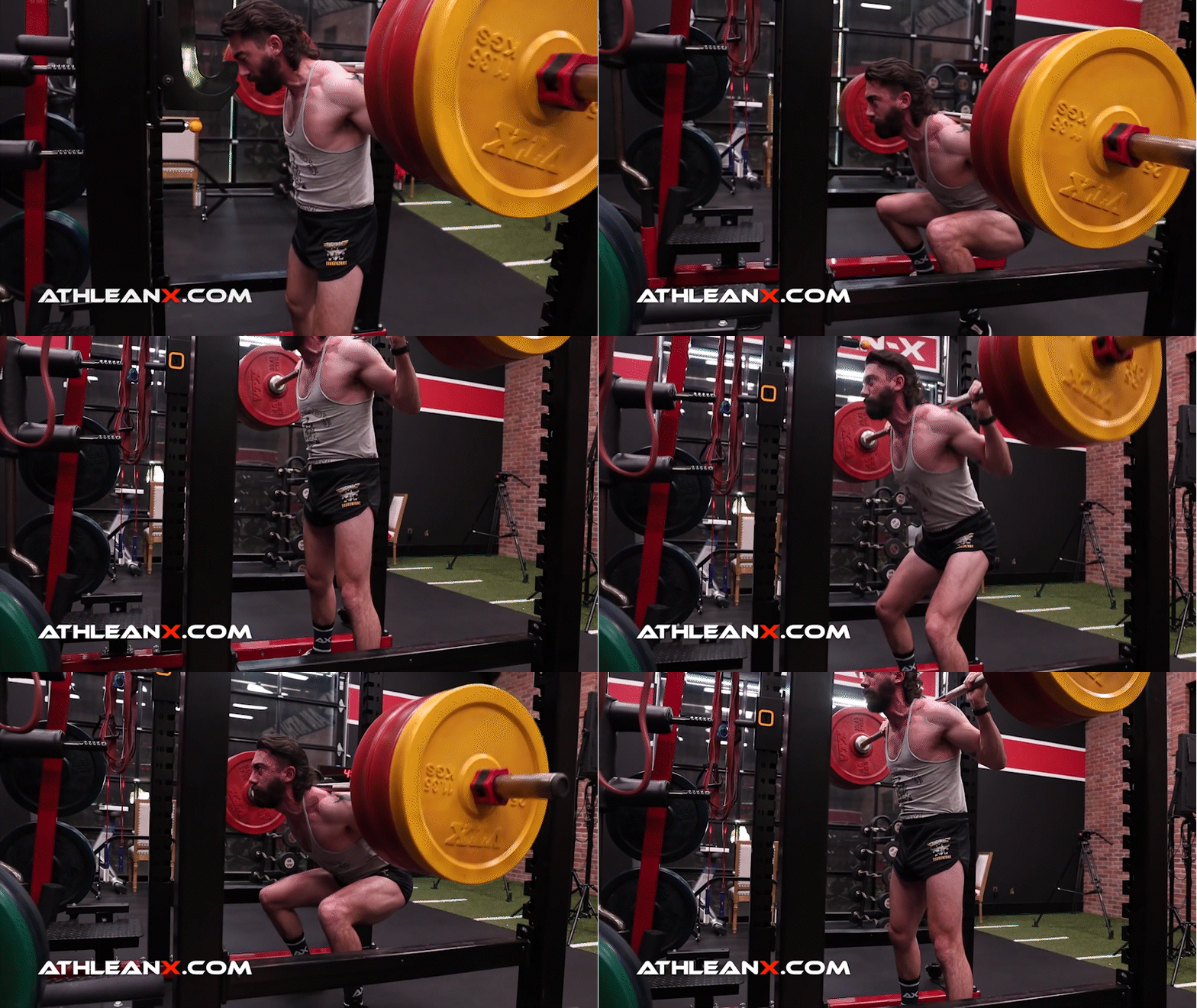
Barbell Squats are considered a cornerstone exercise for leg development. They engage multiple muscle groups, including the quadriceps, hamstrings, glutes, and core. To perform Barbell Squats, place a barbell across your upper back and shoulders, descend into a deep squat position, and then return to a standing position. This compound movement builds overall leg strength and size. The recommended protocol for Barbell Squats in this workout is to perform four sets of four to six repetitions. It’s essential to choose a weight that allows you to complete the desired rep range while leaving one or two reps in the tank.

Exercise 2: Barbell Hip Thrusts

Barbell Hip Thrusts are an excellent exercise for targeting the glutes and hamstrings. This exercise helps develop the posterior chain while minimizing stress on the lower back. To perform Barbell Hip Thrusts, sit on the ground with your upper back against a bench, place a barbell across your hips, and drive through your heels to lift your hips off the ground. Focus on squeezing the glutes at the top of the movement. The recommended protocol for Barbell Hip Thrusts in this workout is three sets of eight to ten repetitions.

Exercise 3: Dumbbell/Barbell Reverse Lunges
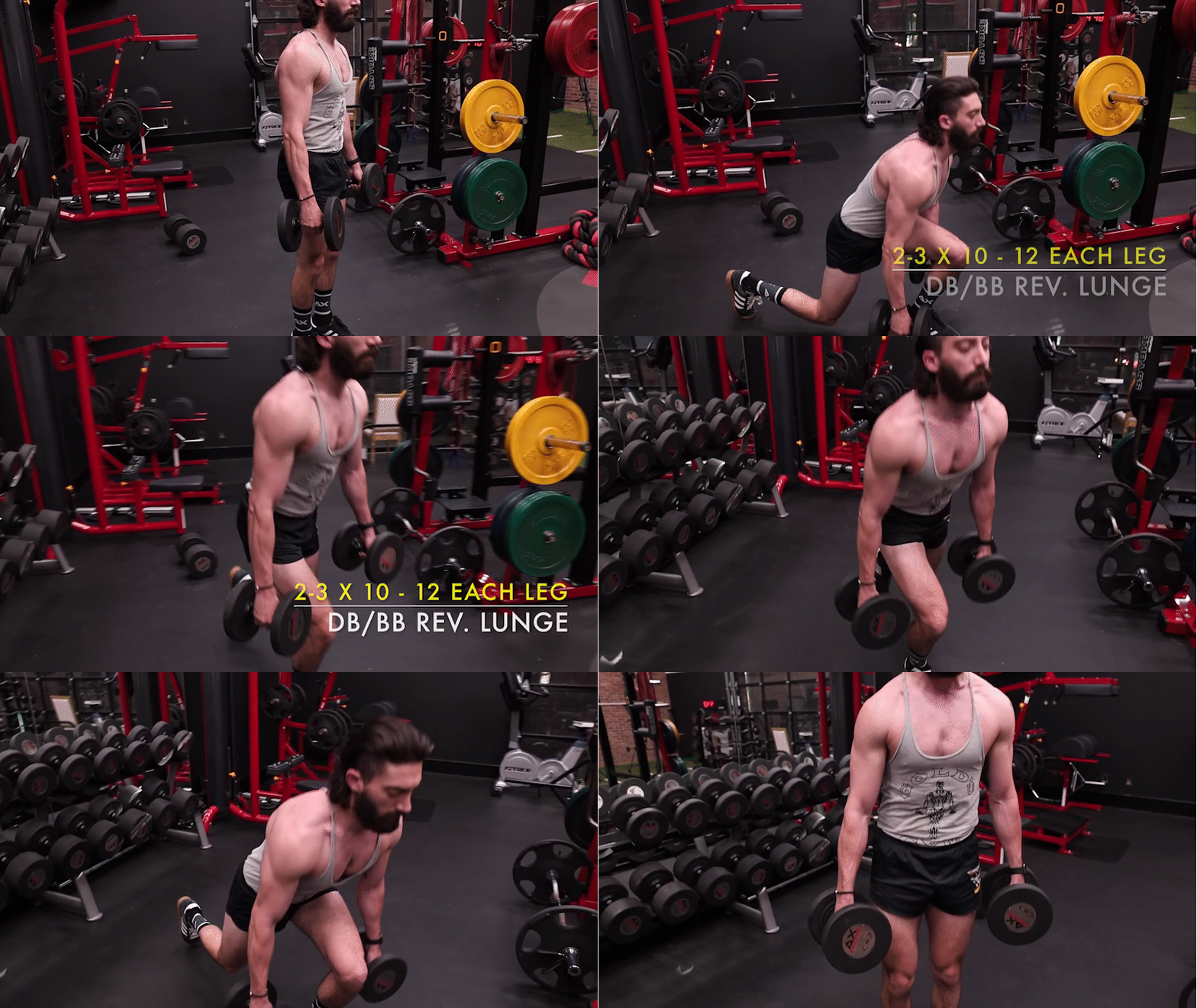
Dumbbell/Barbell Reverse Lunges are a fantastic way to target the anterior chain and enhance overall leg strength and stability. This exercise requires stepping back into a lunge position and then returning to a standing position. The reverse lunge variation places less stress on the knees and provides a unique challenge to the muscles of the legs and core. To perform Dumbbell/Barbell Reverse Lunges, hold a dumbbell or barbell in each hand, step back with one leg, lower your body until the back knee is just above the ground, and then push through the front heel to return to the starting position. Aim for two to three sets of ten to twelve repetitions per leg.

Exercise 4: Dumbbell Single Leg ADL/Slick Floor Bridge Curl (Rotation)
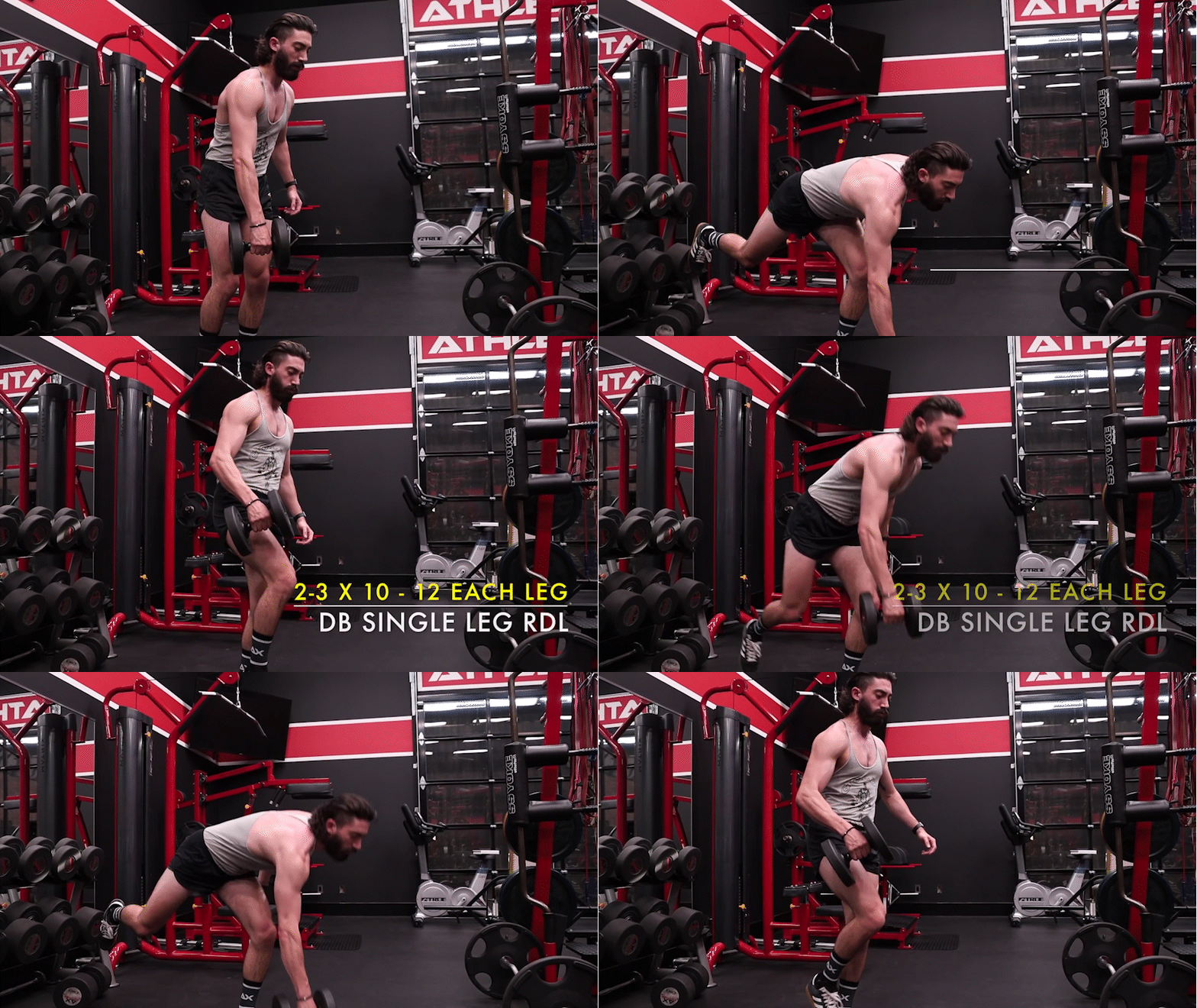
The fourth exercise in the perfect leg workout introduces the concept of exercise rotation. In this workout, you have the option to alternate between two exercises: Dumbbell Single Leg ADL and Slick Floor Bridge Curl. These exercises primarily target the hamstrings and glutes while challenging stability and core engagement.

Dumbbell Single Leg ADL is a variation of the Romanian Deadlift (RDL) that helps isolate the hamstrings and promotes unilateral leg development. To perform Dumbbell Single Leg ADL, hold a dumbbell in one hand, lift the opposite leg off the ground, hinge at the hips, and lower the dumbbell while keeping the back straight. Focus on engaging the glutes and hamstrings throughout the movement. Aim for two to three sets of ten to twelve repetitions per leg.

The alternative exercise, Slick Floor Bridge Curl, is a unique exercise that targets the hamstrings and glutes. It involves lying on the floor with your feet on a slick surface, such as a hardwood floor, and curling your legs toward your glutes by driving through the heels and engaging the hamstrings. This exercise offers the advantage of a closed-chain movement, reducing stress on the lower back. Again, aim for two to three sets of ten to twelve repetitions.

Exercise 5: Standing/Seated Dumbbell Calf Raises (Rotation)
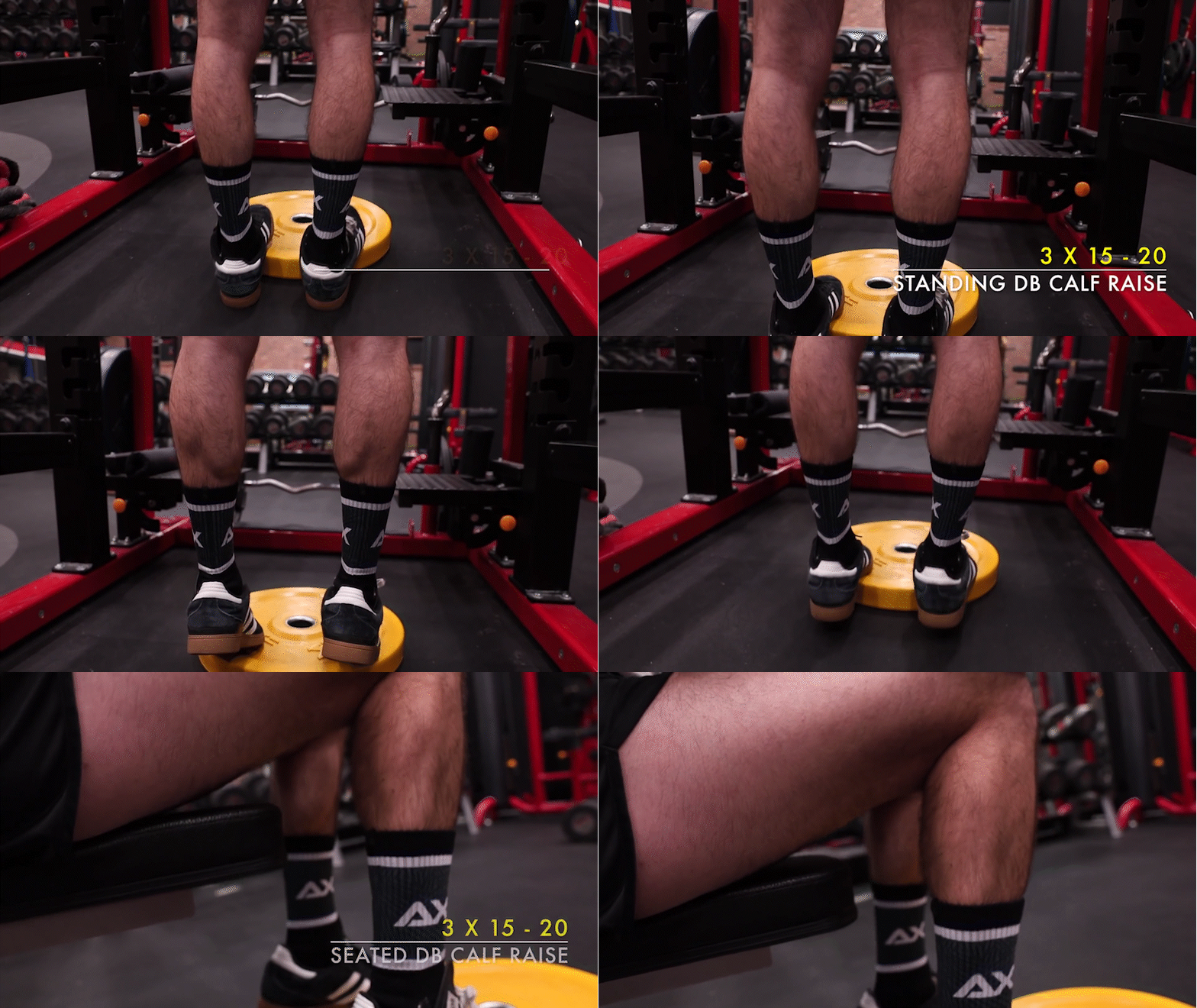
The final exercise in the perfect leg workout focuses on calf development. Strong and well-defined calves add balance and aesthetic appeal to the legs. In this workout, you have the option to choose between two variations: Standing Dumbbell Calf Raises and Seated Dumbbell Calf Raises. Each variation targets different muscles within the calf complex, providing a comprehensive calf training experience.

Standing Dumbbell Calf Raises primarily target the gastrocnemius, the larger calf muscle responsible for the visible bulge in the lower leg. To perform Standing Dumbbell Calf Raises, stand on the edge of a step or platform with your heels hanging off the edge, hold dumbbells in your hands, and rise up onto your toes, then lower your heels below the step to stretch the calves. Aim for three sets of fifteen to twenty repetitions.

Seated Dumbbell Calf Raises shift the focus to the soleus, a deeper calf muscle responsible for ankle flexion. This exercise is performed while sitting on a bench or chair, with dumbbells placed on your thighs. By pressing through the balls of your feet, raise your heels as high as possible, and then lower them back down. The recommended protocol for Seated Dumbbell Calf Raises is also three sets of fifteen to twenty repetitions.

Conclusion and Final Thoughts

In conclusion, the perfect leg workout provides a comprehensive training routine that targets all major muscle groups in the legs and posterior chain. Incorporating exercises like Barbell Squats, Barbell Hip Thrusts, Dumbbell/Barbell Reverse Lunges, Dumbbell Single Leg ADL/Slick Floor Bridge Curl, and Standing/Seated Dumbbell Calf Raises, this workout is designed to promote hypertrophy and functional leg development. Remember to prioritize proper form, progressive overload, and consistency in your training to achieve the best results.

By following the recommendations provided in this leg workout, you can take your leg training to the next level. Whether your goal is building strength, enhancing athletic performance, or achieving a well-defined lower body, the perfect leg workout has got you covered. Incorporate this workout into your training routine, stay dedicated, and watch your legs transform.
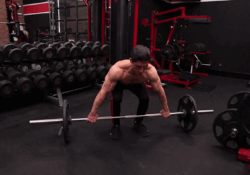
The Perfect Pull Workout (PUSH | PULL | LEGS)

Maximizing Muscle Growth: Unveiling the Perfect Pull Workout – Part 1 and Part 2 in the Push-Pull Legs Split


Introduction

Welcome to the ultimate guide to the perfect Pull workout as part of the Push-Pull Legs (PPL) Split. This workout series, by popular demand, focuses on hypertrophy and muscle building. In this comprehensive guide, we will delve into the Pull portion of the PPL Split, breaking down each exercise, set, and rep to ensure you have all the tools you need to achieve the gains you desire.

The Pull Workout: Part 1

Now, let’s explore the first part of the Pull workout, which serves as the foundation for building a well-rounded back and bicep strength.

Exercise 1: Deadlifts

The Pull workout begins with the deadlift, a compound lift that engages multiple muscle groups. To perform the deadlift properly, start with warm-up sets and gradually increase the weight. Aim to reach 80% of your one-rep max for a challenging set of five reps. Progression is key, so increase the weight in subsequent sessions if you successfully complete the five reps.

Exercise 2: Chest Supported Rows

Following the deadlift, we transition to chest supported rows. This exercise not only targets the lats but also offers relief for the lower back. Performing three sets of eight to ten reps allows you to focus on strengthening your upper back, an often neglected area. Remember, maintaining proper form is crucial for maximizing results.

Exercise 3: Dumbbell Pullovers

Moving on, we introduce the dumbbell pullover exercise, known as the “squat of the upper body” according to Arnold Schwarzenegger. By initiating the movement with the lats, this exercise effectively targets and builds the lat muscles. Performing two to three sets in the 10 to 12 rep range, with the appropriate weight, ensures muscle failure within the desired range.

Exercise 4: Dumbbell High Pulls

To further work the upper back and develop the rear delts and upper traps, we incorporate the dumbbell high pull. Although it may resemble an upright row, it differs in terms of shoulder mechanics, making it safer and more effective. By emphasizing vertical pulling, this exercise helps balance out the overall back development.

Exercise 5: Bicep Chin Curls

Addressing the biceps, we introduce the bicep chin curl. It is important to include direct bicep work in a hypertrophy-focused split. This exercise mimics the mechanics of a barbell curl, providing an effective stimulus for bicep growth. Performing three sets to failure, combined with a tricep exercise, ensures balanced arm development.

Exercise 6: Tricep Extensions

To complement the bicep chin curls, we incorporate tricep extensions. This exercise focuses on the long head of the triceps, an often overlooked area. By utilizing a stress position, we aim for three sets to failure, ensuring maximum tricep engagement and hypertrophy.

Corrective Work: Angel and Devil Exercise

No pull workout is complete without some additional corrective work. The Angel and Devil exercise engages the entire posterior chain, activating the lower back, lower traps, upper back, and paraspinal muscles. Performing three sets of 15 to 20 quality reps allows you to target these crucial muscle groups effectively.

The Pull Workout: Part 2

Now, let’s explore the second part of the Pull workout, designed to complement Part 1 while offering its own unique benefits.

Exercise 1: Snatch Grip Deadlifts

Part 2 commences with snatch grip deadlifts, focusing on reinforcing the hinge pattern. This exercise offers benefits for the upper back, particularly the upper traps, while also providing additional grip strength training. Aim for three sets of five reps with a weight that allows for approximately eight reps, focusing on volume rather than maximal strength.

Exercise 2: Weighted Pull-Ups

Following the snatch grip deadlifts, we move on to weighted pull-ups. This compound exercise enhances overall pulling strength and targets the lats effectively. To ensure sufficient challenge, aim for six to eight reps per set. If you can perform more, incorporate additional weight to stay within the desired rep range.

Exercise 3: Dumbbell Gorilla Rows

To add variety to the workout, we introduce the dumbbell gorilla row as an alternative to the traditional dumbbell one-arm row. This exercise allows for a balanced and grounded position, minimizing the risk of injury. Adjusting your elbow position can shift the focus from the flat back to the upper back, providing the opportunity for further muscle development.

Exercise 4: Straight Arm Pushdowns

The straight arm pushdown exercise targets the lats while focusing on scapular strength. By extending the range of motion from the previous dumbbell pullover exercise, we achieve complete adduction of the lats, promoting hypertrophy. Aim for two to three sets of 12 to 15 reps to optimize muscle engagement.

Exercise 5: Barbell Curls

To continue working on bicep development, we incorporate the classic barbell curl. This exercise allows for heavier weights and promotes strength and size gains. Aim for six to eight reps per set, challenging yourself with appropriate weight to stimulate bicep growth effectively.

Exercise 6: Tricep Pushdowns

Supersetting the barbell curls, we move on to tricep exercises with tricep pushdowns. This exercise specifically targets the lateral and medial heads of the triceps, providing a well-rounded arm workout. Aim for three sets of 10 to 12 reps to ensure optimal tricep development.

Corrective Work: Face Pulls

The final exercise of the Pull workout is the face pull, which targets the upper back, midscapular muscles, and rotator cuff. This exercise serves as a crucial component for overall shoulder health and upper back development. Focus on performing 15 to 20 quality reps, emphasizing form and muscle activation.

The Perfect Push Workout (PUSH | PULL | LEGS)

Maximizing Muscle Growth and Strength with the Perfect Push Workout: A Comprehensive Guide to the Push | Pull | Legs (PPL) Split series by Jeff Cavaliere

When we look at creating a perfect workout, no matter what it is, you have to understand there’s a lot of selections that go into that. I’m making my bold selections here and putting them into this workout for a reason because I believe it’s going to work to help you to build muscle. That being said guys, I want to break it down for you step-by-step and show you not just what we’re picking, but why we’re picking it so you can get the gains that you’re looking for.

Understanding the PPL Split

Before we dive into the details of the perfect push workout, let’s first understand the Push | Pull | Legs (PPL) split. This split is a popular and effective way of organizing workout routines. It involves dividing your training sessions into three main categories: push, pull, and legs.

On the push day, you focus on training the pushing muscles, which primarily include the triceps, shoulders, and chest. By dedicating a specific day to these muscles, you can ensure they receive proper attention and stimulation for growth and development.

The perfect push workout we’ll be discussing today is part of the PPL series, which means it complements the pull and legs workouts. This split allows for balanced and comprehensive training of all major muscle groups, leading to overall strength and physique improvements.

The PPL Split and Training Frequency

DayMondayTuesdayWednesdayThursdayFridaySaturdaySunday
Option APullPushLegsPullPushLegsOFF
Option BPullPushLegsOFFPullPushLegs
Option C (Asynchronous Split)OFFPullPushLegsOFFPullPush

This weekly chart provides a structured plan for your training routine. It ensures that each major muscle group is targeted with adequate rest days in between to promote recovery and growth. Remember to adjust the sets, reps, and exercises according to your fitness level and goals. Stay consistent and enjoy your workouts!

Now that we have a comprehensive understanding of the perfect push workout, let’s take a moment to discuss the PPL split and training frequency options. The PPL split allows for organized and balanced training of all major muscle groups throughout the week.

In the PPL split, you have the option to follow a six-day training cycle, where you repeat the push, pull, and legs workouts for six consecutive days before taking a day off. This approach provides consistent stimulation to the muscles, promoting growth and progress.

Alternatively, you can opt for the asynchronous split, which involves incorporating rest days between the push, pull, and legs workouts. This split allows for more frequent rest and recovery, which can be beneficial for muscle growth and reducing the risk of overtraining.

The asynchronous split, as mentioned earlier, provides an additional rest day between each workout. For example, you can perform the push workout on day one, followed by a rest day on day two. Then, proceed with the pull workout on day three, followed by another rest day on day four. Finally, perform the leg workout on day five, followed by a rest day on day six. This pattern repeats for subsequent weeks.

While the asynchronous split may introduce an unpredictable off day, the additional rest days allow for enhanced recovery, potentially leading to better muscle growth and overall performance. However, it’s important to note that individual preferences and training goals may vary, so choose the frequency that suits your needs and allows for adequate recovery.

The Perfect Push Workout: Push One

Now, let’s dive into the details of the perfect push workout. We have carefully selected a set of exercises that target the triceps, shoulders, and chest to maximize muscle growth. In Push One, we will cover six exercises that work synergistically to help you achieve the desired results. Let’s explore each exercise in detail:

Exercise 1: Barbell Bench Press

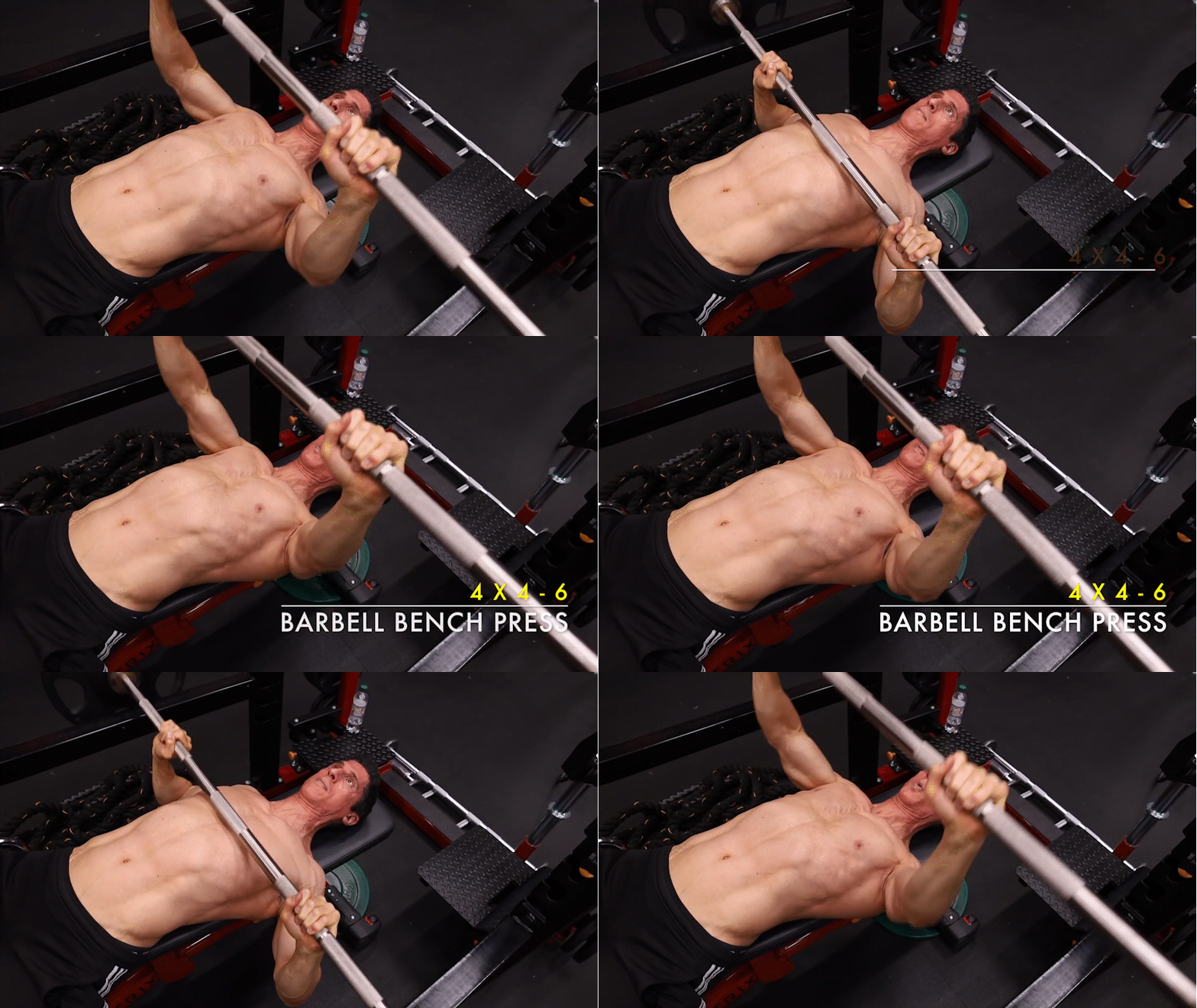
The Barbell Bench Press is a classic exercise that forms the cornerstone of any effective push routine. It is an excellent compound movement that builds strength and muscle mass in the triceps, shoulders, and chest. When performing the Barbell Bench Press, aim for four sets of four to six reps. This rep range allows for sufficient intensity without pushing yourself to failure. Keep in mind that as fatigue sets in, you may need to adjust the weights to maintain proper form and stay within the prescribed rep range.

Exercise 2: Hi-to-Low Crossover

To complement the Barbell Bench Press, we incorporate the Hi-to-Low Crossover. This exercise provides a unique opportunity to fully contract the chest by bringing the arm across the body. By performing the crossover in a high-to-low motion, we target the lower chest fibers, particularly the abdominal fibers. Additionally, this exercise promotes full adduction of the hand across the chest, making it an effective hypertrophy exercise. Aim for three sets of 10 to 12 reps to maximize the benefits of this exercise.

Exercise 3: Dumbbell Shoulder Press

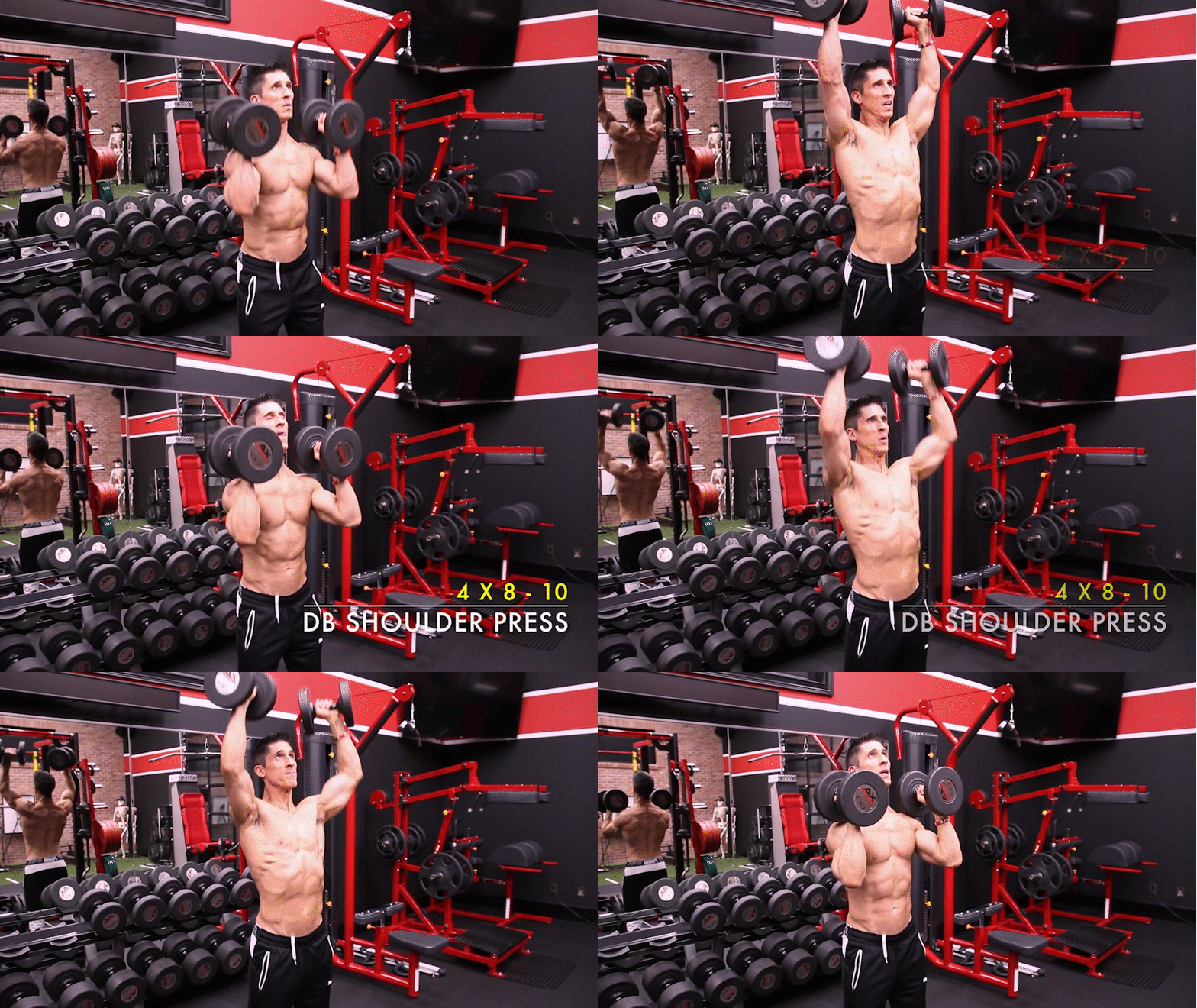
Shifting our focus to the shoulders, we introduce the Dumbbell Shoulder Press. While the barbell variation is a viable option, we prefer the Dumbbell Shoulder Press for this workout. Performing the exercise in a standing position, as opposed to a seated position, allows for better shoulder mechanics and avoids unnecessary restrictions caused by pushing the scapula back into the bench. Aim for four sets of 8 to 10 reps, slightly higher than the previous exercise, to stimulate muscle growth in the shoulders.

Exercise 4: 1 1/2 Side Lateral Raise

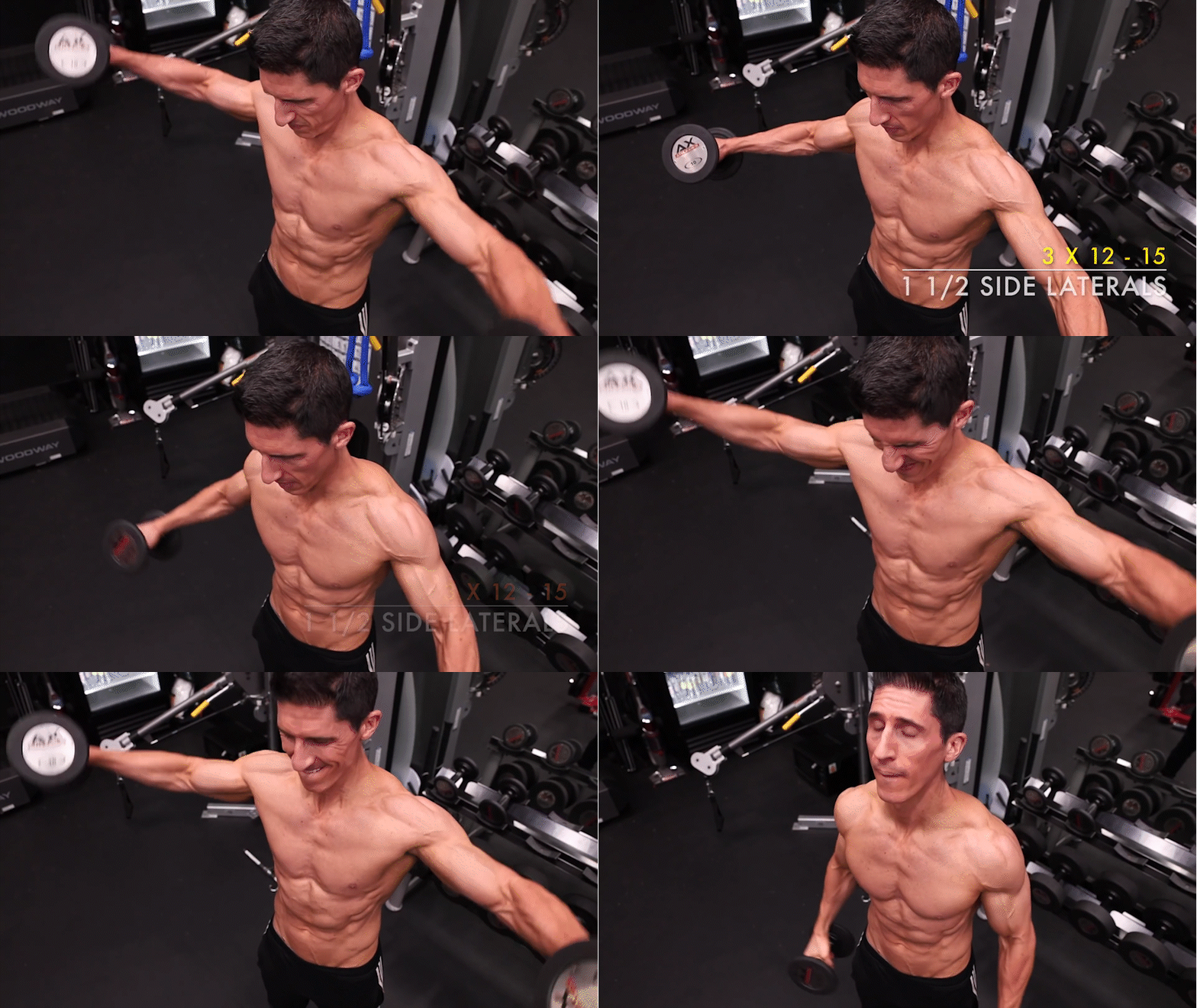
Next on our list is the 1 1/2 Side Lateral Raise, an exercise that specifically targets the middle deltoid. This exercise emphasizes hypertrophy by increasing the time under tension. The technique involves taking the weight up fully, coming down halfway, and then returning to the top position. By eliminating momentum and focusing on controlled contractions, we effectively engage the targeted muscle. Perform three sets of 12 to 15 reps to optimize the benefits of this exercise.

Exercise 5: Tricep and Bicep Superset

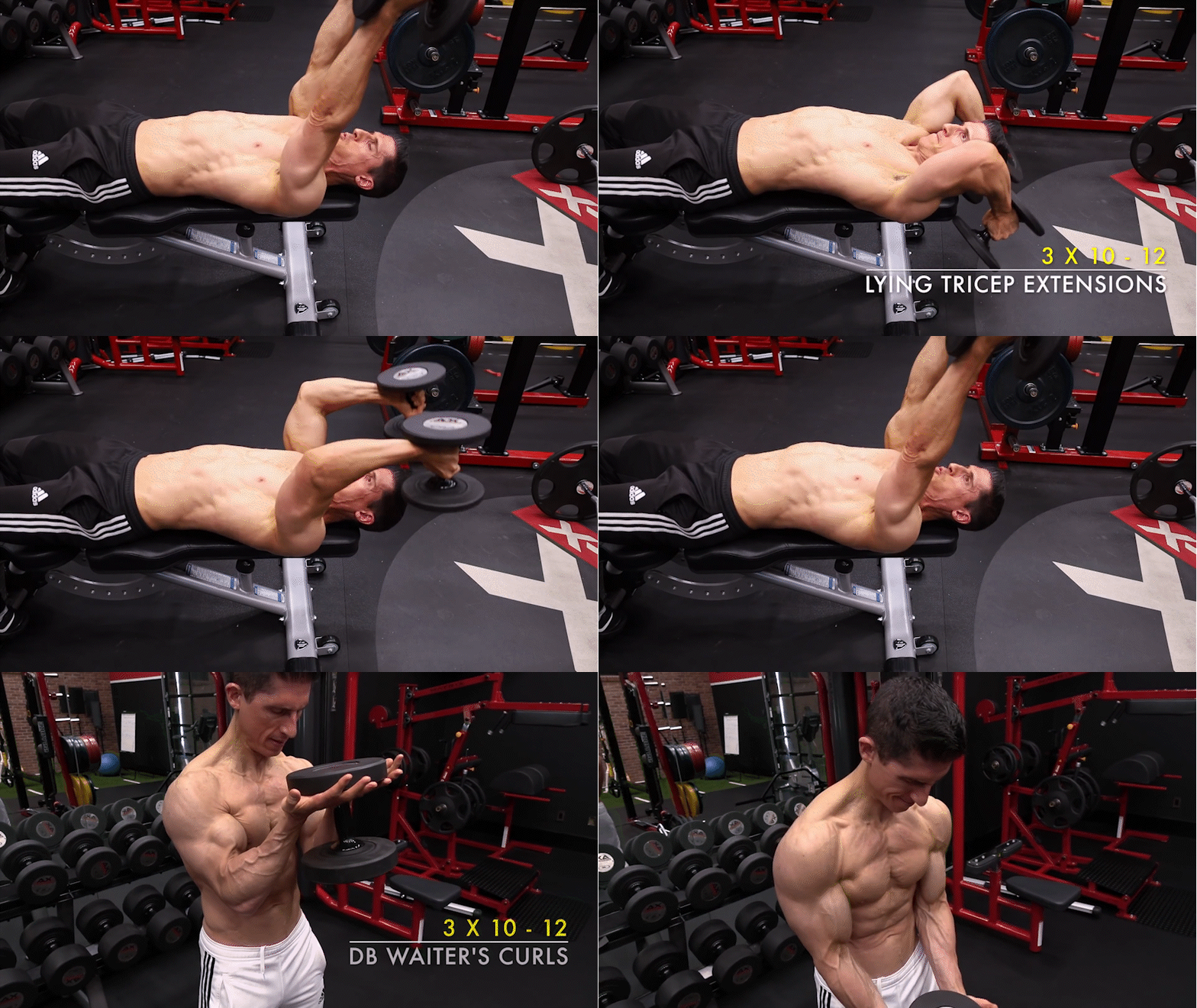
In this superset, we incorporate a tricep exercise alongside a bicep exercise, offering additional volume for both muscle groups without interfering with the primary push exercises. The first exercise is the Lying Tricep Extension, which primarily targets the long head of the triceps. Aim for three sets of 10 to 12 reps, taking the exercise to failure. Immediately following the tricep extension, move on to the Dumbbell Waiter’s Curl. This exercise provides a challenging workout for the biceps while maintaining a balance within the push routine. Perform three sets of 10 to 12 reps for both exercises.

Exercise 6: Rotator Cuff External Rotation

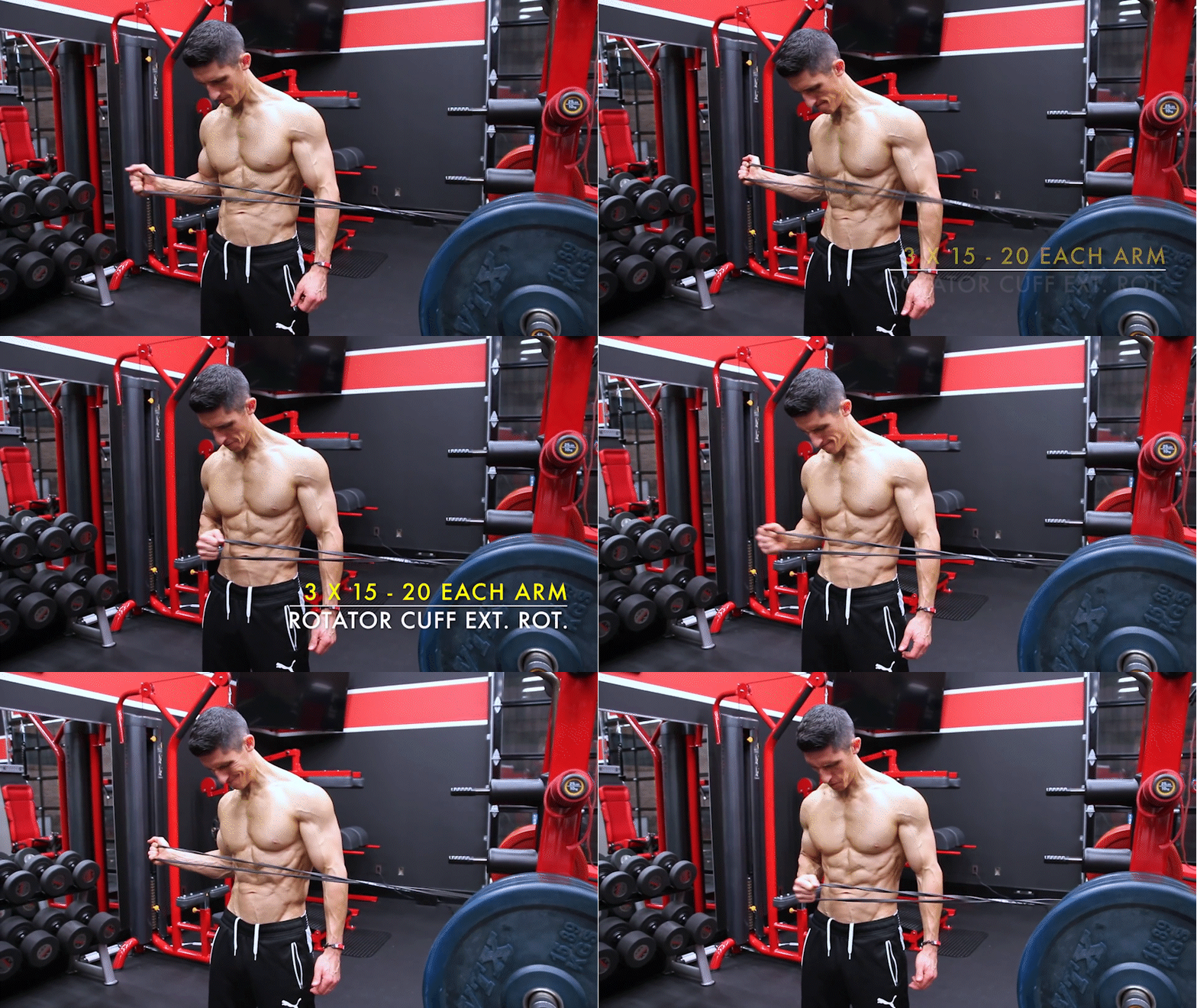
To complete the push workout, we need to pay attention to proper shoulder function and stability. The Rotator Cuff External Rotation exercise serves as a corrective exercise to strengthen the rotator cuff muscles and promote healthy shoulder movement. This exercise is simple yet crucial for preventing imbalances caused by the internal rotation involved in push workouts. Perform three sets of 15 to 20 reps with a resistance band to ensure proper activation of the external rotators.

Transition and Recap

Congratulations on completing the first push workout! Before moving on, let’s recap the exercises covered:

ExerciseSets and Reps
Barbell Bench Press4 sets of 4-6 reps
Hi-to-Low Crossover3 sets of 10-12 reps
Dumbbell Shoulder Press4 sets of 8-10 reps
1 1/2 Side Lateral Raise3 sets of 12-15 reps
Tricep and Bicep Superset3 sets of 10-12 reps (each exercise)
Rotator Cuff External Rotation3 sets of 15-20 reps

Now that we have covered the first push workout in detail, it’s time to transition to the second push workout. In the next section, we will explore a new set of exercises designed to complement and build upon the foundation laid in the first workout. Stay tuned for an invigorating continuation of your push routine.

The Perfect Push Workout: Push Two


Exercise 1: Overhead Barbell Press

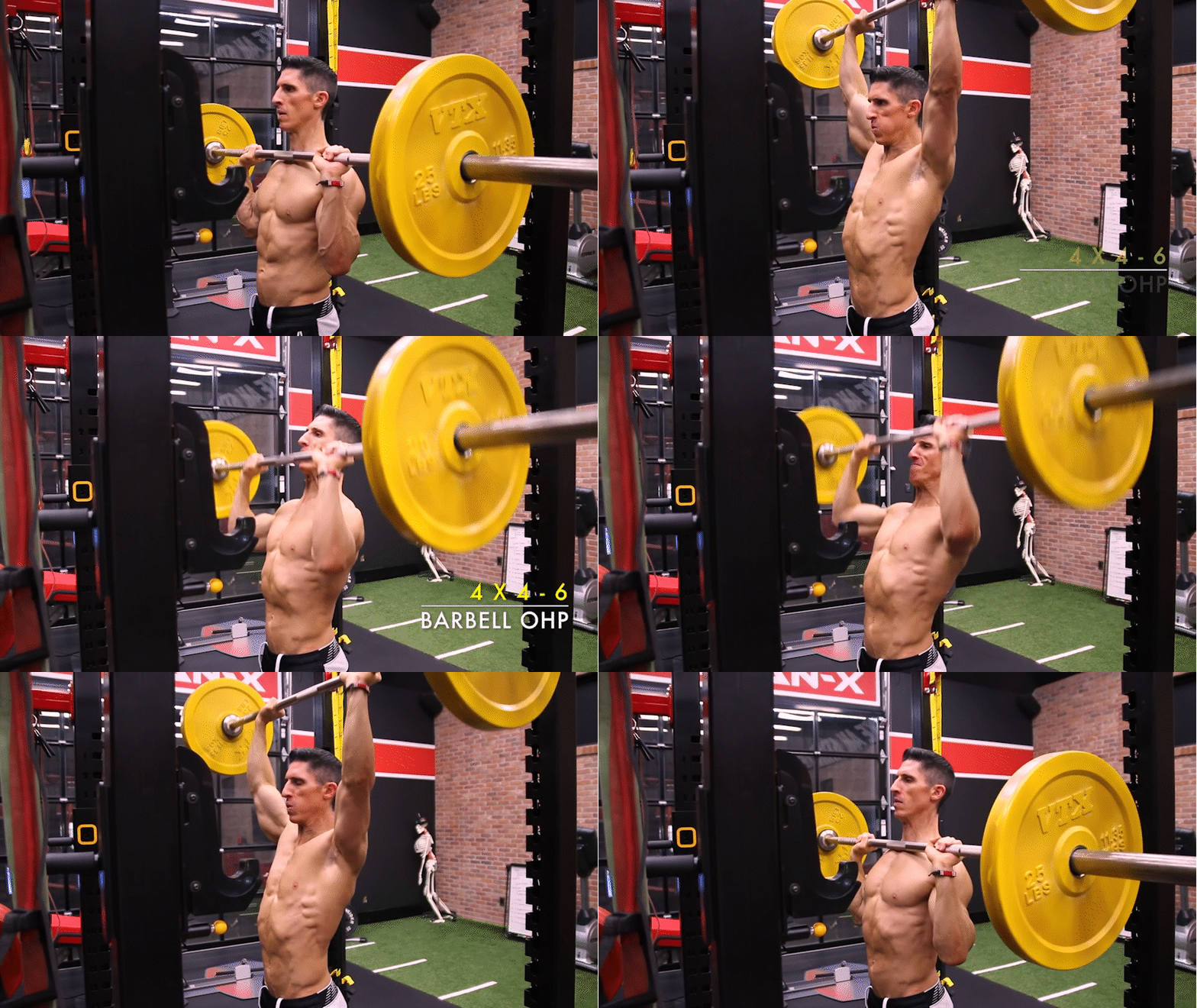
We begin Push Two with the Overhead Barbell Press. This exercise serves as a compound movement that focuses on building strength and driving hypertrophy in the triceps, shoulders, and chest. The Overhead Barbell Press allows for a greater load to be used compared to its dumbbell counterpart. Aim for four sets of four to six reps, leaving one to two reps in the tank. This rep range ensures sufficient intensity while avoiding failure. As you progress, remember to adjust the weights accordingly to maintain proper form and stay within the recommended rep range.

Exercise 2: Dumbbell Underhand Bench Press

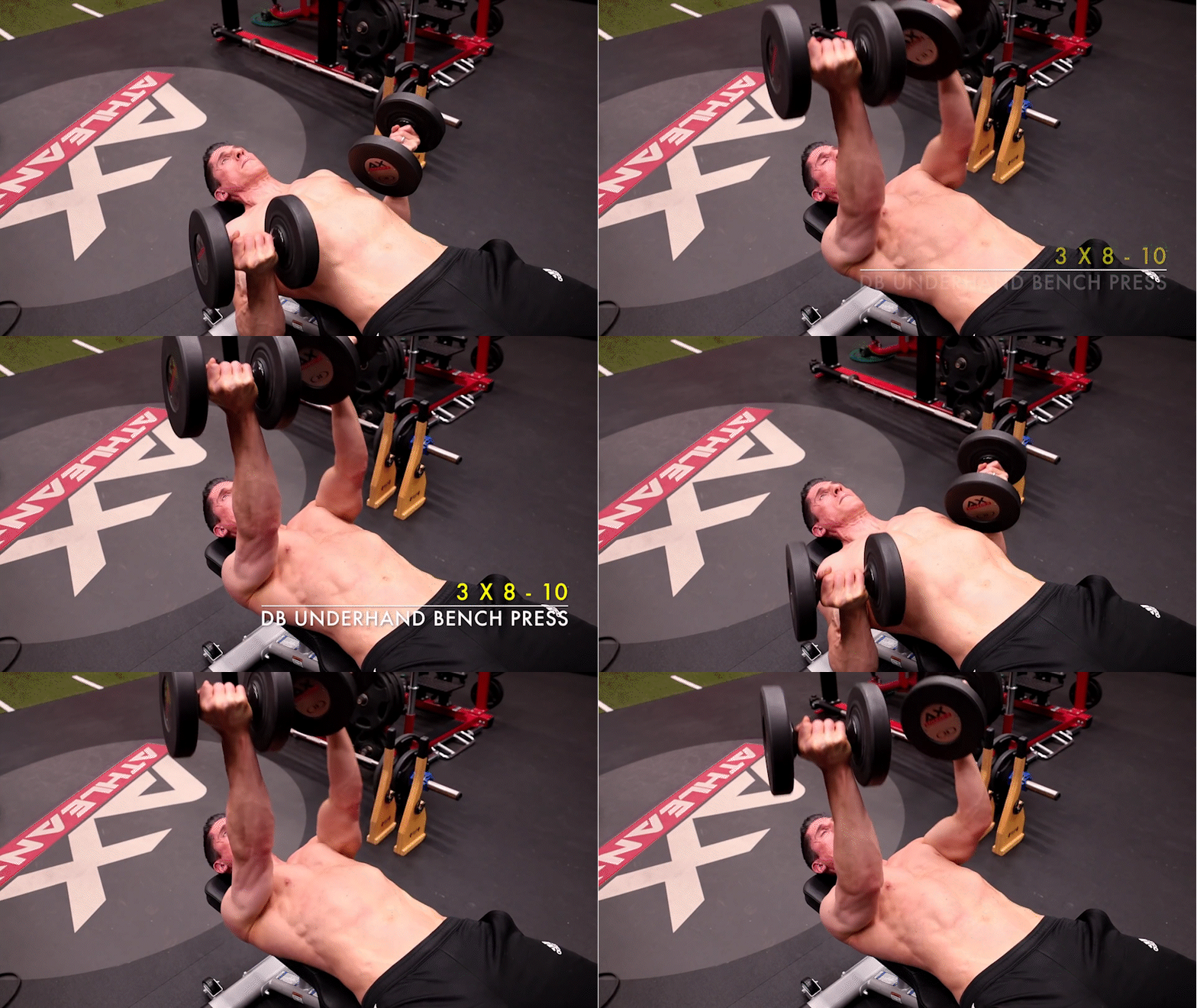
Moving on to the next exercise, we introduce the Dumbbell Underhand Bench Press. This variation specifically targets the upper chest while reducing stress on the shoulders compared to the Incline Dumbbell Bench Press. Performing the exercise with an underhand grip engages the upper chest muscles effectively. Aim for four sets of eight to ten reps to optimize muscle growth in this area. Remember to maintain stability and control throughout the movement, focusing on the mind-muscle connection.

Exercise 3: Abduction Row

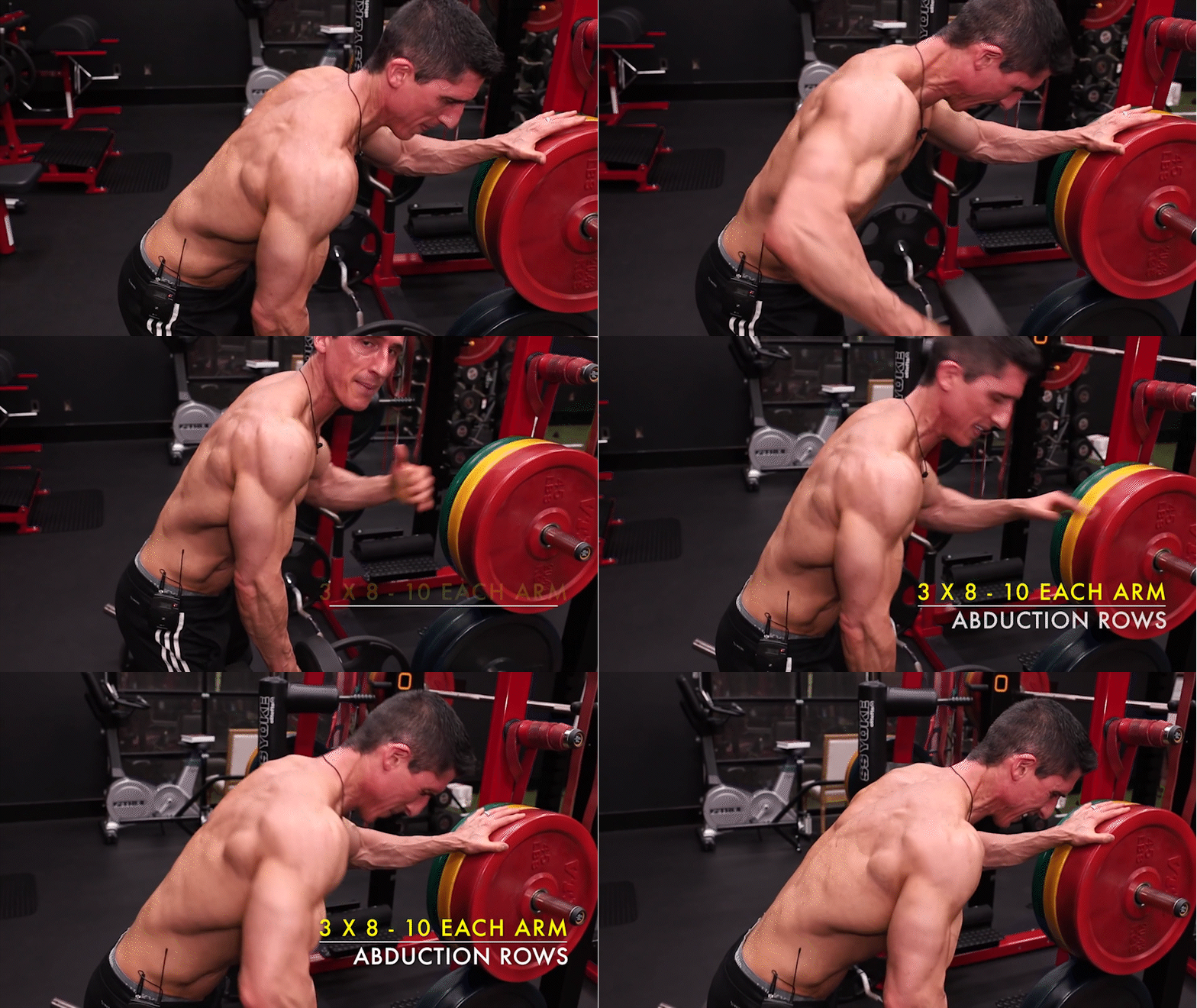
Now, we introduce a unique inclusion in the push workout—Abduction Row. Traditionally considered a pulling exercise, this movement is strategically incorporated on push day to target the middle and rear deltoids while offsetting accumulated fatigue. The Abduction Row involves driving the arm back and out, focusing on scapular abduction. Perform three sets of eight to ten reps, ensuring proper scapular control and tension in the targeted muscles. Maintain a slight forward lean to maximize the activation of the middle and rear deltoids.

Exercise 4: Dumbbell Floor Fly

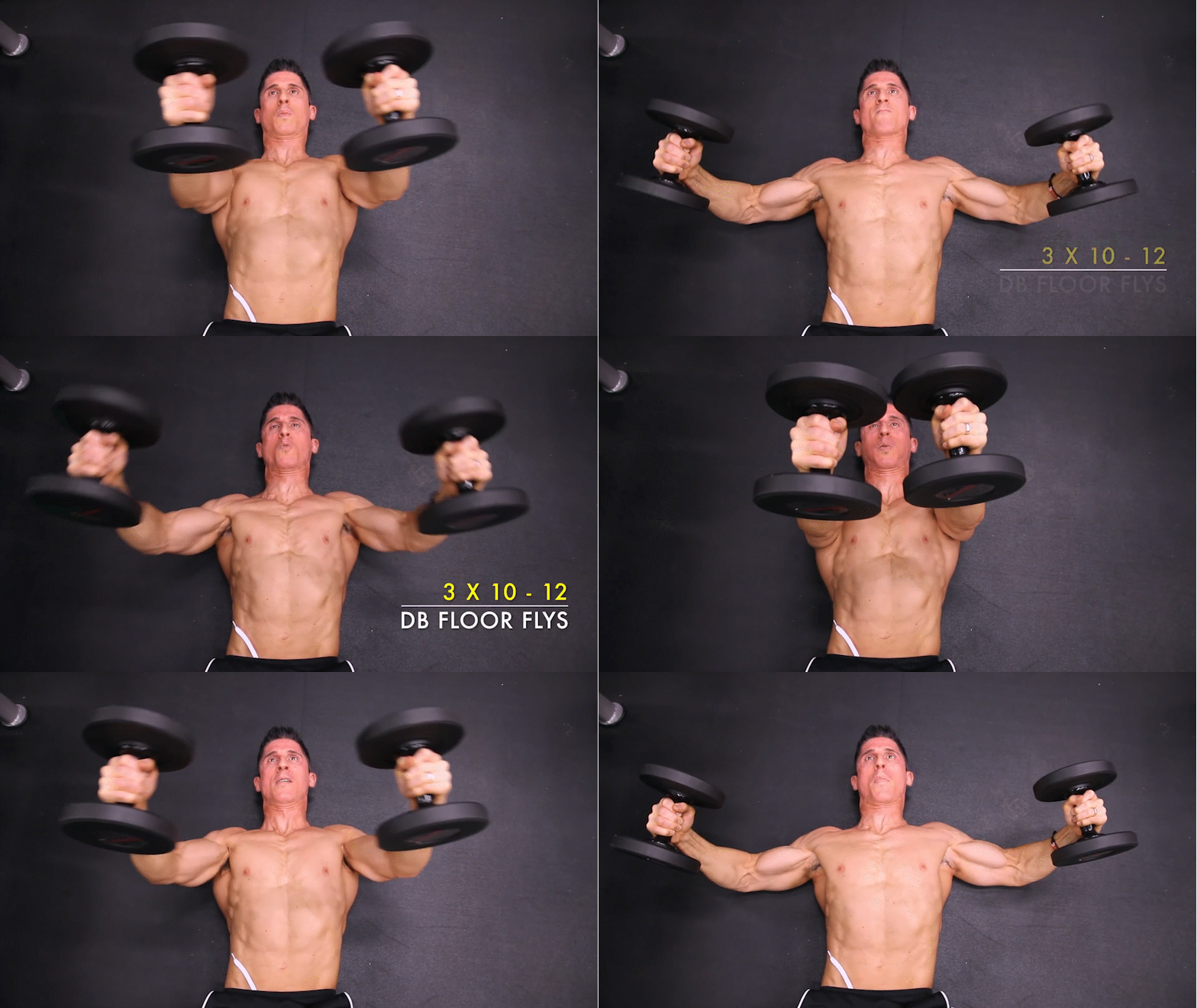
The Dumbbell Floor Fly takes center stage in this push workout. This exercise offers several advantages over the unsupported version, providing a safer and more controlled environment. By performing the exercise on the floor, we ensure that the anterior shoulder capsule is not overextended, reducing the risk of injury. The Dumbbell Floor Fly also allows for eccentric overload, a key driver of hypertrophy. Aim for three sets of ten to twelve reps, focusing on a controlled range of motion and tempo throughout the exercise.

Exercise 5: Tricep and Bicep Superset (Heavier Focus)

Next, we delve into a superset that places a heavier focus on tricep and bicep exercises, allowing for additional volume and strength development. The first exercise in this superset is the Close Grip Bench Press. By narrowing the grip, we target the medial and lateral heads of the triceps, promoting their growth and strength. Perform three sets of six to eight reps, gradually increasing the weights as you progress. Immediately after each set of Close Grip Bench Press, move on to a dumbbell curl exercise of your choice. Select a weight that allows for three sets of ten to twelve reps, focusing on quality contractions and controlled movements.

Exercise 6: Pushup Plus

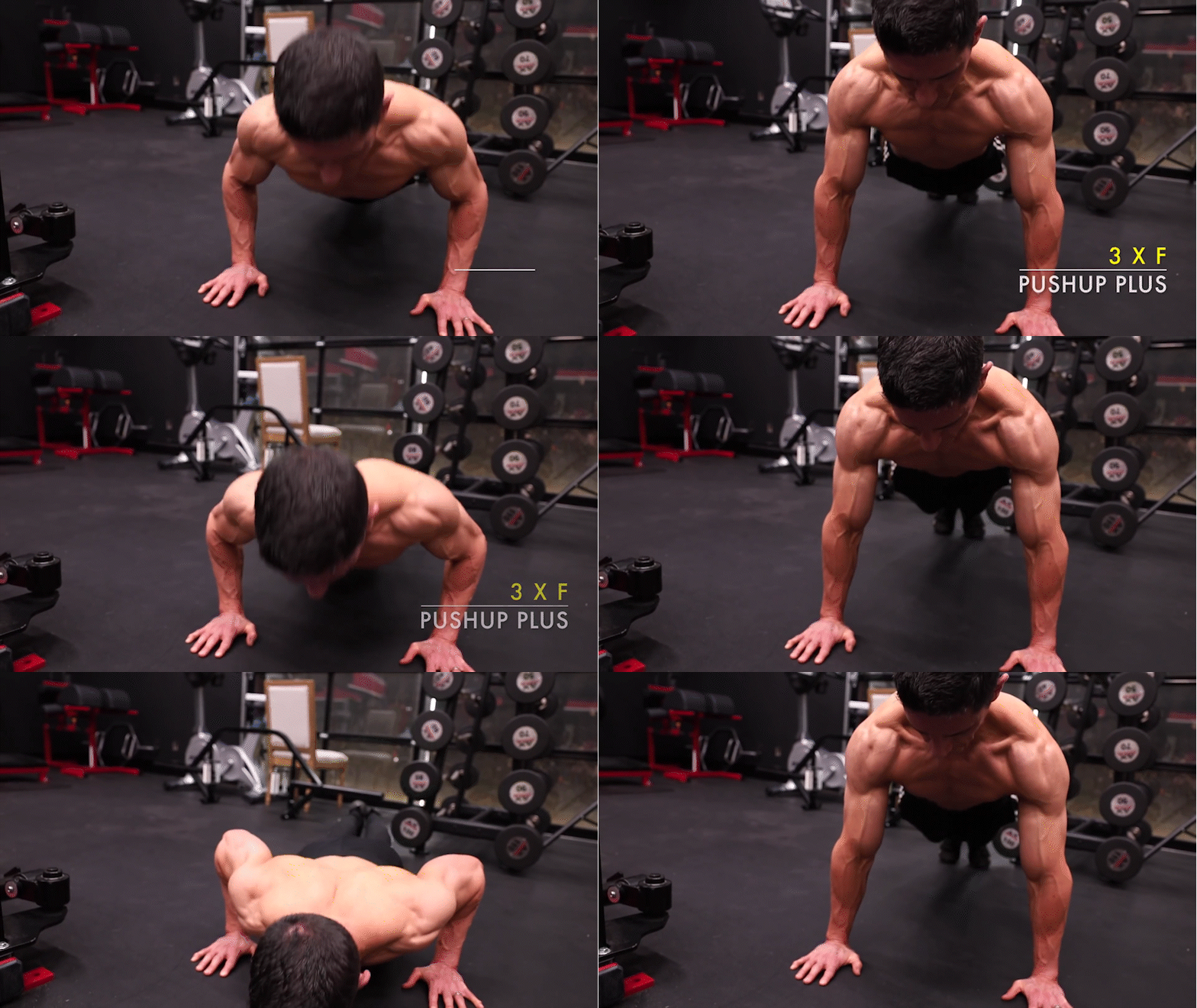
To conclude Push Two, we introduce the Pushup Plus exercise. This exercise serves a dual purpose—it enhances scapular control and provides additional stimulation to the chest muscles. Start in a pushup position and proceed to push through as hard as you can, allowing your shoulder blades to wrap around your body into protraction. This movement engages the serratus anterior muscles and promotes stability. Perform three sets to failure, focusing on proper mechanics and maintaining tension throughout the exercise.

Transition and Recap

Congratulations on completing the second push workout! Before moving on, let’s recap the exercises covered:

ExerciseSets and Reps
Overhead Barbell Press4 sets of 4-6 reps
Dumbbell Underhand Bench Press4 sets of 8-10 reps
Abduction Row3 sets of 8-10 reps
Dumbbell Floor Fly3 sets of 10-12 reps
Tricep and Bicep Superset
– Close Grip Bench Press3 sets of 6-8 reps
– Dumbbell Curl3 sets of 10-12 reps
Pushup Plus3 sets to failure

These exercises are part of the Push Two workout and aim to target the triceps, shoulders, and chest while promoting muscle growth and strength.

5 Steps to Bigger Arms in 30 Days (GUARANTEED!)

Unleash Your Sleeve-Filling Potential: A Comprehensive Guide by Fitness expert Jeff Cavaliere

Did you know that the average medium-sized T-shirt has a 4.6 inch diameter sleeve? That means you need a minimum of a 14-inch unflexed arm to fill it! And if you’re wearing a large or XL shirt, you’ll need even bigger arms to prevent that ugly bagginess.

If you’re tired of your shirts looking too loose and you want to change the way your arms look, it’s time to revolutionize your arm training. In this article, I will guide you through five essential steps to transform the effectiveness of your biceps and triceps workouts, ensuring bigger and more impressive arms in just 30 days. And to make it even better, I’ll provide you with a step-by-step routine that removes all the guesswork. Let’s dive in!

Step 1: Understanding the Sleeve-Filling Requirement

Before we delve into the specific steps, it’s crucial to understand the sleeve-filling requirement. You need to measure your arm size accurately to determine the minimum size needed to fill different shirt sizes. For example, a medium-sized shirt requires a 14-inch unflexed arm, while a large size necessitates a 15-inch unflexed arm. If you’re sporting an XL shirt, you’ll need almost 16-inch arms to avoid baggy sleeves.

Knowing these measurements gives you a clear goal to work towards. So grab a measuring tape and find out your current arm size. This way, you can track your progress and ensure you’re on the right path to achieving sleeve-filling arms.

Step 2: Avoiding the 5 Big Mistakes in Arm Training

To see significant gains in arm size, it’s crucial to address the common mistakes many people make in their biceps and triceps training. One of the most critical points to understand is that building arm strength alone won’t necessarily lead to bigger arms. While strength is important, it’s equally vital to intensify your arm workouts.

Instead of focusing solely on the weight you’re lifting, emphasize taking your sets to failure. Push yourself beyond your limits, using techniques like drop sets, run the rack, and mechanical drop sets. By taking each set to the point of failure and even beyond, you’ll maximize the effectiveness of your workouts and experience substantial gains in arm size.

Step 3: Eccentric Overload for Muscle Growth

Now let’s discuss the power of eccentric overload, a concept that can revolutionize your arm training. Eccentric overload refers to emphasizing the lowering phase of each repetition. By slowing down and controlling the lowering portion, you provide additional tension and stress to your muscles, leading to greater muscle growth.

Contrary to popular belief, controlled eccentric movements are incredibly safe when performed correctly. For example, in a lying tricep extension, you can enjoy a slow eccentric movement on the way down and safely drop the weight behind you if needed. Applying eccentric overload stretches and damages the muscles, stimulating them to grow back stronger and bigger.

To incorporate eccentric overload into your arm training, choose exercises that allow you to focus on the eccentric portion. This can include exercises like dumbbell curls, tricep pushdowns, or skull crushers. Remember, controlling the eccentric phase is key to maximizing muscle growth and achieving those coveted bigger arms.

Step 4: Don’t Forget the Brachialis Muscle

When it comes to arm training, many people solely focus on their biceps and neglect an essential muscle—the brachialis. The brachialis is a separate muscle located beneath the biceps, and developing it is crucial for achieving maximum arm size.

The brachialis plays a vital role in pushing up the biceps, contributing to the peak and overall width of the arm. If you want those shirt sleeves to be filled out properly, it’s time to incorporate brachialis exercises into your routine. Sprinkling in the occasional brachialis exercise won’t be sufficient; you need to make it a consistent part of your arm training.

To target the brachialis effectively, consider exercises like hammer curls or reverse curls. These movements isolate the brachialis and provide the stimulus necessary for its growth. By incorporating specific exercises that focus on the brachialis, you’ll achieve not only impressive bicep size but also enhanced arm width and fullness.

Step 5: Maximizing Tricep Growth

While biceps often steal the spotlight, neglecting your triceps can hinder your progress towards bigger arms. The triceps play a significant role in arm size and shape, and it’s crucial to provide them with dedicated training for optimal growth.

Although triceps receive indirect work from chest and shoulder exercises, direct tricep training is necessary to achieve maximum growth. While the triceps have the capacity to handle more volume than the biceps, adjustments in training need to be made to stimulate their growth effectively.

Incorporating bodyweight exercises can be an excellent way to maximize tricep growth. Push-ups, bench dips, and tricep extensions can significantly increase tricep volume and provide a different stimulus compared to traditional weightlifting exercises. These exercises can target different heads of the triceps and help achieve a more complete contraction or stretch.

Remember, high repetition ranges combined with proper form and intensity are key to maximizing tricep growth. Don’t be afraid to push yourself to failure during these exercises, as metabolic fatigue and intensity are crucial for hypertrophy gains.

Step-by-Step 30-Day Plan for Bigger Arms

Now that we’ve covered the essential steps to bigger arms, let’s put it all together into a comprehensive 30-day plan. This plan will guide you through specific workouts for biceps, triceps, and what we’ll call the “missing pieces” to ensure a well-rounded approach to arm training.

Biceps Workout:

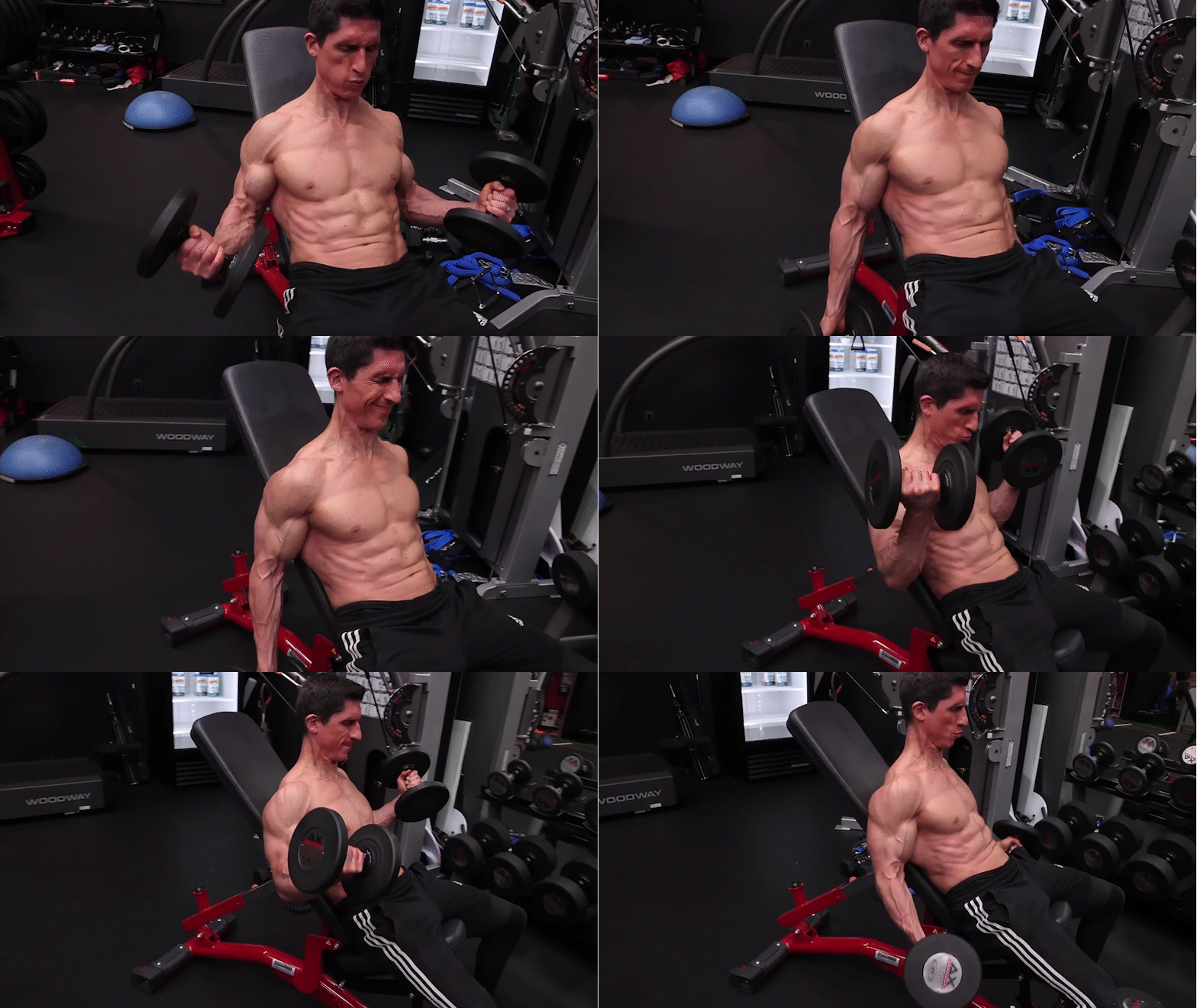
Incorporate exercises that emphasize intensity and eccentric overload. Perform exercises like incline dumbbell curls, concentration curls, or preacher curls. Use techniques such as drop sets, mechanical drop sets, or 21s to maximize the effectiveness of your sets. Aim for 3-4 sets per exercise, targeting the biceps from various angles.

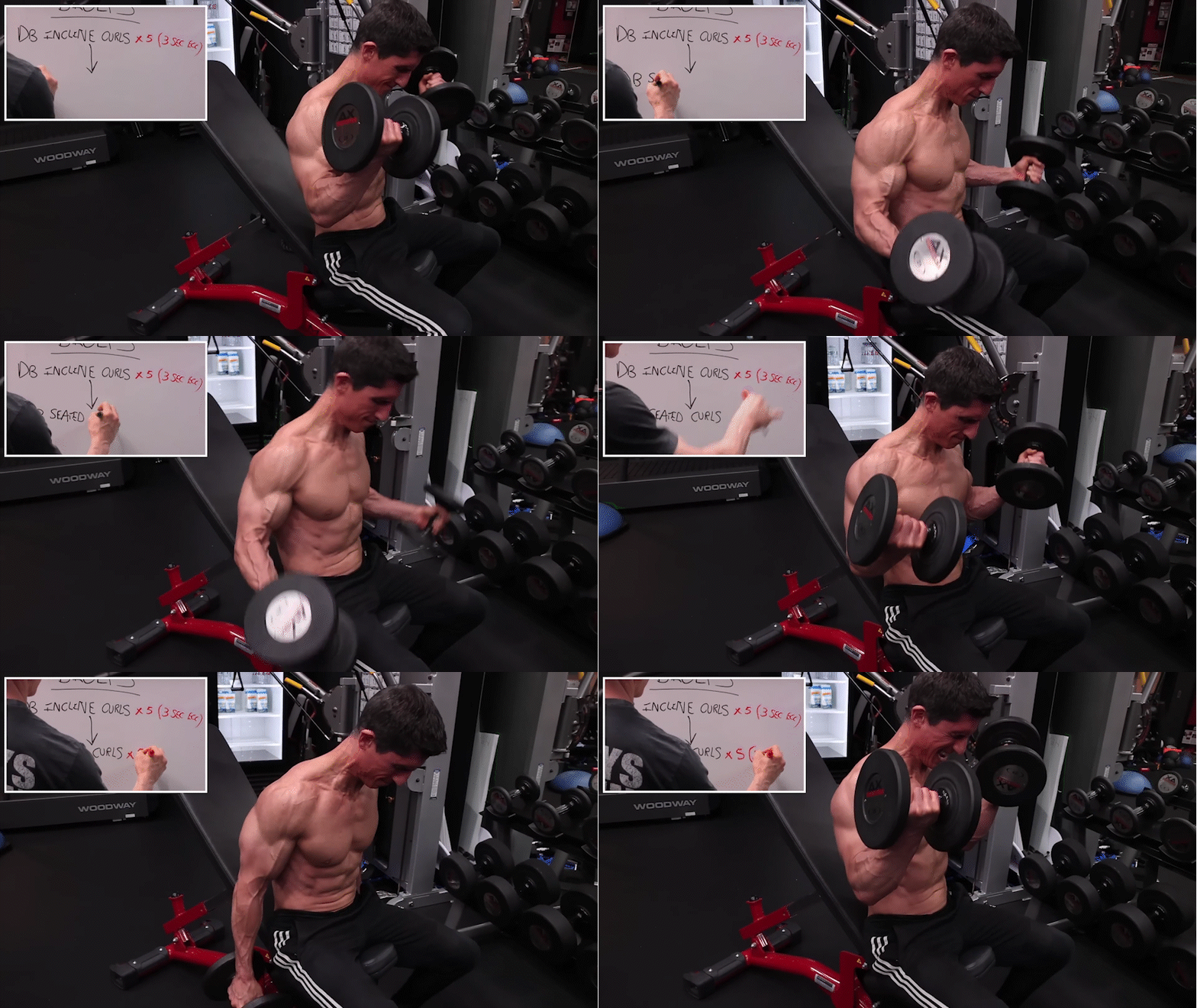
1A. DB Incline curls x 5 reps (20 seconds)

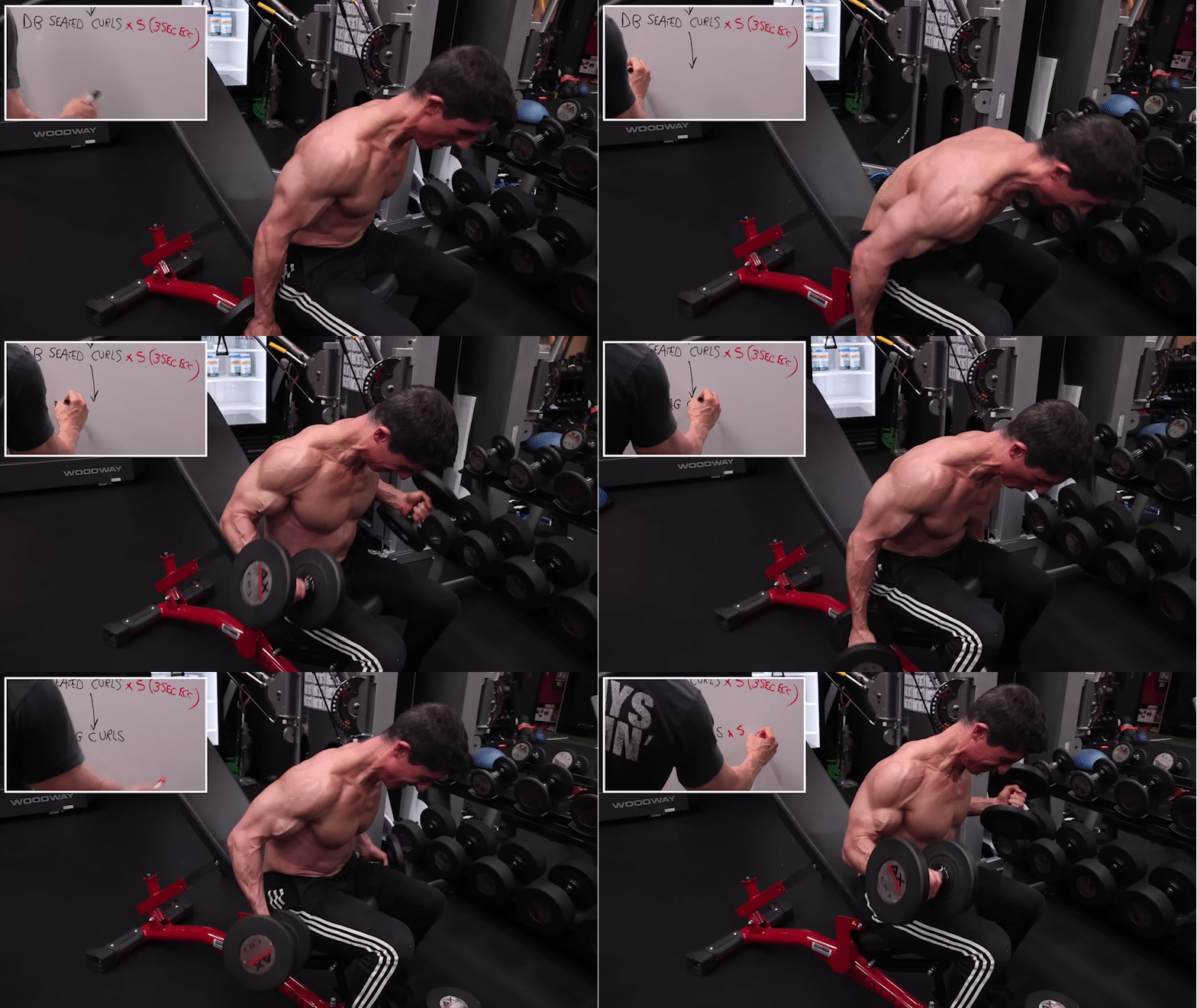
1B. Seated DB curls x 5 Reps (20 seconds)

1C. DB drag curls X 5 Reps (20 seconds)

Triceps Workout:

Focus on exercises that maximize the contraction and extension of the triceps. Include exercises like lying dumbbell extensions, tricep pushdowns, or dips. Utilize techniques like 21s to divide the range of motion into different sections. Perform 3-4 sets per exercise, aiming for a complete triceps workout.

1A. DB Incline extensions x 21*

1B. Incline DB kickbacks x 1 minute

1C. Eccentric only DB skull crushers x 1 minute

*Performed in 21 style (7 top rom/ 7 bottom rom/ 7 full rom

Missing Pieces Workout:

Incorporate exercises that target the brachialis and other supporting muscles. Include hammer curls, reverse curls, or brachialis-specific exercises. Perform 2-3 sets of brachialis exercises, ensuring a proper stimulus for growth.

Bodyweight triceps variation – 2-3 x F

Hammer curl variation – 3-4 x 10-12 rep failure

Conclusion

By following these five steps and implementing the 30-day plan, you are guaranteed to see noticeable gains in your arm size. Remember, consistency and dedication are key to achieving your desired results. Measure your progress, track your arm size, and continue to challenge yourself throughout the process.

Say goodbye to loose shirt sleeves and hello to sleeve-filling arms. With proper arm training techniques, you’ll achieve the impressive arm size you’ve always desired. So, roll up your sleeves, commit to the journey, and get ready to showcase your bigger and stronger arms to the world!