Visceral fat is the hidden threat most people never see coming. Unlike the soft layer of fat you can pinch around your waist, visceral fat is buried deep inside your abdominal cavity — silently wrapping itself around your liver, pancreas, and intestines. It doesn’t always show up dramatically on the scale, and it doesn’t always produce an obvious belly. But make no mistake: excess visceral fat is one of the most powerful predictors of early death, cardiovascular disease, type 2 diabetes, and cognitive decline currently known to medicine.
According to a 2024 analysis published in Nature Medicine, individuals with high visceral fat volume face a 34% greater risk of all-cause mortality compared to those with normal levels — independent of overall body weight. You can be clinically “normal weight” and still be metabolically sick.
The encouraging news? Visceral fat is also the most metabolically responsive fat in your body. It is the first to go when you apply the right interventions consistently. This guide breaks down exactly how to lose visceral fat using the mechanisms that science has validated — covering insulin dynamics, exercise strategy, fasting protocols, and the hormonal realities of aging.
What Makes Visceral Fat So Dangerous
Most people treat body fat as a passive storage system. Visceral fat is anything but passive.
Unlike subcutaneous fat, visceral adipose tissue functions as an active endocrine organ. It secretes pro-inflammatory cytokines — including TNF-alpha, IL-6, and resistin — that travel directly through the portal vein to the liver, triggering systemic inflammation and disrupting insulin signaling at the cellular level.
This is why visceral fat is categorically different from fat stored elsewhere:
- It impairs liver function by flooding hepatic tissue with free fatty acids
- It elevates LDL cholesterol and lowers HDL, accelerating arterial plaque formation
- It promotes chronic low-grade inflammation, a root driver of cancer, neurodegeneration, and autoimmune disease
- It disrupts hormonal balance, interfering with leptin, adiponectin, and cortisol regulation
A 2025 large-scale cohort study from the Mayo Clinic confirmed that waist-to-height ratio — a proxy for visceral fat — outperforms BMI as a predictor of metabolic syndrome in adults over 40.
The takeaway is simple: reducing visceral fat is not a cosmetic goal. It is a clinical priority.
The Insulin-Visceral Fat Feedback Loop
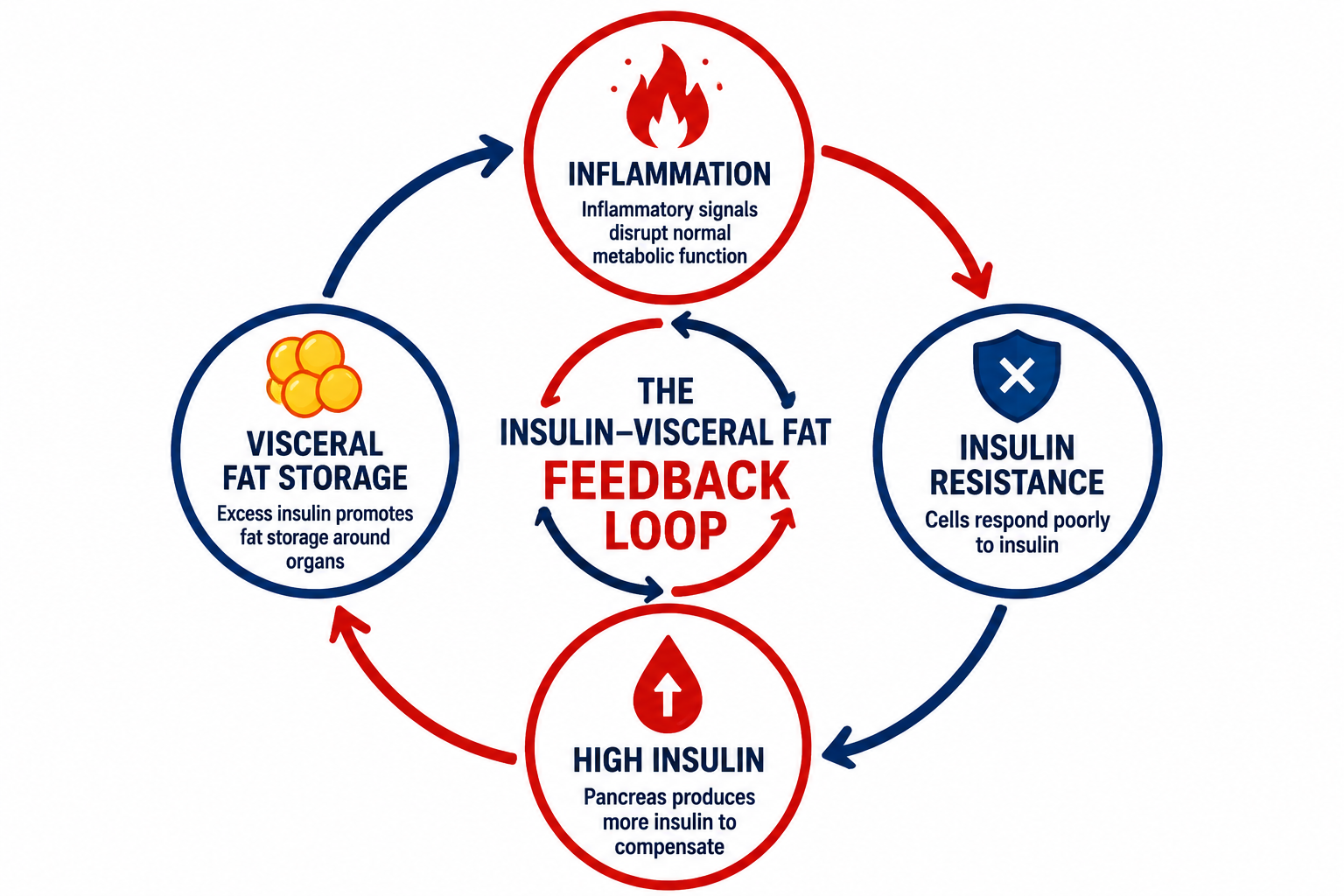
To understand how to lose visceral fat, you must first understand why it accumulates in the first place. At the center of the problem is insulin resistance — and the two conditions reinforce each other in a damaging cycle.
How Insulin Resistance Develops
Insulin is the hormone that acts as a “key,” unlocking cells so they can absorb glucose from the bloodstream. When cells are repeatedly flooded with glucose — from a diet high in refined carbohydrates and added sugars — they begin to downregulate their insulin receptors. The key stops fitting the lock as well.
The pancreas responds by producing more insulin to compensate. Chronically elevated insulin then signals the body to store energy preferentially in the visceral compartment. More visceral fat generates more inflammation. More inflammation worsens insulin sensitivity. The cycle accelerates.
The four-stage feedback loop:
- Visceral fat accumulates → releases inflammatory cytokines
- Inflammation disrupts insulin receptor signaling in muscle and liver
- Insulin resistance develops → pancreas overproduces insulin
- Hyperinsulinemia signals the body to store more visceral fat
Breaking this cycle requires simultaneous action on multiple fronts: reducing glucose spikes, improving cellular insulin sensitivity through exercise, and depleting glycogen stores through strategic fasting.
The Role of Glycogen
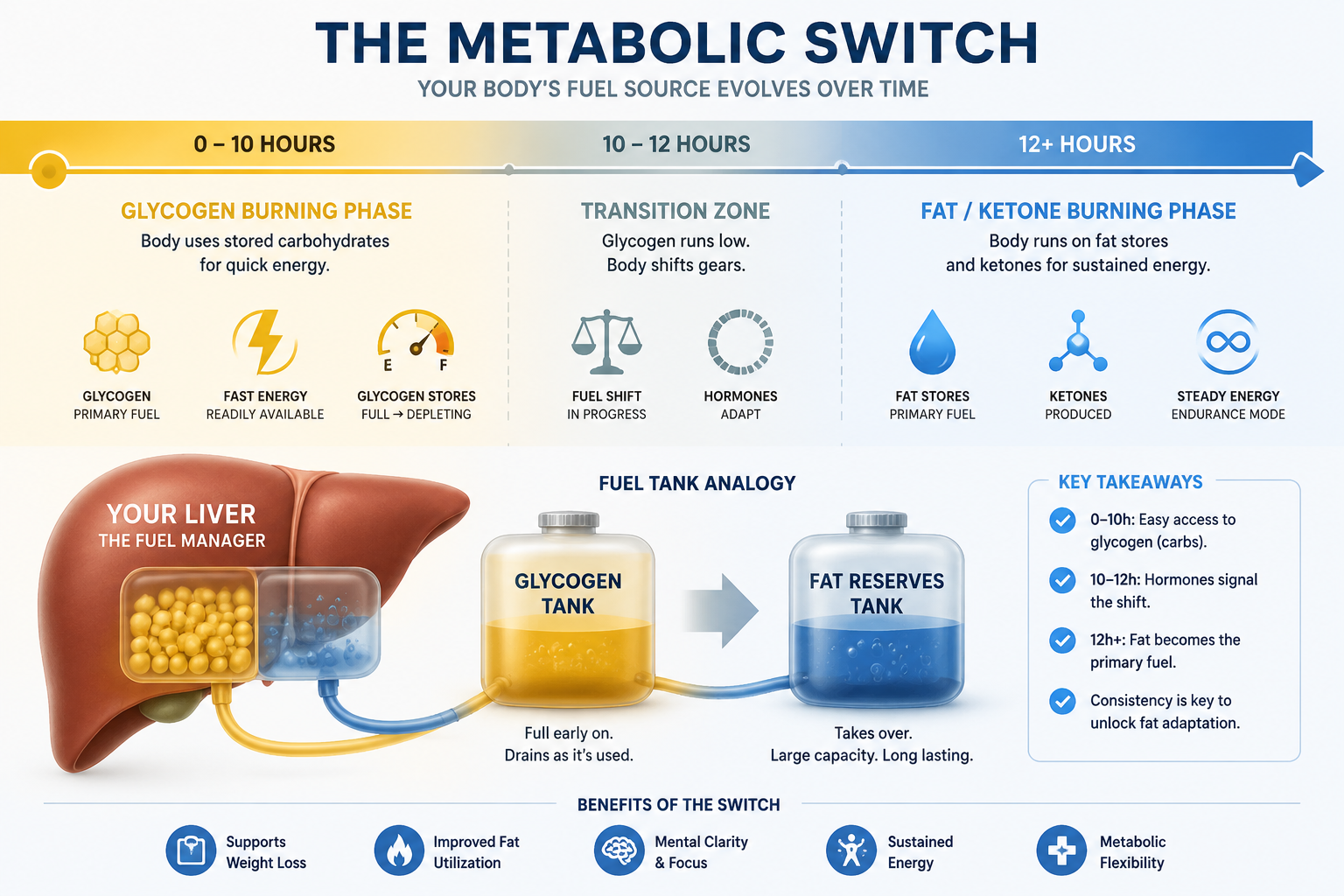
Your liver stores approximately 80–100 grams of glycogen — a readily available form of glucose. Your muscles store another 300–500 grams. Until these reserves are depleted, your body has little metabolic incentive to mobilize fat stores. This is why diet quality and meal timing matter as much as calorie quantity.
| Metabolic Factor | Healthy Function | When Disrupted |
|---|---|---|
| Glucose | Primary cellular fuel | Excess causes oxidative stress and insulin pressure |
| Insulin | Shuttles glucose into cells | Chronically high levels block fat oxidation entirely |
| Glycogen | Short-term energy reserve | Full stores prevent the shift to fat burning |
| Visceral Fat | Minimal protective padding | Excess drives inflammation and organ dysfunction |
Exercise: The Most Potent Tool for Losing Visceral Fat
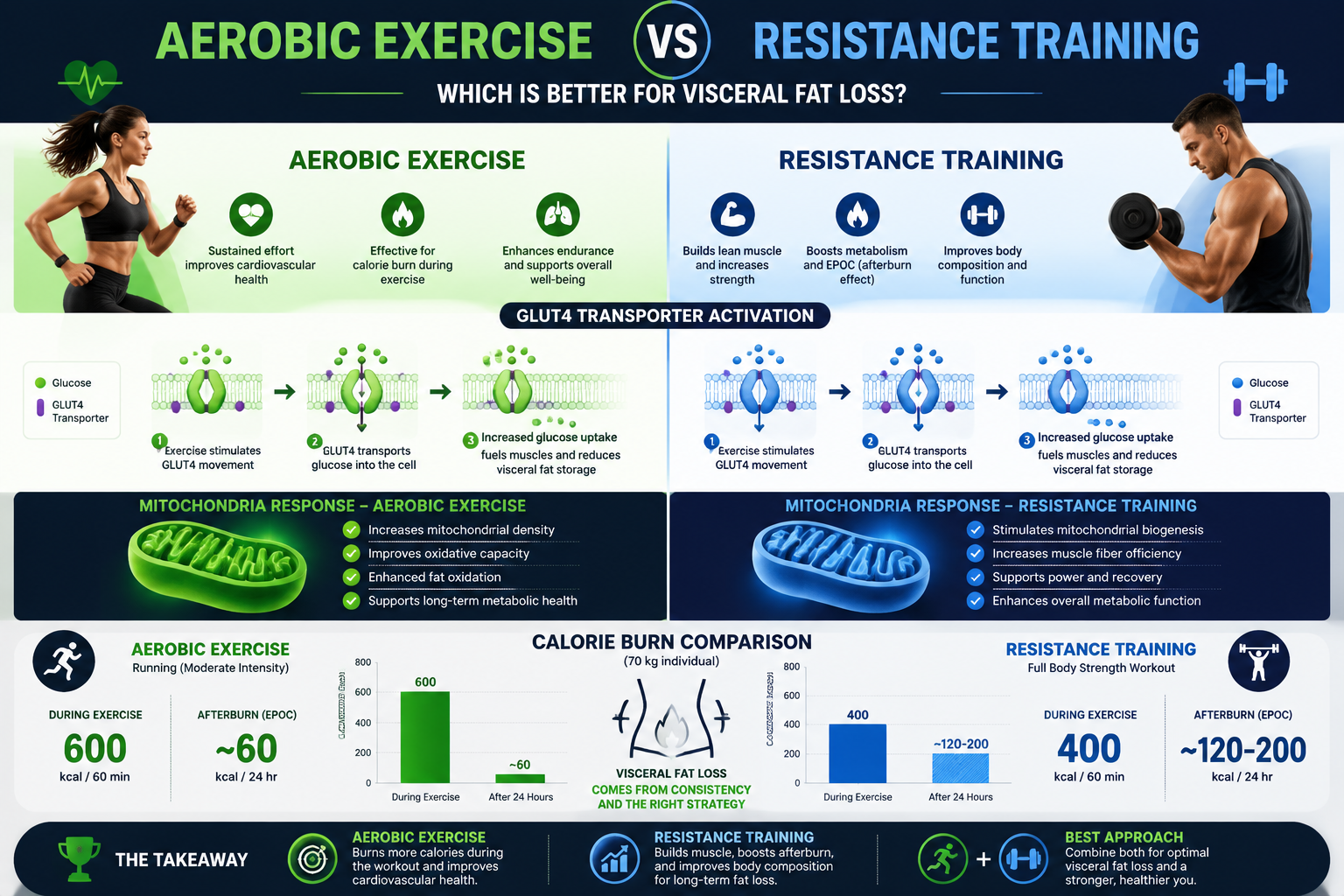
Not all exercise produces equal results when the specific goal is visceral fat reduction. The research here is clear and worth understanding in detail.
Why Aerobic Exercise Outperforms Resistance Training for Visceral Fat
A landmark 2023 meta-analysis in Obesity Reviews — covering 58 randomized controlled trials — confirmed that aerobic exercise produces significantly greater reductions in visceral adipose tissue than resistance training alone, even when total calorie burn is matched.
The mechanism is hormonal. Sustained aerobic work elevates catecholamines (epinephrine and norepinephrine), which directly stimulate lipolysis — the breakdown of fat — in visceral adipose tissue. Visceral fat has a higher density of beta-adrenergic receptors than subcutaneous fat, making it particularly responsive to this signal.
Effective aerobic modalities include:
- Running or brisk walking (especially incline walking for lower-impact options)
- Cycling, both outdoor and stationary
- Swimming, which adds the benefit of full-body resistance
- Rowing, which combines cardiovascular and muscular demand
Aim for a minimum of 150–180 minutes of moderate-intensity aerobic exercise per week, distributed across at least three sessions, to produce measurable visceral fat reduction within 8–12 weeks.
The HIIT Advantage: Speed and Insulin Sensitivity
High-Intensity Interval Training (HIIT) offers a time-efficient complement to steady-state cardio. A typical HIIT session — alternating 30–40 seconds of near-maximal effort with 60–90 seconds of recovery — activates a distinct set of adaptations:
- GLUT4 upregulation: Exercise contracts muscles and triggers GLUT4 transporters to move to the cell surface, allowing glucose uptake without insulin. This directly improves insulin sensitivity for 24–48 hours post-workout.
- EPOC (Excess Post-Exercise Oxygen Consumption): The metabolic “afterburn” from HIIT keeps calorie expenditure elevated for hours after the session ends.
- Mitochondrial biogenesis: Repeated high-intensity bouts stimulate PGC-1alpha, a protein that drives the creation of new mitochondria — increasing your cells’ capacity to oxidize fat over time.
For individuals managing sleep deprivation — which independently causes insulin resistance — even two HIIT sessions per week have been shown to partially counteract those negative metabolic effects.
Protecting Muscle While Burning Fat
Aerobic work burns visceral fat. Resistance training protects the muscle you need to keep your metabolism elevated long-term. Both are necessary.
When operating in a caloric deficit, the body will cannibalize muscle tissue for energy if not given a reason to preserve it. Resistance training provides that signal. Combine it with adequate protein intake — 1.6 to 2.2 grams per kilogram of body weight daily — to prevent muscle loss during fat reduction phases.
Intermittent Fasting and the Metabolic Switch
One of the most powerful strategies for how to lose visceral fat is learning to trigger what researchers call the “metabolic switch” — the physiological transition from burning glucose to burning fatty acids and ketones.
How the Switch Works
After roughly 10 to 14 hours of fasting, liver glycogen stores become sufficiently depleted that the body begins mobilizing free fatty acids from adipose tissue. The liver converts these fatty acids into ketone bodies — beta-hydroxybutyrate, acetoacetate, and acetone — which serve as an alternative fuel for the brain, heart, and muscles.
This state is not only effective for fat loss; it carries additional benefits:
- Reduced neuroinflammation: Beta-hydroxybutyrate inhibits the NLRP3 inflammasome, a key driver of brain inflammation linked to Alzheimer’s disease
- Improved mood and focus: Ketones increase GABA production, an inhibitory neurotransmitter that reduces anxiety and mental noise
- Cellular autophagy: Fasting activates autophagy — the body’s cellular “cleanup” process — which degrades damaged proteins and organelles that accumulate during constant fed states
The 16:8 Protocol in Practice
A 16:8 intermittent fasting schedule — fasting for 16 hours and eating within an 8-hour window — is one of the most research-supported approaches for visceral fat reduction. A 2022 clinical trial in Cell Metabolism found that participants following time-restricted eating reduced visceral fat by an average of 4.3% over 12 weeks without explicitly counting calories.
Practical implementation tips:
- Finish your last meal by 7–8 PM and break your fast at 11 AM–12 PM the following day
- Black coffee and plain tea do not break a fast and may enhance fat oxidation during the fasting window
- Ease into it — start with a 12-hour fast and extend by 30 minutes every few days if you are new to fasting
Fasted Cardio: Worth Considering
Performing aerobic exercise in the fasted state — before breaking the overnight fast — may enhance fat oxidation during the session by ensuring glycogen stores are already partially depleted. Research results are mixed, but for individuals who feel energetically capable, fasted morning cardio is a legitimate strategy. If performance suffers significantly, a small protein-only intake (20–30g) before training is a reasonable compromise.
Hormonal Realities: Why Age Makes Visceral Fat Harder to Lose
Understanding how to lose visceral fat in your 40s, 50s, and beyond requires acknowledging the hormonal environment that changes with age — for both men and women.
Women: The Menopause Transition
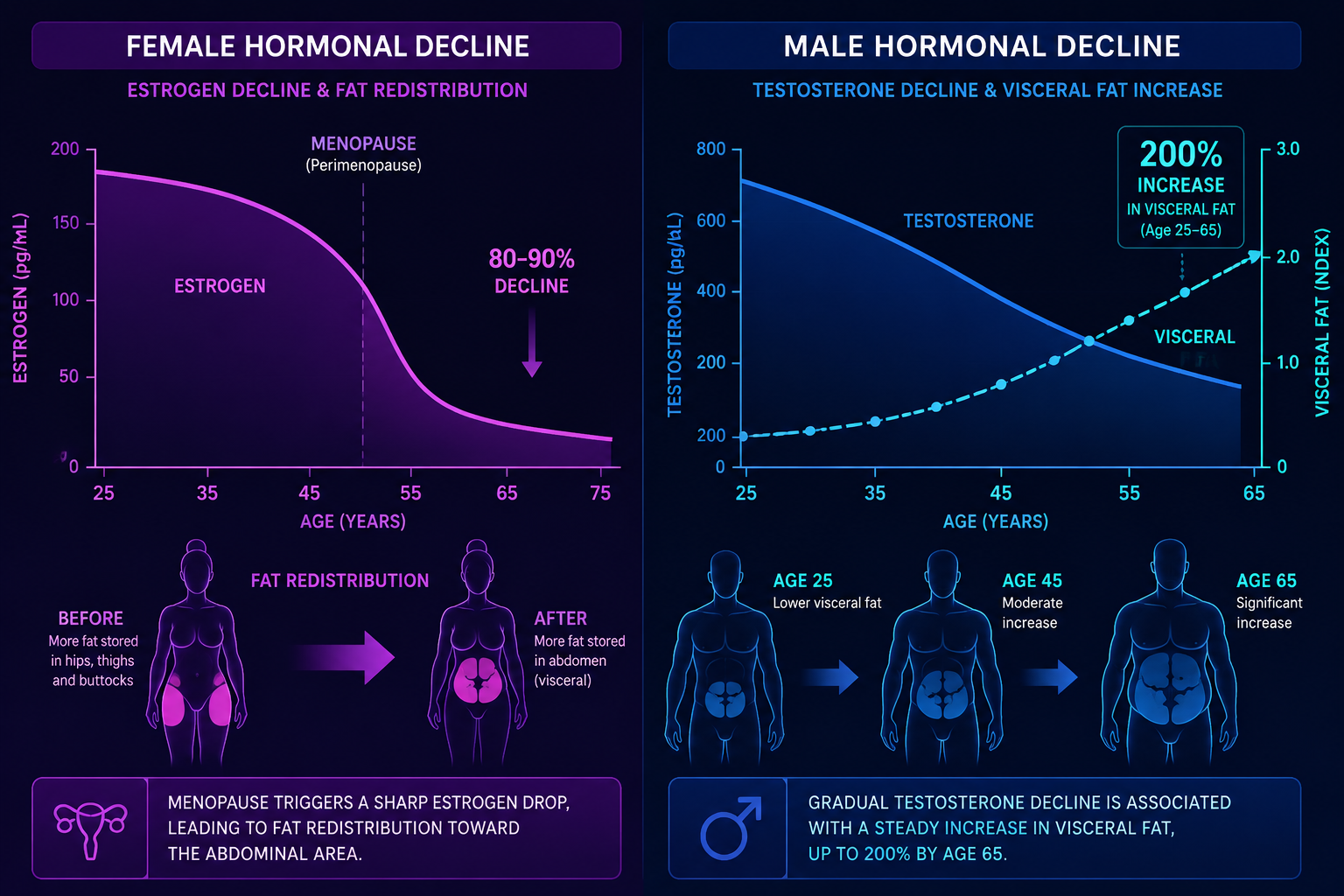
The SWAN (Study of Women’s Health Across the Nation) — one of the most comprehensive longitudinal studies of female midlife health — found that women experience an 8–10% annual increase in visceral fat beginning approximately two years before their final menstrual period.
Estrogen plays a critical role in directing fat storage toward the hips and thighs (subcutaneous). As estrogen declines during perimenopause and menopause, this directional signal disappears. Fat storage defaults to the visceral compartment. Women who were metabolically healthy in their 30s can develop significant visceral fat accumulation within just three to five years of menopause onset — without any significant change in caloric intake.
Strategies that show particular benefit for postmenopausal women include:
- Higher-intensity aerobic exercise (which partially compensates for the loss of estrogen’s metabolic benefits)
- Resistance training to preserve lean mass and maintain resting metabolic rate
- Discussing hormone therapy options with a qualified physician, as estrogen replacement has been shown in multiple studies to attenuate visceral fat accumulation post-menopause
Men: Testosterone Decline and the 200% Problem
Men face a different but equally significant hormonal challenge. Testosterone — which facilitates fat oxidation, muscle protein synthesis, and metabolic rate — peaks in the late 20s and declines by approximately 1% per year from age 30 onward.
Research tracking men from age 25 to 65 has documented a 200% increase in visceral fat volume over that period — even in men whose total body weight remained stable. This means visceral fat can triple while the scale barely moves, a phenomenon sometimes called “weight-stable metabolic drift.”
Testosterone’s role in visceral fat metabolism is direct: it upregulates beta-adrenergic receptor sensitivity in adipose tissue and promotes lean mass retention, both of which support fat oxidation. As levels fall, these protective effects diminish.
Lifestyle interventions that support healthy testosterone levels include:
- Resistance training (particularly compound lifts like squats and deadlifts)
- Adequate sleep (7–9 hours; testosterone is primarily synthesized during deep sleep stages)
- Zinc and vitamin D sufficiency, both of which are co-factors in testosterone biosynthesis
- Stress management, since chronically elevated cortisol directly suppresses testosterone production
Your Visceral Fat Reduction Protocol: A Practical Framework
Combining all of the above into a sustainable, week-by-week approach is where most people struggle. Here is a concrete framework to start with:
Weekly Exercise Structure
| Day | Activity | Duration |
|---|---|---|
| Monday | Aerobic (moderate intensity) | 40–50 min |
| Tuesday | Resistance training | 45 min |
| Wednesday | HIIT | 20–25 min |
| Thursday | Active recovery (walking) | 30 min |
| Friday | Aerobic (moderate intensity) | 40–50 min |
| Saturday | Resistance training | 45 min |
| Sunday | Rest or light movement | — |
Non-Negotiable Dietary Habits
- Eliminate liquid sugars entirely — sodas, fruit juices, and sweetened coffees produce rapid glucose spikes that drive the insulin-visceral fat cycle
- Prioritize protein at every meal — target 30–40g per sitting to maximize muscle protein synthesis and satiety
- Eat fiber-rich vegetables first — this slows glucose absorption and reduces post-meal insulin response
- Limit ultra-processed foods — they are engineered to override satiety signals and consistently associate with higher visceral fat volumes in epidemiological data
Lifestyle Factors That Multiply Results
- Sleep 7–9 hours per night — a single night of poor sleep (under 6 hours) raises cortisol and ghrelin, both of which promote visceral fat storage
- Manage chronic stress actively — elevated cortisol is a direct driver of visceral adiposity, even in a caloric deficit
- Track waist circumference, not just weight — a waist measurement above 35 inches (women) or 40 inches (men) is a clinical risk threshold worth monitoring monthly
The Bottom Line
Visceral fat is dangerous, pervasive, and largely invisible — but it is not inevitable. The science is unambiguous: aerobic exercise, time-restricted eating, insulin sensitivity training, and hormonal awareness form the most evidence-based combination for reducing visceral fat efficiently.
Start with what you can control today. Extend your overnight fast to 12 hours. Add three aerobic sessions to your week. Eliminate liquid sugar. These are not dramatic interventions — but applied consistently over 8 to 12 weeks, they produce measurable, clinically meaningful reductions in the fat that matters most.
Your organs are worth the effort.
This article references insights from Dr. Rhonda Patrick’s research communications and incorporates peer-reviewed literature current to 2025–2026. Always consult a qualified healthcare provider before making significant changes to your diet or exercise regimen.
