Last updated: November 23, 2026
Quick Answer
For most lifters over 40, the best weightlifting gloves combine a fingerless design, moderate (not thick) palm padding, a mesh or stretch back for airflow, and an integrated wrist wrap you can tighten on press days. Expert roundups updated through late 2026 repeatedly favor Harbinger Pro Wristwrap and Training Grip 3.0, Skott Evo 2, Trideer, Ihuan Ventilated, and Schiek Platinum for exactly that combination [1][2][3][4][5]. Skip gloves entirely for max-effort deadlifts, where chalk and bare-hand feedback beat any fabric layer.
Key Takeaways
- Fingerless + thin palm wins. Thick foam feels plush but increases bar diameter and makes grip work harder.
- Wrist wraps matter more after 40 on bench, overhead press, and front-rack work, not on pulls.
- Breathability beats padding for long sessions; Harbinger Training Grip 3.0 is widely called the best for ventilation [2][5].
- Gloves ≠ straps. Gloves protect skin; straps carry load; wraps brace joints. Different jobs.
- Expect roughly $15,$45 for solid gloves, with premium leather models running higher.
- Slipping and bunching usually mean the glove is a size too big or the padding is too thick.
- Arthritic hands do better with compression-style stretch fabric and gel palms than stiff leather.
- Replace gloves when the palm goes slick or seams split, typically every 6-12 months for 3-4 sessions a week.
What Features Should I Look For in Weightlifting Gloves Over 40?
Prioritize four things in order: palm grip material, wrist support, breathability, and fit. Padding is the least important feature despite being the most marketed.
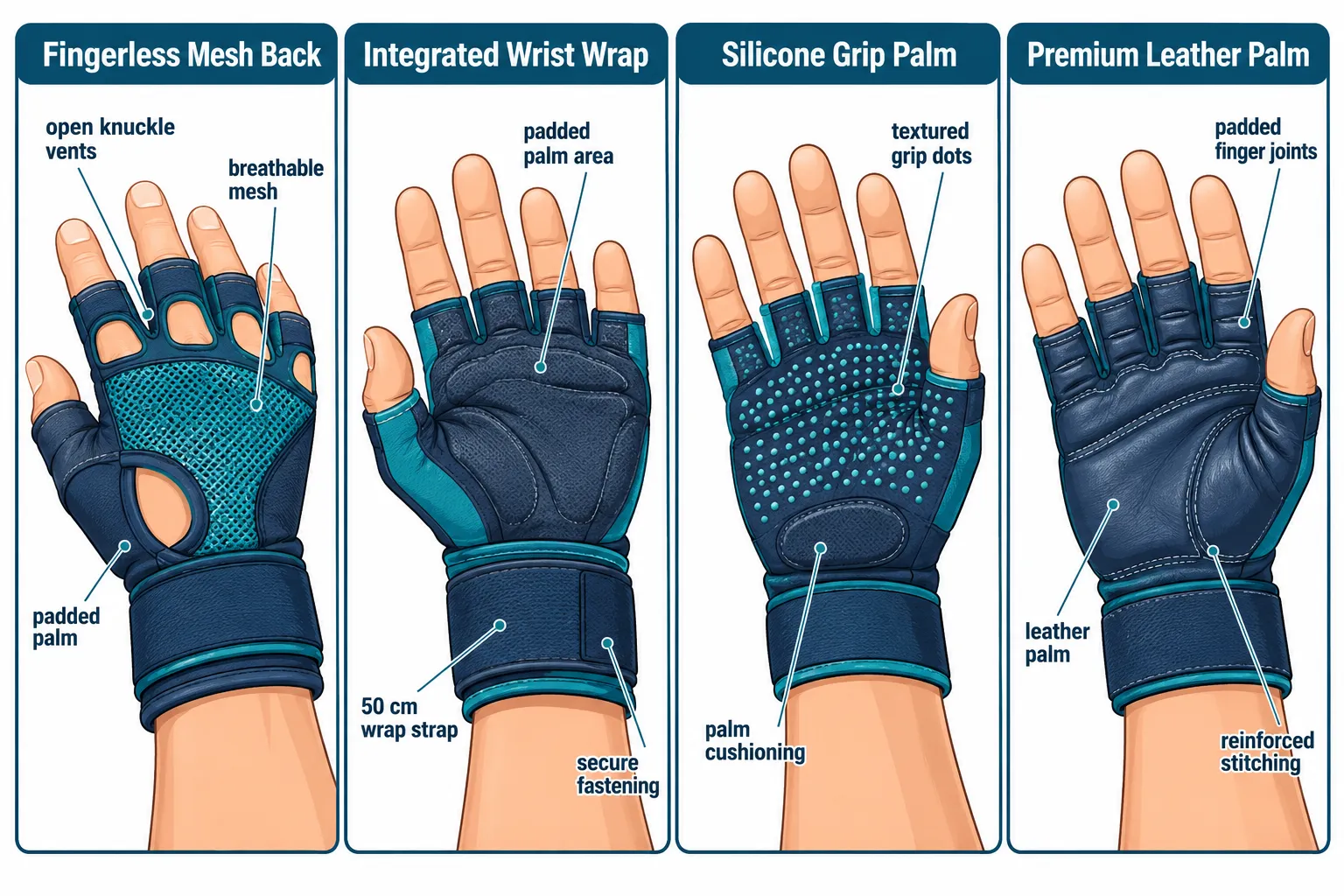
- Palm surface: Silicone grip dots (Trideer) or Amara/leather (Schiek Platinum) hold a knurled bar better than smooth synthetic [5].
- Padding depth: Thin gel or TechGel. Anything over ~5 mm reduces bar feel and encourages a sloppy, open grip.
- Wrist wrap: Look for a strap you can adjust per exercise. Harbinger Pro Wristwrap and Skott Evo 2 use long wraps (up to about 50 cm) for pressing stability [3][4][6].
- Back of hand: Mesh or StretchBack panels. Older skin and joints overheat and swell faster in sealed neoprene [2][5].
- Pull-tabs: Finger loops on the palm make sweaty gloves removable without a fight.
Decision rule: If your sessions run over 60 minutes or you train in a warm room, choose breathability over padding every time.
Do You Actually Need Gloves for Weightlifting, or Just Wrist Support?
Gloves are optional; wrist support is situational. If your only problem is callus tearing or bar bite, a thin fingerless glove fixes it. If your problem is wrist pain under a loaded bar, a dedicated wrist wrap does more than a glove ever will.
Gloves help most when:
- Calluses tear or skin splits on high-rep barbell and dumbbell work
- Rubberized band handles chafe during banded rows and pull-aparts
- Kettlebell handles are rough or rusty
- You're coming back from a long break and skin hasn't adapted
Gloves hurt performance when:
- Pulling near-maximal deadlifts (fabric rolls, bar sits deeper in the fingers)
- Doing barbell cleans, where bar-to-hand feedback guides the turnover
- Doing heavy kettlebell swings, where a thick palm forces an over-tight grip
A glove that makes your hand feel protected but your grip feel vague is a glove that's too thick.
Weightlifting Gloves vs Wrist Wraps vs Straps: Which Is Best?
Different tools, different jobs. Use gloves for skin, wraps for joints, straps for load.
| Tool | Main job | Best for | Weakness |
|---|---|---|---|
| Fingerless gloves | Skin and callus protection, light grip texture | Dumbbells, machines, bands, pull-ups, kettlebells | Minimal joint support; can slip if oversized |
| Wrist wraps | Brace wrist extension under load | Bench, overhead press, front squat | No skin or grip help |
| Lifting straps / Cobra Grips | Transfer load off the fingers | Heavy deadlifts, shrugs, rows, pull work [6] | Masks grip weakness; not for pressing |
| Wrist-wrap gloves (hybrid) | Both skin and wrist in one | General gym training over 40 [3][4] | Compromise on both vs dedicated gear |
Choose hybrids if you do a mixed bodybuilding-style program. Choose separates if you powerlift and need stiff competition wraps.
Are Lifting Gloves Different for Powerlifting Versus Bodybuilding?
Yes. Powerlifters use gloves rarely and prefer stiff, dedicated wrist wraps plus bare hands with chalk on pulls. Bodybuilders are the main glove users because higher rep ranges, machine handles, and longer sessions make skin comfort the limiting factor.
- Powerlifting: Separate wrist wraps for bench and squat; nothing on the deadlift bar.
- Bodybuilding / hypertrophy: Harbinger Pro Wristwrap is widely favored for pull days and pressing where grip plus wrist stability both matter [4][7].
- CrossFit and mixed training: Rogue Mechanix V2 and Skott Evo 2 are repeatedly named top CrossFit picks; Glofit Freedom is recommended for pull-ups and bar work [1][3][4][5][7].
Best Weightlifting Gloves for People With Arthritis or Joint Pain
For arthritic or sore joints, the priority is compression plus warmth plus a low-profile gel palm, not thick cushioning. Stretchy compression-style wrist-support gloves (now widely stocked by major retailers, including smartwatch-compatible versions) keep the joint warm without locking it rigid [8][9].
Practical picks and why:
- Harbinger Pro Wristwrap 3.0, adjustable wrap lets you loosen for curls, tighten for press [2][4]
- Schiek Platinum, padded finger joints reduce pressure points on thin skin [5]
- Trideer, silicone grip means less squeeze force needed to hold the bar [5]
Edge case: Thumb-base (CMC) arthritis responds better to a thumb-spica style brace than any gym glove. Gloves cover the palm, not the thumb joint.
Why Do My Lifting Gloves Slip or Bunch Up During Heavy Lifts?
Slipping and bunching almost always trace to three causes: the glove is too large, the palm padding is too thick, or the palm material is sweat-saturated. Sizing down one and switching to a silicone or Amara palm fixes most cases.
Troubleshooting order:
- Check the fit, if you can pinch loose fabric across the palm, it's too big.
- Check padding, thick foam migrates under load and forms a ridge across the base of the fingers.
- Check moisture, smooth synthetic palms turn slick when wet. Silicone-dotted palms stay grippy [5].
- Check the lift, if it only happens on deadlifts, the glove isn't the problem. Use straps or bare hands.
Which Weightlifting Gloves Have the Best Grip on Wet Barbells?
Textured silicone or genuine leather palms perform best on a damp bar. Grip Power Pads Elite leather gloves, Trideer's silicone-grip palms, and Mechanix gloves are consistently ranked "best grip" or "heavy-duty" across expert lists for barbell and dumbbell work while still allowing reasonable bar feel [1][3][5][7][10].
Quick rules for sweaty-hand lifters:
- Wipe the bar before every set; no glove rescues a wet knurl.
- Avoid smooth neoprene palms entirely.
- Fingerless designs dry faster between sets than full-finger.
- Carry a second pair for long sessions; swapping beats squeezing a soaked glove.
Most Breathable Weightlifting Gloves for Summer and Hot Weather
For hot-weather training, pick fingerless gloves with a mesh or stretch-knit back and perforated palm. Harbinger Training Grip Gloves 3.0 is singled out as best for breathability thanks to its StretchBack ventilation, and RIMSports and other mesh-back designs are praised for back-of-hand airflow [2][5]. Ihuan Breathable Fingerless gloves are also named a top all-around ventilated pick [1][3].
Breathability checklist: open knuckles, perforated or micro-holed palm, no full neoprene wrist cuff, washable fabric, and a hang loop so they actually dry between sessions.
How Tight Should Weightlifting Gloves Fit and What Size Do I Need?
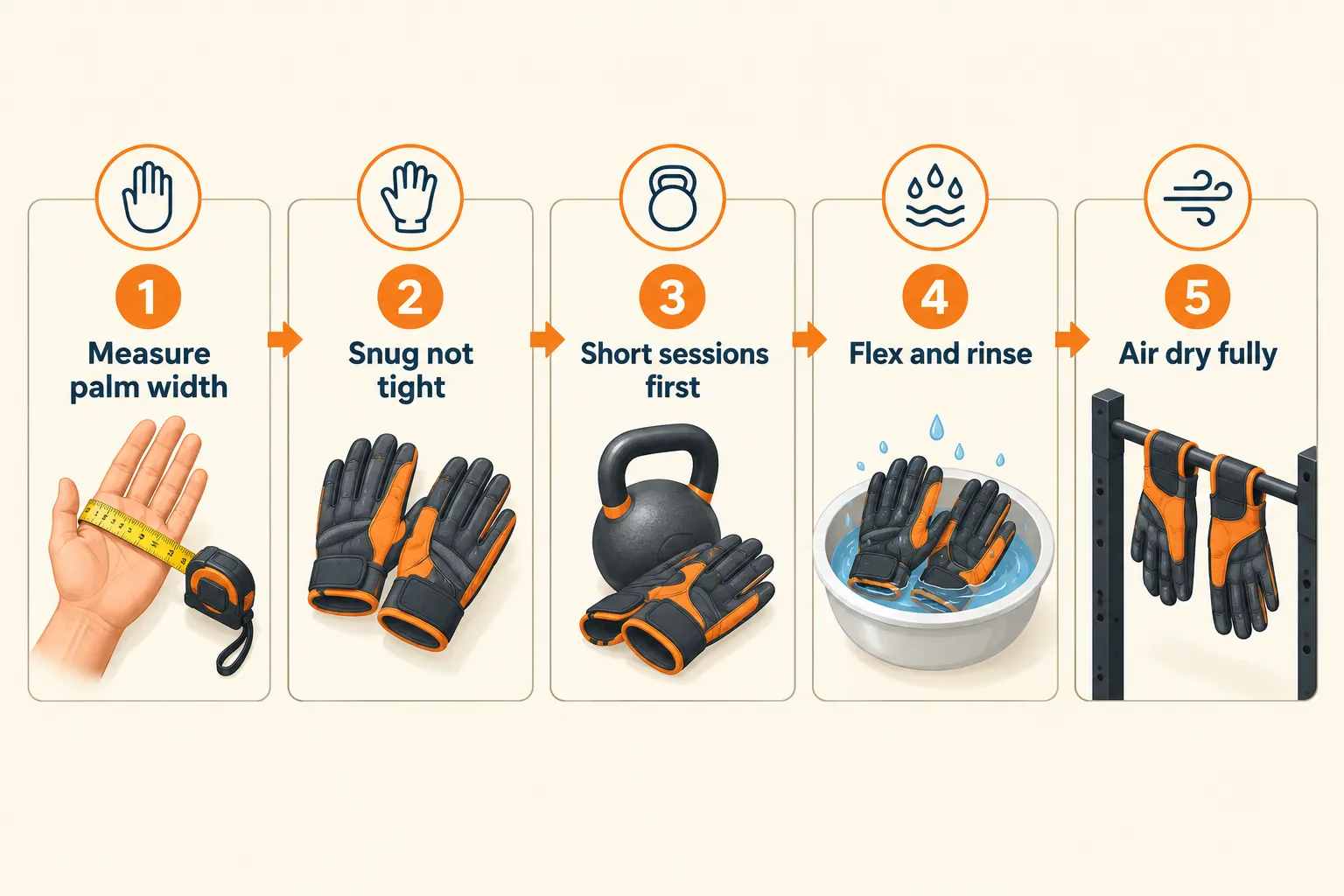
Gloves should fit snug like a second skin with no loose palm fabric, but loose enough to fully close your hand without the back panel pinching. Measure across your palm at the knuckles (excluding the thumb) in inches, then match the brand's chart.
- Rough guide: 7-8 in = S, 8-9 in = M, 9-10 in = L, 10+ in = XL (always check the specific brand).
- When between sizes, size down for synthetic/stretch fabric, up for stiff leather that will stretch.
- Fingerless gloves should leave about a finger's width of exposed finger, not a half-inch gap.
Best Weightlifting Gloves for Large Hands and Grip Strength
Large-handed, strong-gripping lifters do best in leather or Amara palms with reinforced stitching and XL/XXL sizing, Schiek Platinum, Grip Power Pads Elite, and Mechanix Original all scale up well and resist seam blowout [1][5][7]. For very heavy deadlifts and pull work, Cobra Grips are the recommended alternative to any glove [6].
How to Break In New Lifting Gloves Without Destroying Your Hands
Break them in over three to four sessions on light-to-moderate work before using them for heavy pressing. New leather and stiff synthetics create hot spots exactly where calluses already sit.
- Wear them at home for 10-15 minutes, opening and closing your fist.
- Use them for machines, bands, and cable work first, low shear, moderate load.
- Add dumbbells and kettlebells in session two or three.
- Stop at the first hot spot; a blister under a glove heals slower than a callus.
- Air-dry fully between uses. Damp leather hardens and rubs.
How Much Should You Spend on Quality Lifting Gloves?
Budget roughly $15,$25 for a solid everyday fingerless pair, $25,$45 for wrist-wrap hybrids, and above that for premium leather. ATERCEL is repeatedly listed as a credible budget pick for machines and pull-ups without wrist support, while premium designs like Schiek Platinum justify their price with Amara leather palms and padded finger joints [3][5].
Spend more only if you train 4+ times a week, need the wrist wrap, or have hand sizes/joint issues that cheap one-shape-fits-all gloves don't accommodate.
How Often Should You Replace Lifting Gloves?
Replace gloves when the palm turns slick, seams split, padding compresses flat, or the wrist strap stops holding tension. For someone training three to four times a week, that's commonly 6 to 12 months; heavy barbell users wear through palms faster.
Replace immediately if: the palm has a hole over a callus, the Velcro no longer bites, or the glove smells persistent after washing (bacteria in the lining can irritate skin).
Why Do Wrist Support Gloves Cause Wrist Pain or Numbness?
Numbness or aching almost always means the wrap is too tight, positioned over the wrist crease instead of just above it, or left cinched for the entire session. The strap compresses the median nerve and the ulnar side of the wrist when overtightened.
Fix it in three steps:
- Reposition the wrap 1-2 cm above the wrist crease, toward the forearm.
- Tighten only for the working set, then release between sets.
- Loosen or remove for curls, rows, and pulldowns, those lifts don't need wrist bracing.
If tingling persists after loosening, stop using the wrap and get the wrist assessed. Gloves don't treat carpal tunnel syndrome.
Training Use Cases: Matching Gloves to Bands, Dumbbells, Kettlebells, and Pull-Ups
Match the glove to the implement. Expert rankings from November 2026 group picks by lift type for this reason [3].
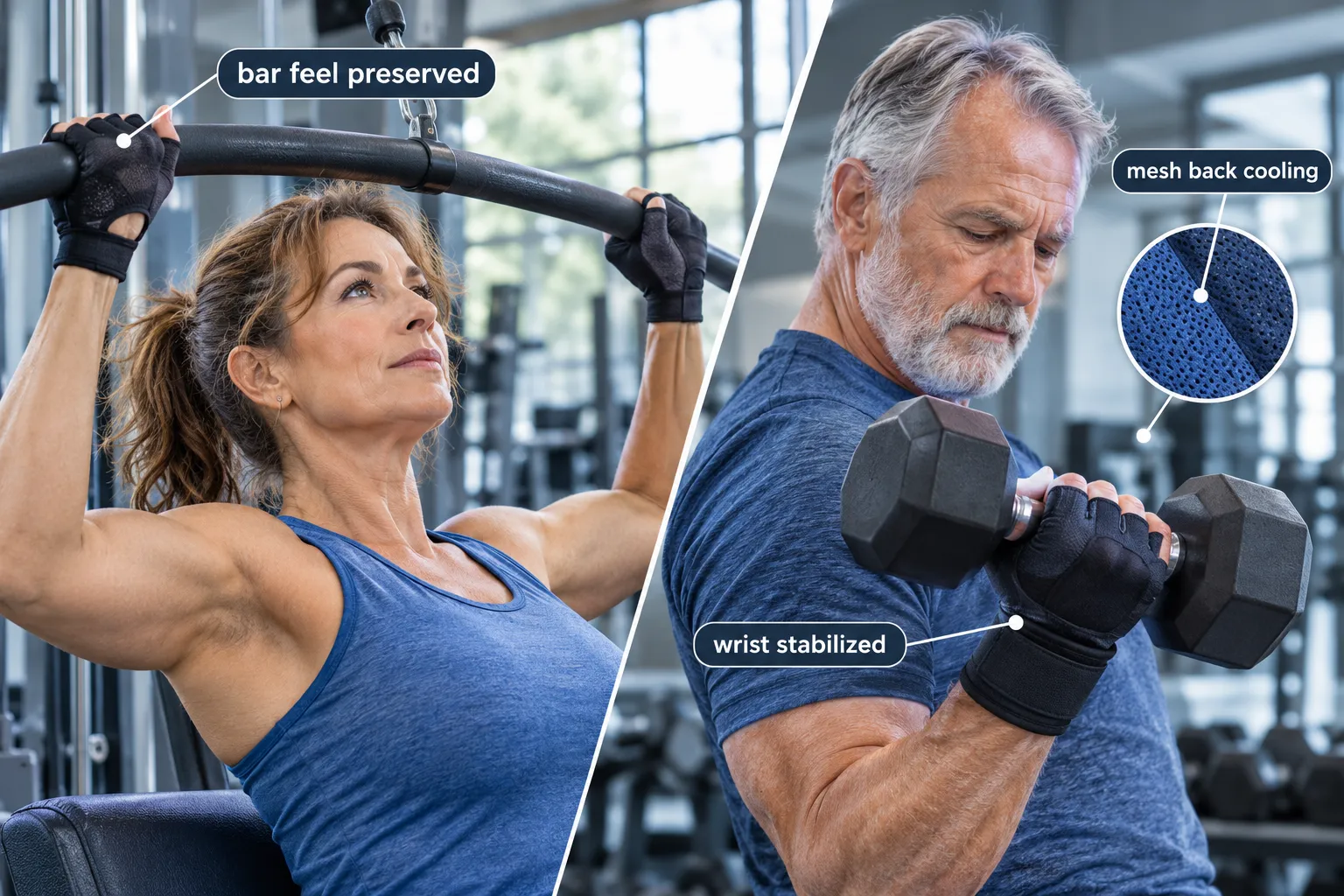
- Resistance bands: Thin fingerless gloves stop handle chafe without dulling tension feedback.
- Dumbbells and machines: Budget fingerless gloves (ATERCEL) are enough; no wrist wrap needed [3].
- Kettlebells: Minimal padding only. Thick palms force a crushing grip and cause forearm fatigue.
- Pull-ups and lat work: Glofit Freedom is specifically highlighted for pull-ups and machine work [3][4].
- Bench and overhead press: Wrist-wrap hybrids such as Skott Evo 2, scored 4.7/5 as best overall for pressing in Total Shape's November 2026 ranking [3].
- Cleans and front squats: Ihuan Ventilated gloves, rated 4.6/5 for exactly this use [3].
FAQ
Do lifting gloves weaken your grip?
Only indirectly. Thick padding increases effective bar diameter and can mask grip fatigue, so pair glove use with some bare-hand or strapless grip work each week.
Fingerless or full-finger?
Fingerless for nearly all strength training, better airflow, better bar feel. Full-finger mainly for cold garage gyms or very rough handles.
Can gloves replace chalk?
No. Chalk reduces moisture; gloves add a layer. On near-max deadlifts, chalk and bare hands win.
Will gloves prevent calluses entirely?
They reduce tearing and thickness, but don't eliminate calluses. File calluses flat regularly regardless.
Are smartwatch-compatible gloves worth it?
They're a convenience feature. Late-2026 retail listings show cushioned watch zones on wrist-support gloves, which helps if you track every set [8][9].
Can you wash lifting gloves?
Most synthetic and mesh gloves: hand wash cold, air dry. Leather palms: wipe only, never machine wash.
Best single pick for a 45-year-old general lifter?
A wrist-wrap hybrid with a mesh back, Harbinger Pro Wristwrap 3.0 or Skott Evo 2 cover pressing, pulling, and long sessions [3][4].
Do gloves help wrist arthritis during push-ups?
Partly. Compression gloves keep the joint warm, but switching to push-up handles or dumbbells to keep the wrist neutral helps more.
Conclusion
Good lifting gloves for the over-40 crowd solve a narrow set of problems well: skin protection, wrist stability under pressing loads, and heat management on long sessions. They don't build grip and they shouldn't be worn for every lift.
Next steps:
- Measure your palm at the knuckles and write the number down before shopping.
- Decide whether you need a wrist wrap, if you bench or press overhead weekly, yes.
- Buy one fingerless, mesh-backed, thin-palm pair in the $20,$40 range.
- Break them in over three light sessions, and keep them off max-effort deadlifts.
- Set a calendar reminder at six months to check the palm for slickness.
References
- Best Weightlifting Gloves. garagegymreviews.com.
- Best Weightlifting Gloves. sweatpicks.com.
- Best Weight Lifting Gloves. totalshape.com.
- Best Weightlifting Gloves. generationiron.com.
- Best Workout Gloves Lifting Grips 2026. theconsumers.guide.
- Best Workout Gloves with Wrist Support. tacticalgearguy.com.
- Best Workout Gloves. mensjournal.com.
- Breathable Compression Wrist Support Gloves. bestbuy.ca.
- Weightlifting Exercise Gloves (retail listing). us.amazon.com.
- Sports Gloves Toplist. galaxus.ch.