{"cover":"Professional landscape format (1536×1024) editorial hero image with bold text overlay 'Using Wearables and Mobile Fitness Apps' in crisp white sans-serif on a semi-transparent teal overlay panel, centered with 10% safe margins from every edge, no character touches the edge. Background: bright natural-daylight photograph of an active silver-haired woman in her late 60s doing a controlled resistance band squat in a sunlit living room, an Apple Watch-style smartwatch clearly visible on her wrist, a tablet propped on a chair showing a colorful workout progress ring, warm hardwood floors, soft window light, magazine-cover polish, teal-and-coral accent palette. No pricing, no numbers rendered as text.","content":["Four-panel labelled comparison guide (1536×1024) titled 'Wearable Options for Seniors': Panel 1 'Basic Fitness Tracker' with a slim wristband illustration and labels 'Steps', 'Heart rate', 'Sleep', 'Long battery'; Panel 2 'Smartwatch' with a square-face watch illustration and labels 'ECG', 'Fall detection', 'Apps', 'GPS'; Panel 3 'Medical Alert Wearable' with a pendant illustration and labels 'SOS button', 'Auto-fall alert', '24/7 monitoring'; Panel 4 'Smart Ring' with a ring illustration and labels 'HRV', 'Recovery', 'Discreet wear'. Clean white background, thin teal callout lines, navy typography, editorial medical-guide polish, 5% safe margins.","Annotated documentary photograph (1536×1024) of a diverse 70-year-old Black man performing a seated resistance band row in a bright home living room, smartwatch on left wrist, smartphone on side table showing a workout app with a heart rate zone graph, four small floating callout labels with thin lines pointing to elements: 'Zone 2 heart rate', 'Rep counter', 'Form reminder', 'Rest timer'. Natural window light, shallow depth of field, warm neutral palette, editorial fitness magazine quality, labels short and inside a 5% safe margin.","Numbered five-step process flow illustration (1536×1024) titled 'Personalize Your Training Loop': Step 1 'Baseline Assessment' with a clipboard icon; Step 2 'Set Goals in App' with a target icon; Step 3 'Wearable Tracks Session' with a smartwatch icon; Step 4 'App Adjusts Intensity' with a dial icon; Step 5 'Weekly Progress Review' with a chart icon. Curved arrow connecting each step, soft coral-and-teal gradient background, flat vector style, short label per step, clean sans-serif typography, editorial infographic polish, 5% safe margins."}
Last updated: September 5, 2026
Quick Answer
Adults 55+ can use wearables (smartwatches, fitness trackers, medical-alert devices) alongside mobile fitness apps to set safe intensity, track strength and mobility gains, and progress workouts at home. A 2026 meta-analysis in older adults found that wearable-guided exercise produced meaningful improvements in lower-limb strength and balance, and a 2026 clinical trial showed smart strength devices substantially increased knee-extensor strength in frail seniors [1][3]. The best setup pairs one comfortable wearable that tracks heart rate and movement with one app that delivers structured strength, balance, and mobility routines.
Key Takeaways
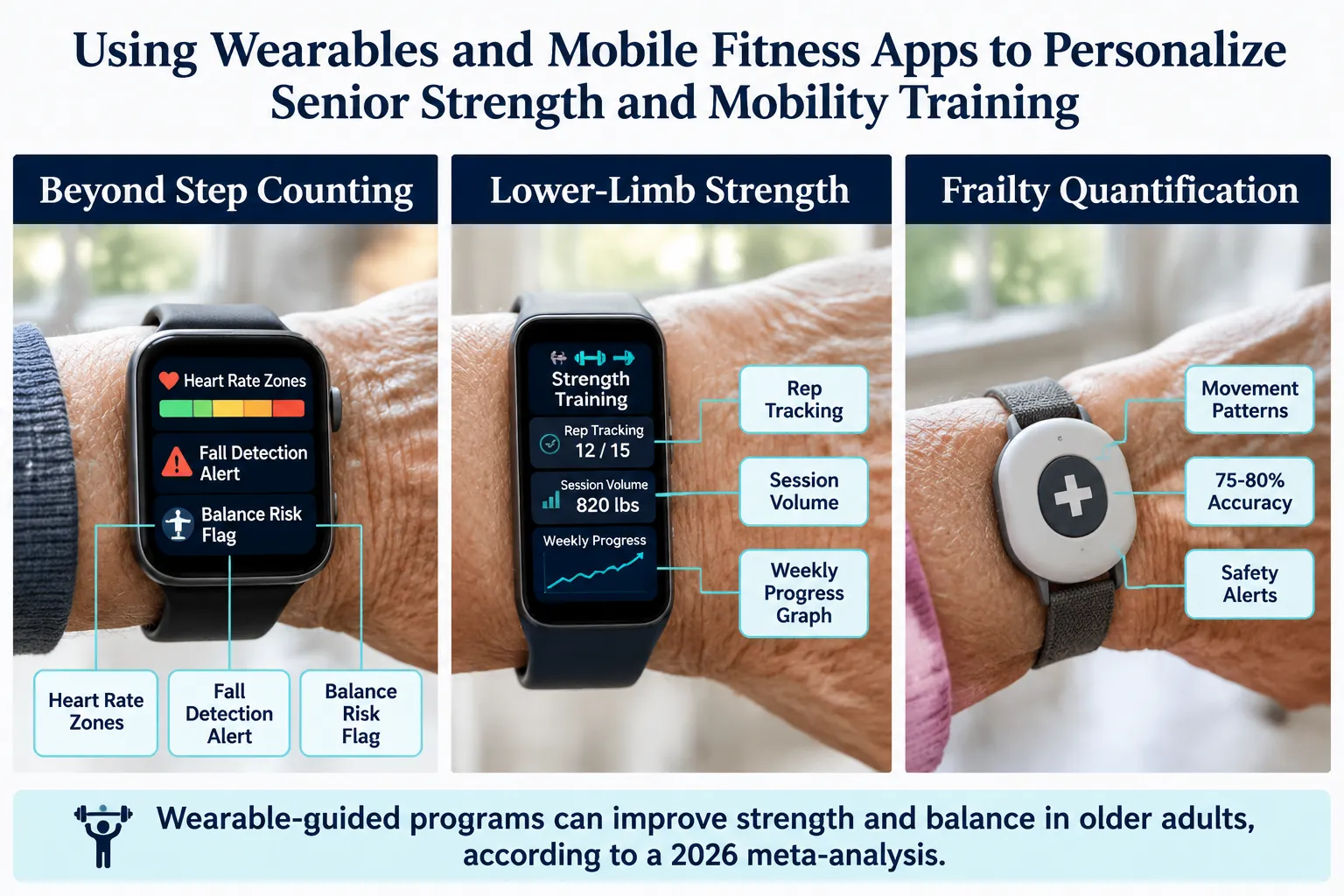
- Wearables now do more than count steps, they measure heart rate zones, detect falls, quantify frailty, and flag balance risk with 75-80% accuracy [8].
- A 2026 meta-analysis confirmed wearable-guided programs significantly improve lower-limb strength and balance in older adults [1].
- Smart strength devices paired with apps notably raised knee-extensor strength in frail seniors in a 2026 trial [3].
- Free apps can work well; you rarely need to pay more than $10,$15 a month for a quality senior-focused program.
- Zone 2 heart rate (roughly 60-70% of max) is a safe, effective target for most strength and mobility sessions.
- Most seniors with pacemakers can use wearables safely, but should keep the device 6+ inches from the pacemaker and confirm with a cardiologist.
- Wearables help arthritis sufferers pace effort, but silicone bands and larger touchscreens matter more than raw specs.
- Apps do not fully replace a trainer or physical therapist for complex conditions, but they extend and reinforce professional guidance.
What wearables are best for tracking senior fitness and mobility?
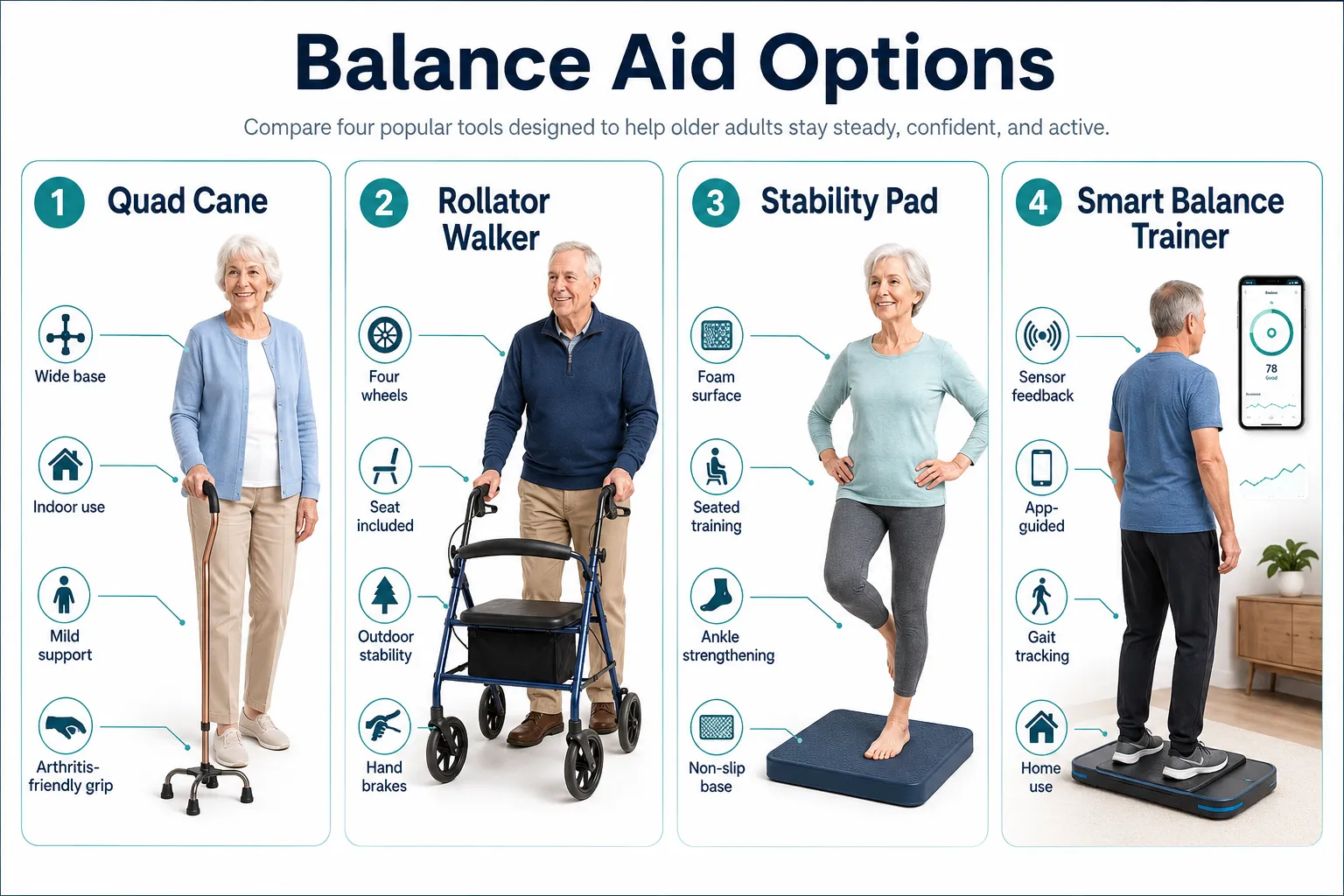
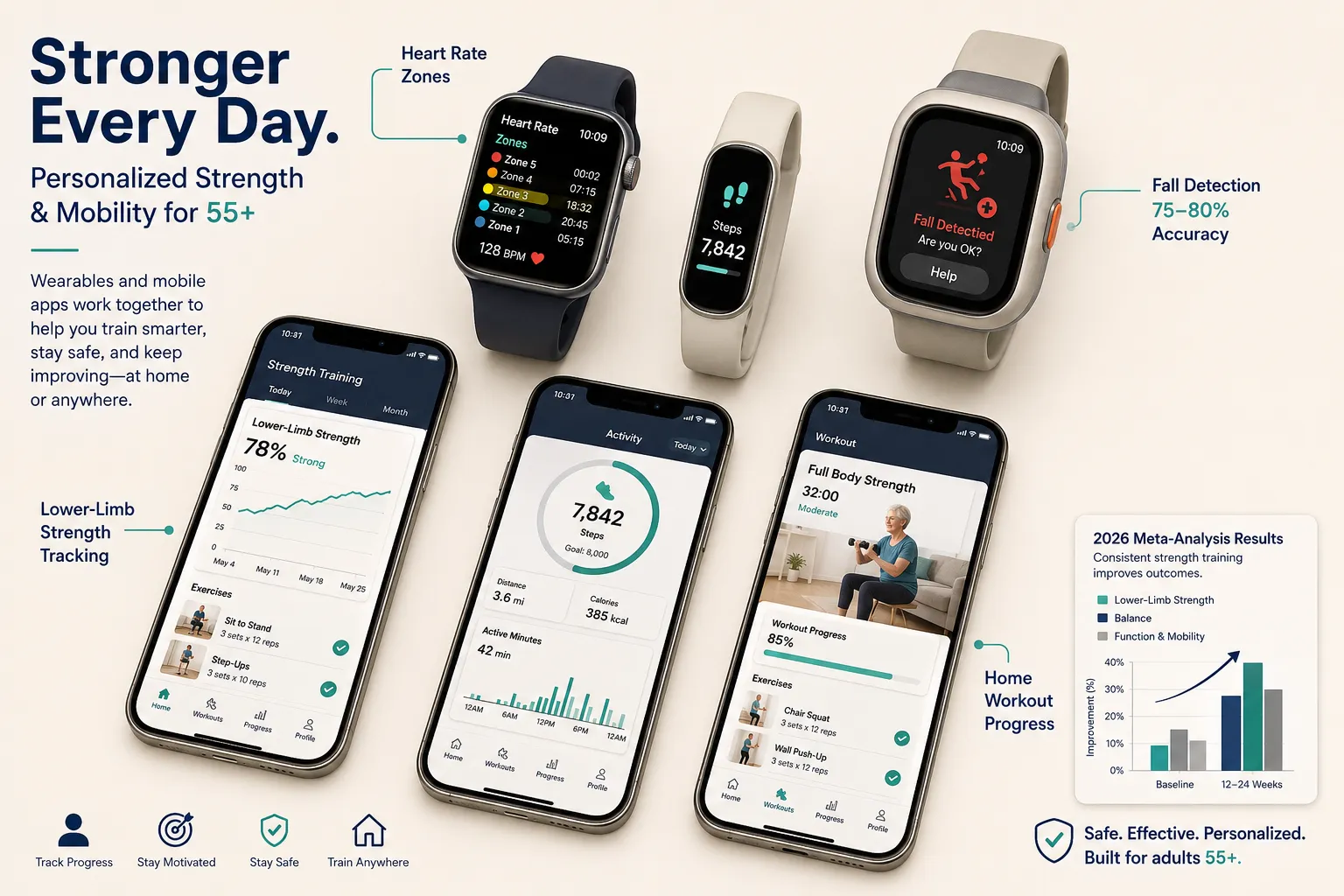
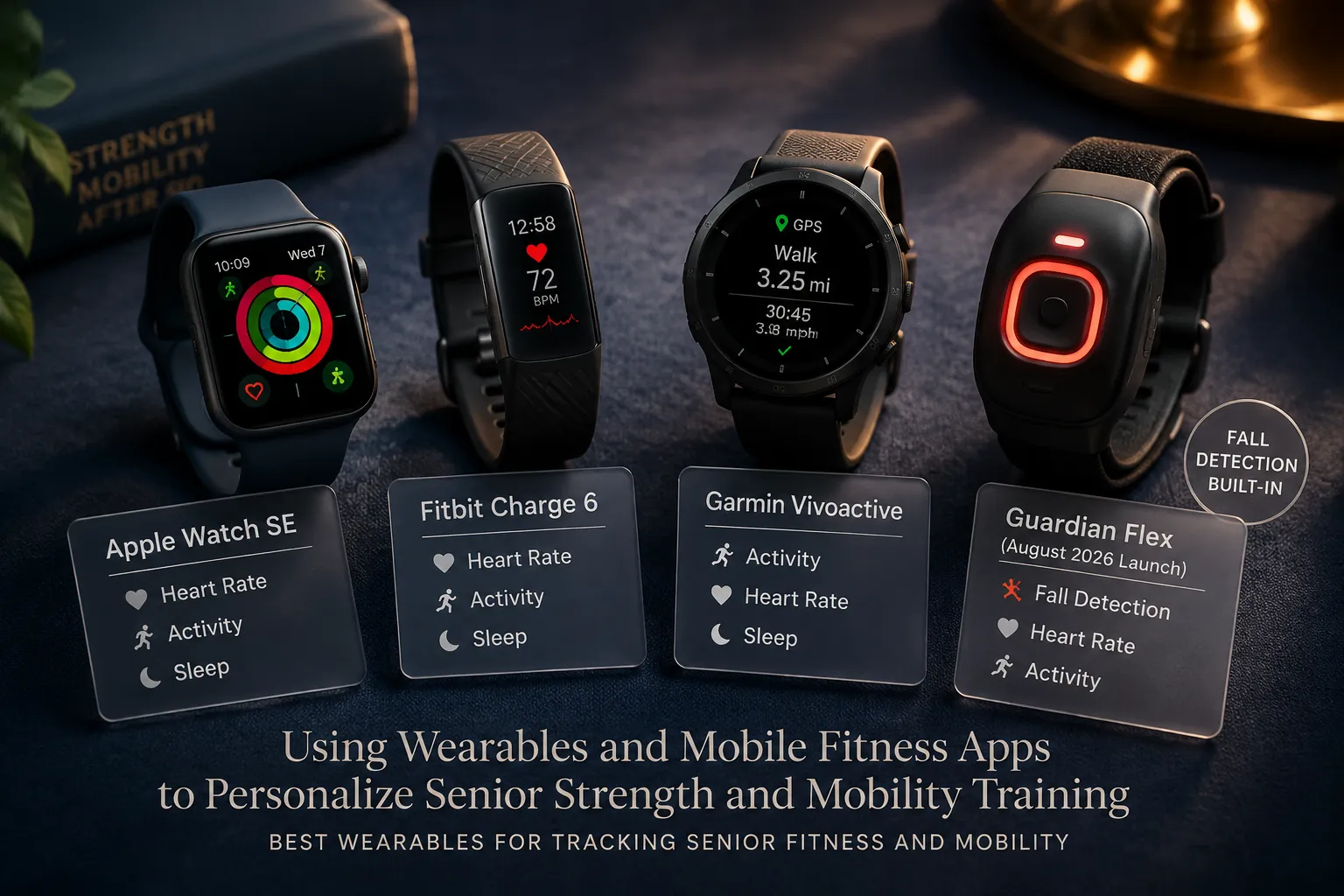
The best wearables for seniors are ones that balance accuracy, ease of use, and comfort. For most adults 55+, an Apple Watch SE, Fitbit Charge 6, Garmin Vivoactive, or a medical-alert hybrid like the Guardian Flex (launched August 2026) covers the essentials: heart rate, activity, sleep, and fall detection [2].
)
Pick based on the primary goal:
- Strength and mobility training focus: Apple Watch SE or Fitbit Charge 6. Both track heart rate zones during resistance work and integrate cleanly with dozens of apps.
- Fall safety plus activity: Apple Watch (built-in fall detection), Guardian Flex, or a medical-alert pendant with activity tracking [2][5].
- Simple daily wear, long battery: Fitbit Inspire 3 or Garmin Vivosmart, 7-10 day battery, minimal buttons.
- Discreet all-day tracking: Oura Ring or Ultrahuman Ring, good for seniors who dislike wristbands.
Wearable sensors can now quantify frailty and fall risk with 75-80% accuracy, and classify slip/trip events with over 98% accuracy, which is why they're moving into structured senior training programs [8].
Decision rule: If falls are a real concern, choose a device with automatic fall detection. If strength progression is the goal, choose one with reliable continuous heart rate and third-party app support.
How do fitness apps personalize workouts for older adults?
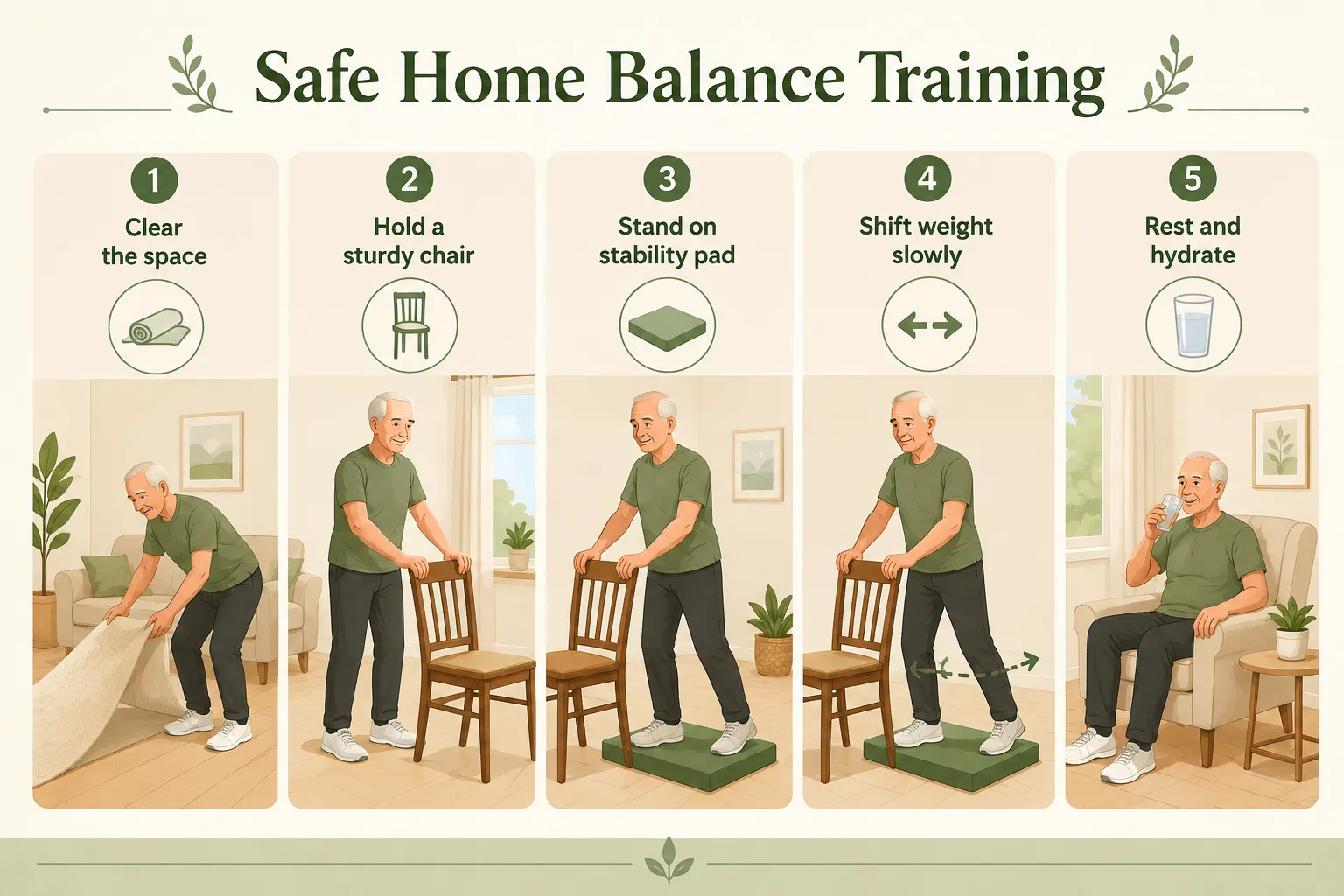
Modern senior fitness apps personalize by pulling wearable data (heart rate, movement patterns, recovery) and combining it with user inputs (age, conditions, goals, session feedback) to adjust the next workout automatically. This is the shift from tracking to adaptive coaching.
Typical personalization inputs:
- Baseline questionnaire, mobility limits, joint pain, medications, prior injuries.
- Wearable-derived data, resting heart rate, HRV, activity level, sleep.
- In-workout feedback, perceived effort ratings, completed reps, skipped exercises.
- Progression rules, the app raises resistance, reps, or complexity when heart rate response drops or perceived effort falls.
Apps like SilverSneakers GO, Bold, Mighty Health, and Nymbl use this loop to serve strength, balance, and mobility routines tuned to the individual. Evidence-based resistance band protocols can also be embedded into apps and paired with a wearable for real-time monitoring [4][7].
Can smartwatches help seniors with strength training?
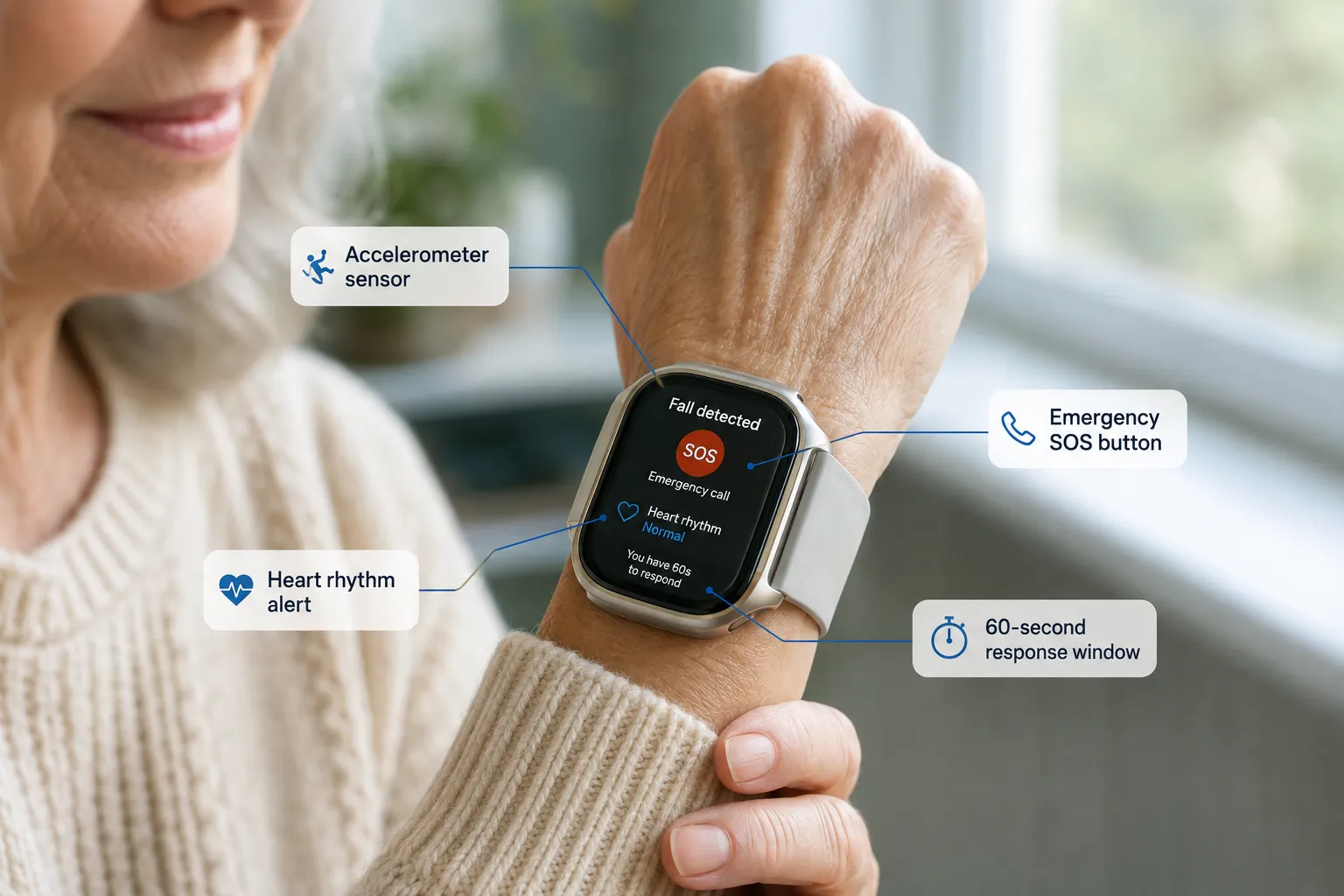
Yes. Smartwatches help seniors train strength safely by tracking heart rate response between sets, timing rest, counting reps in some apps, and logging session volume over weeks. The 2026 meta-analysis found wearable-guided exercise produced significant improvements in lower-limb strength in older adults [1].
)
What a smartwatch actually adds to strength work:
- Rest timing: Vibration alerts prevent rushing between sets, 60-90 seconds is ideal for most senior programs.
- Heart rate ceiling: Warns you if effort spikes too high.
- Session logging: Weekly and monthly views show consistency, which predicts strength gains better than any single workout.
- Form cues (in some apps): Sensor-based apps can flag when tempo is off or a rep is incomplete.
Common mistake: Relying on the watch's "calories burned" number for strength work. It's inaccurate for resistance training. Focus on heart rate zones and completed sessions instead.
What's the difference between fitness trackers and smartwatches for seniors?
A fitness tracker is a slim wristband focused on activity, heart rate, and sleep, usually with a small display and 5-10 day battery. A smartwatch is a fuller computer on the wrist, apps, ECG, fall detection, notifications, GPS, and typically 1-2 day battery.
| Feature | Fitness Tracker | Smartwatch |
|---|---|---|
| Battery life | 5-10 days | 1-2 days |
| Screen size | Small | Large, touchscreen |
| Fall detection | Rare | Common (Apple, Samsung) |
| ECG / blood oxygen | Some | Most |
| Third-party apps | Limited | Extensive |
| Price range | Lower | Higher |
| Ease for arthritis | Very easy | Larger touch targets help |
Choose a tracker if: the senior wants simplicity, long battery, and just the basics.
Choose a smartwatch if: fall detection, ECG, or app-guided workouts matter.
How much do senior fitness apps cost, and what are the best free options?
Most quality senior fitness apps cost between $0 and $15 per month. Many excellent programs are free, especially those bundled with Medicare Advantage plans or wearable ecosystems.
Best free options for seniors:
- SilverSneakers GO, free with many Medicare Advantage plans; strength, cardio, and balance routines built for older adults.
- Nymbl, free in many U.S. states through public health partnerships; focused on fall prevention and balance.
- Apple Fitness (limited free tier) and Fitbit basic app, free workouts, guided breathing, and activity tracking.
- YouTube channels (Bob & Brad, HASfit Senior), free structured strength and mobility routines.
- MyGuardian companion app, free with a Guardian medical alert device, includes activity and check-in features [10].
Paid but worth it: Bold ($10-15/mo), Mighty Health (~$25/mo with coaching), Apple Fitness+ ($9.99/mo).
Decision rule: Start free for 30 days. Only pay if you need live coaching, condition-specific programs (Parkinson's, post-stroke), or richer progression tracking.
Why isn't my fitness app tracking my movements accurately?
Fitness apps typically miscount senior workouts for four reasons: the wearable is worn too loose, the workout mode isn't selected, the movement is too slow for the sensor's algorithm, or strength work doesn't produce the wrist motion the app expects.
Fixes that work:
- Tighten the band, one finger-width of slack, not two. Loose wrists produce ghost data.
- Select the right mode, "Strength Training," "Yoga," or "Other" before starting. Auto-detection misses slow, controlled movements.
- Log resistance work manually, most wearables underreport seated or band-based strength. Use the app's rep logger.
- Update firmware, algorithm improvements happen quarterly.
- Wear on the non-dominant wrist, usually more accurate for daily steps.
Edge case: Seniors who use walkers or canes often get undercounted steps because one arm doesn't swing. A hip-clip tracker or ankle band solves this.
Can seniors use Apple Watch or Fitbit for physical therapy?
Yes, as a support tool, not a replacement. Physical therapists increasingly ask patients to wear an Apple Watch or Fitbit between sessions to verify home-exercise adherence, track heart rate response to prescribed movements, and flag setbacks like reduced daily steps after a joint procedure.
Practical uses in PT:
- Adherence tracking: The therapist can see which days the prescribed workout was completed.
- Range-of-motion checks: Some apps use the watch's motion sensors to estimate shoulder or hip range.
- Recovery monitoring: Post-op patients track daily steps to hit a rising goal (e.g., 2,000 → 5,000 over six weeks).
- Heart rate response: Cardiac rehab uses zone-based training with continuous monitoring.
Discuss with the PT which specific metrics to share and how often. Most modern PT clinics accept a screenshot from the Health or Fitbit app as a progress log.
What heart rate zones should seniors aim for during strength training?
Most seniors should train in Zone 2 (roughly 60-70% of estimated max heart rate) for strength and mobility work, with brief spikes into Zone 3 during hardest sets. This range builds strength safely without over-stressing the cardiovascular system.
A rough guide using the 220-minus-age formula:
- Age 60: Max ~160 bpm → Zone 2 = 96-112 bpm
- Age 70: Max ~150 bpm → Zone 2 = 90-105 bpm
- Age 80: Max ~140 bpm → Zone 2 = 84-98 bpm
Pull quote: "The goal during senior strength training isn't a pounding heart, it's controlled effort you could hold a short conversation through."
Adjust down 10-20 bpm for anyone on beta-blockers, and always use perceived exertion (a 5-6 out of 10) as a backup to the number. Confirm target zones with a physician if there's any cardiac history.
Are fitness wearables safe for seniors with pacemakers?
Most fitness wearables are safe for seniors with pacemakers, but the device should be kept at least 6 inches away from the pacemaker itself, and any wearable with strong magnets (like the Apple Watch charging puck or some fitness rings) should not be placed directly on the chest.
Practical safety rules:
- Wear the watch on the wrist opposite the pacemaker implant when possible.
- Avoid placing the phone or watch in a breast pocket over the pacemaker.
- ECG features on smartwatches are generally not accurate in pacemaker patients, ignore those readings.
- Confirm with the cardiologist or device manufacturer if switching to a new wearable.
Heart rate readings from optical wrist sensors are unaffected by pacemakers and remain useful for training zones.
How often should seniors do strength training according to apps?
Nearly every evidence-based senior app recommends strength training 2-3 times per week on non-consecutive days, plus daily mobility or balance work. This matches CDC and WHO guidelines and aligns with the 2026 meta-analysis showing meaningful strength and balance gains from wearable-guided programs [1].
A typical weekly template apps use:
- Monday: Full-body strength (30-40 min)
- Tuesday: Mobility + balance (15-20 min)
- Wednesday: Walk + light bands (30 min)
- Thursday: Full-body strength (30-40 min)
- Friday: Mobility + balance (15-20 min)
- Saturday: Longer walk or gentle yoga
- Sunday: Rest or stretch
Apps automatically shorten sessions if wearable data shows poor sleep or elevated resting heart rate, a small but genuinely useful piece of adaptive coaching.
Can fitness apps replace a personal trainer for seniors?
Fitness apps can replace a general personal trainer for healthy, motivated seniors, but they cannot replace a physical therapist, exercise physiologist, or trainer with geriatric certification for anyone recovering from surgery, managing Parkinson's, post-stroke, severe osteoporosis, or advanced frailty.
Where apps do well:
- Consistent programming and progression
- Reminders and streak tracking
- Video demonstrations of every exercise
- Objective feedback via wearable data
Where humans still win:
- Hands-on form correction
- Complex condition management
- Motivation during setbacks
- Real-time safety judgment
Best hybrid model: See a certified trainer or PT for 3-4 sessions to build a base, then let the app + wearable maintain and progress the program at home.
What features should a senior fitness app have?
A good senior fitness app should have large text, clear video demonstrations, low-impact and seated modification options, wearable integration, progress tracking, and a safety-focused progression system.
)
Non-negotiable features:
- Large, high-contrast interface, no tiny gray text on white.
- Seated and standing options for every exercise.
- Video demonstrations with clear, older-adult demonstrators.
- Balance and fall-prevention modules, not just cardio and strength.
- Wearable sync with Apple Health, Google Fit, Fitbit, or Garmin.
- Rest-day logic, the app should sometimes tell you to rest.
- Emergency contact or fall alert integration, especially valuable given the 2026 push toward integrated safety-plus-training ecosystems [9].
- Offline mode for spotty Wi-Fi.
Nice-to-haves: coach messaging, condition-specific tracks (arthritis, osteoporosis, diabetes), and family/caregiver dashboards.
Do wearables work for seniors with arthritis or joint pain?
Yes, wearables work well for seniors with arthritis, and they can actually help manage it, but band material, weight, and interface design matter more than headline specs. Look for soft silicone or fabric bands, lightweight cases under 40 grams, and larger touch targets.
Ways wearables help arthritis sufferers:
- Pacing: Heart rate and step trends flag flare-up days so you can dial back.
- Movement reminders: Gentle nudges every hour reduce stiffness.
- Sleep tracking: Poor sleep predicts arthritis pain days, data helps plan gentler workouts.
- Range-of-motion progress: Some PT apps use the sensor to estimate joint mobility gains.
Avoid: Heavy metal bands, small crown dials that require fine finger control, and any device requiring a two-hand clasp. Magnetic loop bands are the easiest to fasten with arthritic hands.
Sample two-week starter plan
A simple way to combine wearables and apps if you're starting from scratch:
Week 1, Baseline
- Wear the device all day, every day. Note resting heart rate.
- Do a 5-minute movement test the app recommends (sit-to-stand, timed walk).
- Complete two 20-minute app workouts. Rate effort 1-10.
Week 2, Personalize
- Increase to three strength sessions, keep Zone 2 heart rate.
- Add one daily 10-minute mobility routine.
- Review weekly summary, steps, active minutes, resting HR trend.
- Adjust workout difficulty if resting heart rate is stable or falling.
FAQ
Do I need Wi-Fi at home to use a fitness wearable?
Not always. Most wearables sync to your phone over Bluetooth. Wi-Fi helps with faster app updates and cloud backup, but is not required for daily tracking.
Can two people share one app account?
Usually no, most apps tie personalization to one profile. Family plans (Apple Fitness+, Fitbit Premium) support multiple users under one subscription.
What if I forget to charge my wearable?
Choose a device with 5+ day battery, or set a weekly charging routine, for example, while showering on Sunday morning.
Are there wearables designed specifically for seniors?
Yes. Medical Guardian's Guardian Flex (August 2026) and other alert-based wearables target older adults with fall detection and simplified interfaces [2].
Should I trust the calorie count on my watch?
Only loosely. Trust heart rate, step count, and active minutes far more than calorie estimates.
Can wearables detect a fall automatically?
Yes. Apple Watch, several Samsung and Garmin models, and dedicated medical alert wearables detect hard falls and can call for help [5][9].
Is it worth upgrading to a newer smartwatch every year?
No. Most seniors get 3-4 useful years from a mid-range wearable. Upgrade when the battery weakens or a needed feature appears.
How do caregivers stay in the loop?
Many apps and medical alert systems offer caregiver dashboards showing daily activity, workout completion, and fall alerts, a growing standard in 2026 aging-in-place ecosystems [6][9].
Conclusion
Using wearables and mobile fitness apps to personalize senior strength and mobility training is no longer a novelty, it's the most practical way for adults 55+ to train safely and progressively at home. The 2026 evidence is clear: wearable-guided programs measurably improve strength and balance, and app-based coaching increasingly adapts in real time to how the body is responding [1][3].
Next steps:
- Pick one wearable that matches your priority, strength progression, fall safety, or all-day comfort.
- Try 1-2 free apps for 30 days before paying.
- Aim for 2-3 strength sessions and daily mobility work in Zone 2 heart rate.
- Share your app data with your doctor or PT at your next visit.
- Reassess every 8-12 weeks, bump resistance, add complexity, or shift focus based on the numbers.
The technology only works if it's worn and used. Start simple, stay consistent, and let the data do the personalization for you.
References
[1] pubmed.ncbi.nlm.nih.gov – https://pubmed.ncbi.nlm.nih.gov/41822921/
[2] Medical Guardian Launches Guardian Flex – https://finance.yahoo.com/healthcare/articles/medical-guardian-launches-guardian-flex-130000137.html
[3] pubmed.ncbi.nlm.nih.gov – https://pubmed.ncbi.nlm.nih.gov/41511633/
[4] Best Resistance Bands For Seniors – https://elderlydaily.com/reviews/best-resistance-bands-for-seniors
[5] Wearable Falls Detection Review 2026 – https://caregivers.website/wearable-falls-detection-review-2026
[6] pubmed.ncbi.nlm.nih.gov – https://pubmed.ncbi.nlm.nih.gov/41960380/
[7] Best Resistance Bands For Seniors – https://www.myexerciseplan.com/strength-weights/best-resistance-bands-for-seniors/
[8] Pmc12831105 – https://pmc.ncbi.nlm.nih.gov/articles/PMC12831105/
[9] CES 2026 Highlights Future Of AgeTech Fall Prevention AI Monitoring – https://beingpatient.com/ces-2026-highlights-future-of-agetech-fall-prevention-ai-monitoring/
[10] MyGuardian App Details – https://play.google.com/store/apps/details?id=com.hc.myguardian&hl=en_US