Last updated: August 4, 2026
Quick Answer
For most seniors training at home, yoga wins for flexibility and joint mobility, while Pilates wins for core strength and fall prevention. A hybrid routine, two yoga sessions and two Pilates sessions per week, usually delivers the best results for balance, strength, and mobility combined. Start with chair-based or gentle mat versions, get medical clearance if you have osteoporosis, joint replacements, or heart conditions, and progress slowly.
Key Takeaways
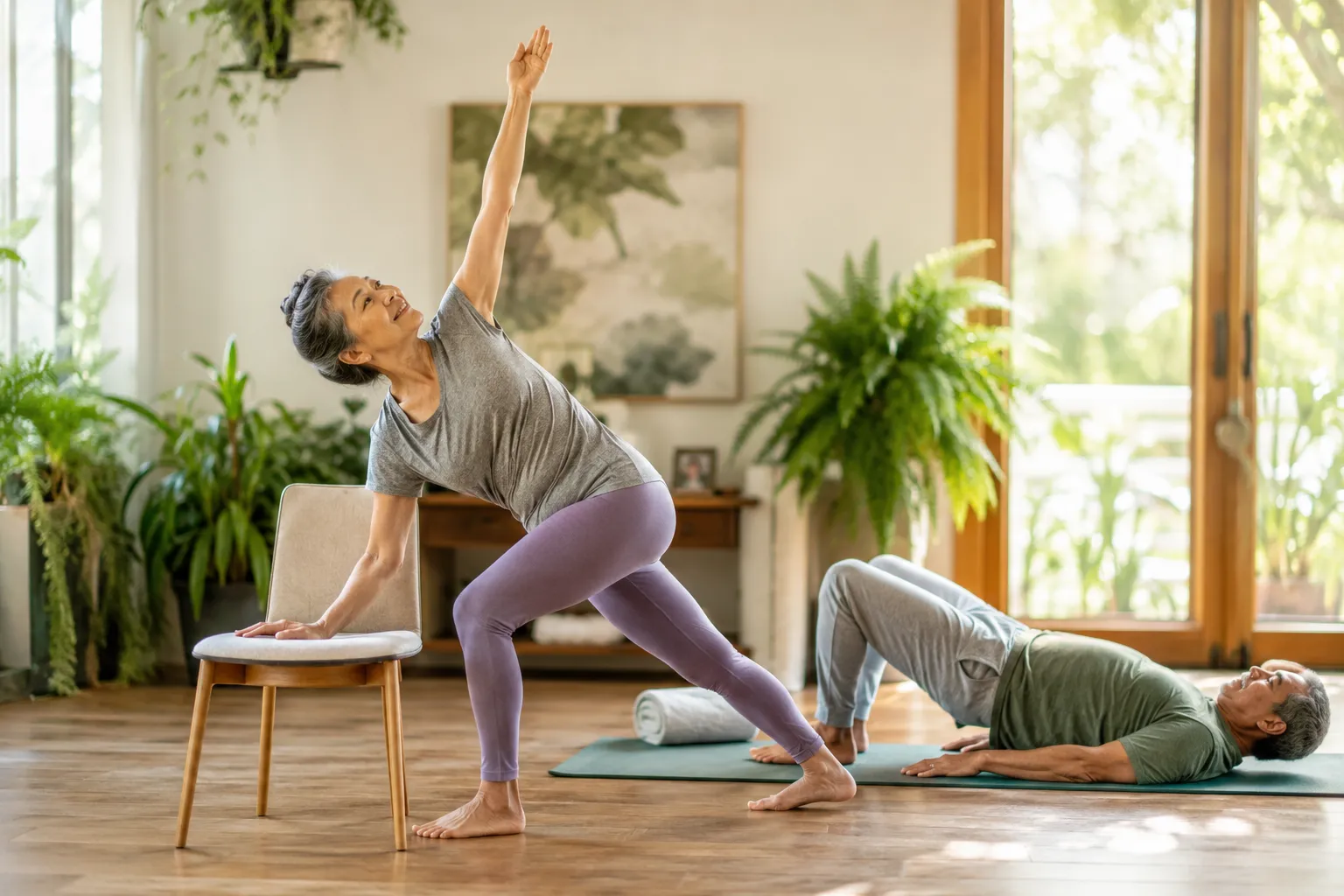
- Yoga improves flexibility, breathing, balance, and joint range of motion through held poses and stretches.
- Pilates builds deep core strength, spinal stability, and controlled movement, highly effective for fall prevention.
- For balance, both help, but Pilates tends to produce faster gains because it directly trains core and hip stabilizers.
- For arthritis and stiff joints, gentle yoga (especially chair or Iyengar styles) is usually more comfortable.
- 2-4 sessions per week, 20-40 minutes each, is the sweet spot for older adults.
- Most seniors can start at home with just a mat; a sturdy chair, resistance band, and small pillow help.
- A hybrid weekly routine covers strength, mobility, and balance better than either practice alone.
- Skip poses that require deep spinal flexion or inversion if you have osteoporosis or uncontrolled blood pressure.
What's the difference between yoga and Pilates for older adults?
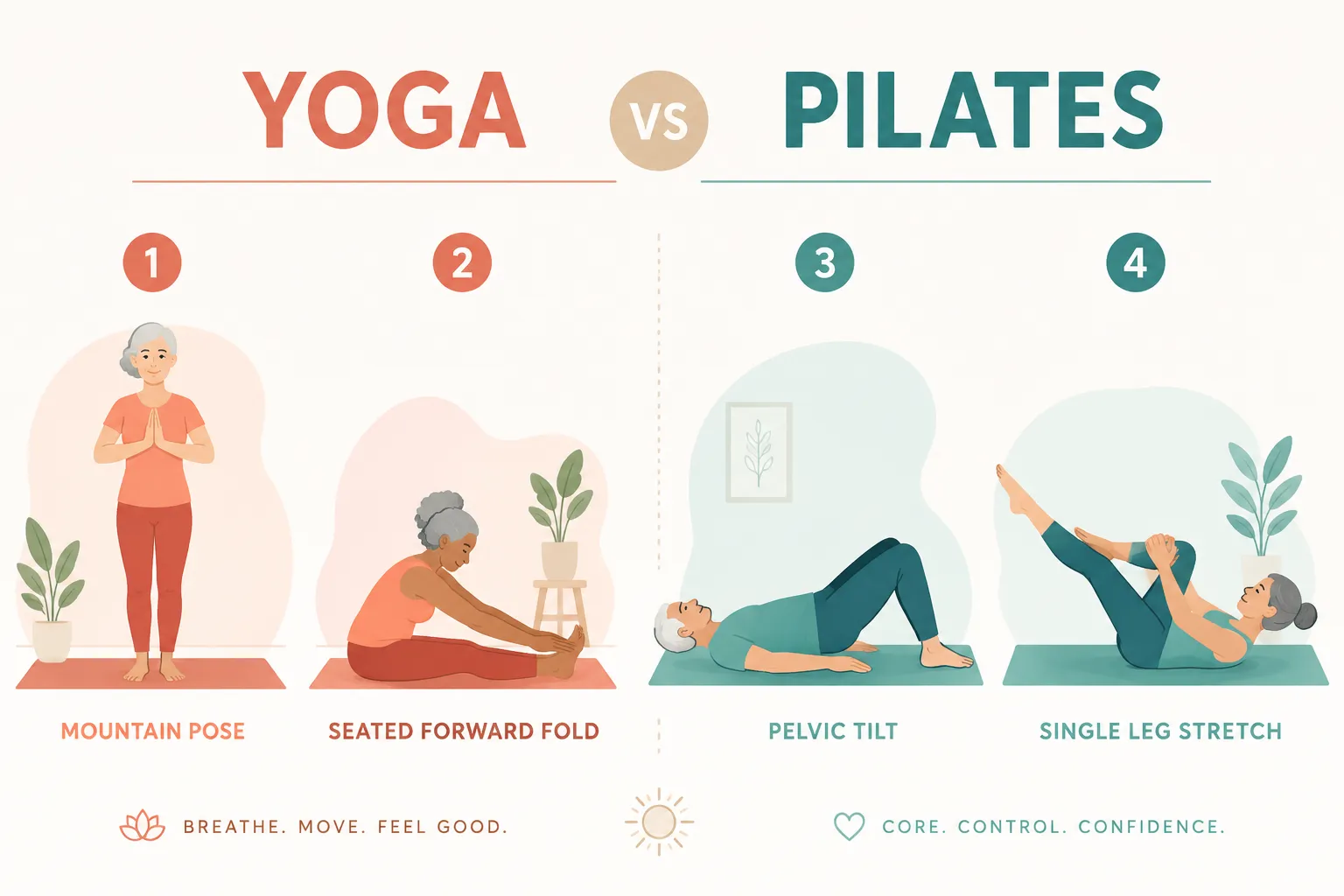
Yoga is a mind-body practice that combines held postures, breathing, and stretching to improve flexibility, balance, and calm. Pilates is a body-conditioning system built around controlled, precise movements that strengthen the deep core, spine, and hips.
The core distinction for seniors:
- Yoga emphasizes holding positions, breath awareness, and lengthening tight muscles. Many styles have a meditative or spiritual element.
- Pilates emphasizes moving with control through repetitions, focusing on core engagement, alignment, and muscular endurance.
Yoga typically feels slower and more restorative. Pilates feels more like a targeted strength workout, though it's low-impact. Both are gentle on joints when done correctly, and both can be adapted for limited mobility.
Choose yoga if you want more flexibility, stress relief, and gentle movement. Choose Pilates if you want more core strength, better posture, and stronger fall prevention.
Which is better for improving balance, yoga or Pilates?
Pilates has a slight edge for balance improvement in seniors, mainly because it directly trains the deep core, glutes, and hip stabilizers that keep you upright. However, yoga's single-leg standing poses (like tree pose or warrior III against a wall) also produce meaningful balance gains.
What the movement science suggests for older adults:
- Pilates strengthens the transverse abdominis and pelvic floor, muscles central to postural control.
- Yoga trains proprioception (your sense of where your body is in space) through held single-leg and shifting-weight poses.
- Combining both gives you strength-based balance (Pilates) and reactive balance (yoga).
Decision rule: If your primary goal is preventing falls, lead with Pilates and add balance-focused yoga poses twice a week.
Can seniors do yoga at home safely without equipment?
Yes, seniors can safely do yoga at home with just a non-slip mat and a sturdy chair for support. Beginners should avoid inversions, deep twists, and unsupported balance poses until they've built confidence.
Safe starting points at home:
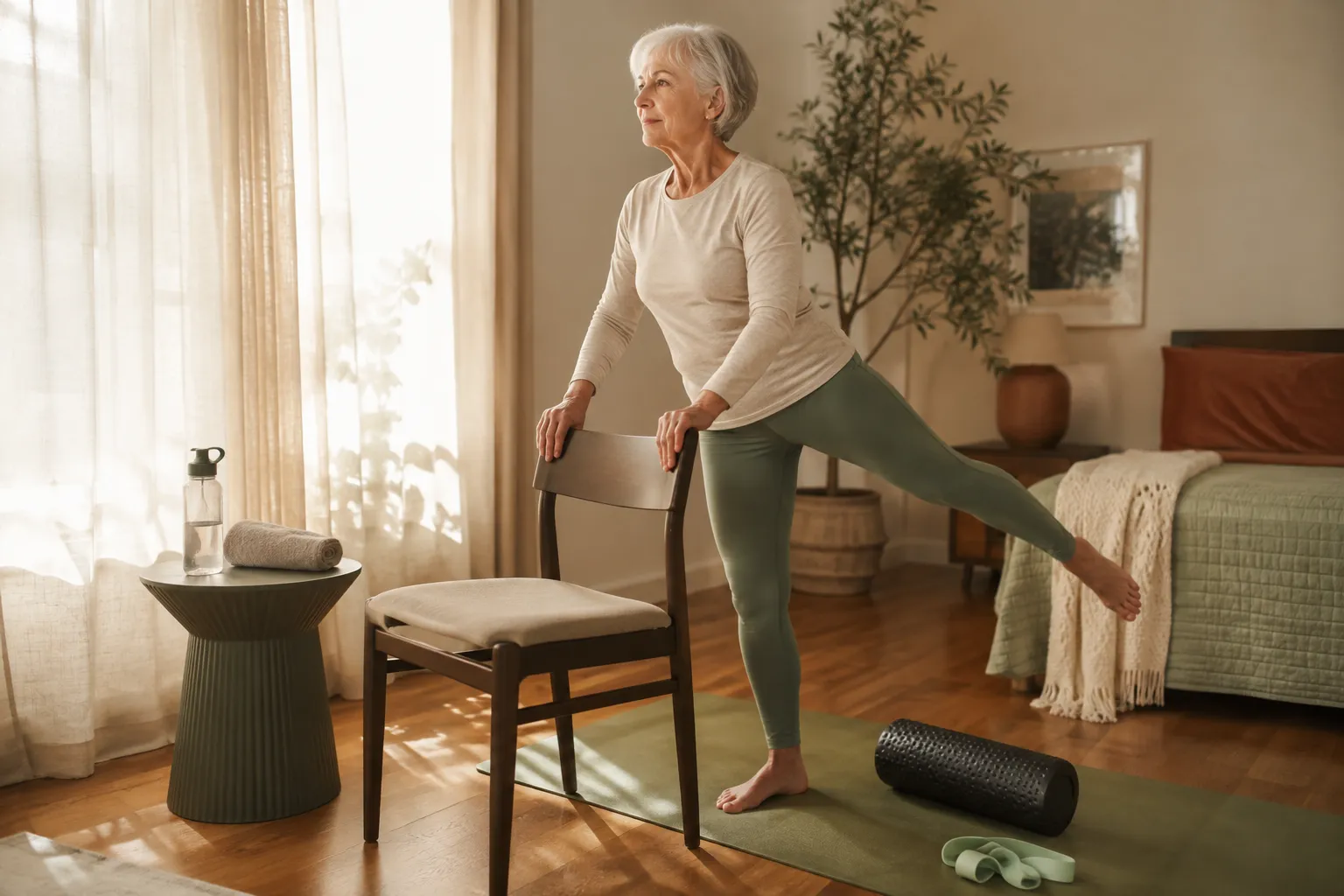
- Chair yoga, seated stretches, gentle twists, and standing poses using the chair for stability.
- Wall-supported poses, practice tree pose, warrior, and downward dog with a wall behind you.
- Floor-based restorative yoga, supported bridge, legs-up-the-wall, gentle spinal twists.
- Follow guided videos made specifically for seniors (see the free options section below).
Common safety rule: Never force a stretch. Mild tension is fine; sharp or radiating pain is a stop signal.
Pilates exercises for seniors to build core strength
Pilates is one of the safest ways for older adults to build core strength because most exercises are done lying down or seated, which protects the spine and joints. Start with 5-8 reps of each and build slowly.
Beginner-friendly Pilates moves for seniors:
- Pelvic tilts, lying on your back, gently rock the pelvis to engage lower abs.
- Single knee lifts (marching), lying down, lift one knee at a time while keeping the pelvis stable.
- Bridge, press through the heels to lift the hips, engaging glutes and core.
- Modified hundred, small arm pulses with knees bent, head down.
- Seated spine twist, gentle rotation from a tall seated position.
- Side-lying leg lifts, target hip stabilizers essential for balance.
Consistency matters more than intensity. Two to three 20-minute sessions weekly produce noticeable core improvements within 6-8 weeks for most beginners.
Yoga for seniors with arthritis and joint pain
Gentle yoga can reduce arthritis stiffness, improve joint range of motion, and ease chronic pain when practiced consistently. Warm, slow styles like chair yoga, Iyengar (which uses props), and restorative yoga are ideal.
Best practices for arthritic joints:
- Warm up first with 3-5 minutes of gentle movement or a warm shower before practicing.
- Use props, blocks, bolsters, straps, and a chair, to reduce strain.
- Avoid deep knee bends if you have knee osteoarthritis; modify with a chair or wall support.
- Skip weight-bearing wrist poses (like plank or downward dog) if you have wrist arthritis; use forearms instead.
- Move slowly between poses to protect inflamed joints.
Poses that tend to help arthritis: cat-cow, gentle seated twists, supported bridge, child's pose with a bolster, and legs-up-the-wall.
How often should seniors practice yoga or Pilates per week?
Most older adults see the best results with 2-4 sessions per week, 20-40 minutes each. Beginners should start with two sessions and add more as strength and stamina build.
A practical weekly schedule:
- Total beginners: 2 sessions × 20 minutes.
- Intermediate: 3-4 sessions × 30 minutes.
- Experienced practitioners: 4-5 sessions × 30-45 minutes, mixing styles.
Rest days matter. Muscles adapt during recovery, not during the workout. Alternating yoga days with Pilates days is a smart way to work different systems without overtraining.
Best yoga poses for seniors with mobility issues
Seniors with limited mobility can safely practice yoga using a chair, wall, or bed as support. The goal is gentle movement through available range, not achieving picture-perfect poses.
Accessible poses worth learning:
- Seated mountain pose, tall spine in a chair, feet flat, shoulders relaxed.
- Seated cat-cow, arch and round the spine while seated.
- Chair forward fold, hinge forward from the hips with hands on thighs.
- Chair pigeon, cross one ankle over the opposite knee for gentle hip opening.
- Standing wall push, palms on wall, step back, gently stretch shoulders and calves.
- Supported warrior II, hold a chair back for balance while stepping into a wide stance.
"Range of motion is a use-it-or-lose-it system. Even five minutes of gentle daily movement can preserve mobility that would otherwise fade quickly after age 65."
Pilates reformer vs mat Pilates for seniors, which is easier?
Reformer Pilates is often easier on the body for seniors because the machine's springs provide adjustable support, making it easier to move without straining. Mat Pilates is cheaper and more accessible at home but requires more baseline core strength.
Quick comparison:
- Reformer Pilates: Requires a studio or expensive home machine ($2,000+). Springs assist movement, reducing joint load. Excellent for seniors recovering from injury or with weak core muscles.
- Mat Pilates: Needs only a mat. More challenging because gravity provides the only resistance. Best for seniors with reasonable baseline strength.
Choose reformer if you have joint issues, are recovering from surgery, or can access a studio with senior-friendly instructors. Choose mat if you're training at home on a budget and can start with modified exercises.
Can Pilates help prevent falls in older adults?
Yes, Pilates is one of the most effective non-medical interventions for fall prevention in seniors. It targets the exact muscle systems (deep core, glutes, hip abductors, ankle stabilizers) that keep older adults steady on their feet.
Why Pilates works for fall prevention:
- Strengthens the posterior chain (glutes, back, hamstrings) that maintains upright posture.
- Improves hip abductor strength, critical for single-leg balance and stair navigation.
- Trains controlled deceleration, which helps you catch yourself during a stumble.
- Enhances body awareness and alignment, reducing missteps.
For fall prevention specifically, aim for 2-3 Pilates sessions weekly, focused on standing exercises, bridges, and single-leg work as strength improves.
Yoga or Pilates, better for flexibility in seniors?
Yoga is more effective for improving flexibility in older adults. It uses longer-held stretches that gradually lengthen muscles and connective tissue, while Pilates focuses more on controlled strength than deep flexibility.
That said, Pilates does improve functional flexibility, the range you can actively control, which matters for daily tasks like reaching, bending, and turning. Yoga improves passive flexibility (how far you can stretch), while Pilates improves active flexibility (how much of that range you can use with strength).
Best combo: Do yoga for flexibility on two days and Pilates for strength on two days. This produces well-rounded mobility that transfers to real-world movement.
Senior yoga classes online, free or affordable options
Several trusted platforms offer free or low-cost yoga specifically for seniors. Always look for instructors certified in senior or adaptive yoga.
Reliable options as of 2026:
- YouTube (free): Channels like Yoga with Adriene (gentle series), SilverSneakers, and Yoga with Kassandra offer senior-friendly content.
- SilverSneakers: Free for many Medicare Advantage plan members; includes live and on-demand yoga.
- Yoga International, Alo Moves, Gaia: Paid subscriptions ($10,$20/month) with curated senior-friendly libraries.
- Local library or community center: Often offer free streaming yoga classes for seniors.
- YMCA Y360: Included with many YMCA memberships; features senior yoga and Pilates.
Tip: Preview any class before following along. If the instructor doesn't offer modifications, choose another one.
What equipment do I need to start Pilates at home?
You can start Pilates at home with just a yoga or exercise mat and comfortable clothing. As you progress, a few inexpensive additions make workouts more effective.
Starter equipment checklist:
- Non-slip mat ($20-40), thicker than a yoga mat for spine comfort.
- Sturdy chair, free; used for support in many senior modifications.
- Small pillow or towel ($0-10), for head or knee support.
- Resistance band ($10-20), adds gentle resistance for arms and legs.
- Small Pilates ball or rolled towel ($10-15), great for core engagement.
- Optional: Foam roller ($20-30), for mobility and gentle self-massage.
Total starter cost: under $80. No expensive machines required.
Is yoga or Pilates better for someone with bad knees?
Pilates is generally safer for seniors with knee problems because most exercises are done lying down or seated, keeping weight off the knees. Yoga can also work if you avoid deep knee bends and use props for support.
Knee-friendly guidelines:
- In Pilates: Skip full squats and lunges; favor bridges, clamshells, and leg circles.
- In yoga: Avoid deep warrior poses and hero pose; use a chair for lunges, and place a folded blanket under the knee in kneeling positions.
- Always warm up with gentle joint circles before harder movements.
- Never lock the knees in standing poses, keep a soft micro-bend.
If knee pain persists during any exercise, stop and consult a physical therapist. Some knee conditions require personalized modifications.
Common mistakes seniors make when starting yoga or Pilates
The most common mistakes come from doing too much too soon, skipping warmups, or following classes designed for younger, more flexible bodies.
Mistakes to avoid:
- Going too fast, too soon, start with 2 short sessions weekly, not 5 long ones.
- Following general classes instead of senior-specific ones.
- Holding the breath during poses or reps, breath should flow steadily.
- Ignoring pain signals, soreness is fine, sharp pain is not.
- Skipping the warmup and cooldown, both matter more as we age.
- Comparing yourself to the instructor, modifications are the goal, not a "failure."
- Practicing on slippery floors, invest in a proper non-slip mat.
- Skipping medical clearance if you have osteoporosis, joint replacements, cardiac issues, or balance disorders.
The case for a hybrid yoga and Pilates routine at home
For most seniors, the best answer to "yoga vs Pilates for seniors: which is better for balance, strength, and mobility at home?" isn't picking one, it's blending both. A hybrid routine covers every physical system that matters as we age.
A simple weekly hybrid schedule:
| Day | Practice | Duration | Focus |
|---|---|---|---|
| Monday | Pilates | 25 min | Core, hips |
| Tuesday | Rest or walking | , | Recovery |
| Wednesday | Yoga | 30 min | Flexibility, breath |
| Thursday | Rest or walking | , | Recovery |
| Friday | Pilates | 25 min | Balance, glutes |
| Saturday | Gentle yoga | 20 min | Restorative |
| Sunday | Rest | , | Recovery |
This structure builds strength, mobility, flexibility, and balance without overtraining. Adjust duration based on your energy and starting fitness.
FAQ
Is yoga or Pilates better for seniors over 70?
Both are safe and effective, but many seniors over 70 do best starting with chair yoga or beginner Pilates for the first month, then adding standing poses as strength returns.
Can I do yoga or Pilates with osteoporosis?
Yes, but avoid deep forward folds, spinal twists under load, and any flexion of the spine. Focus on extension-based poses and get clearance from your doctor first.
How long until I see results?
Most seniors notice better balance and less stiffness within 3-4 weeks of consistent practice. Strength and flexibility gains become clear at 8-12 weeks.
Do I need an instructor?
Not required, but at least one session with a certified senior fitness instructor is highly recommended to check your alignment and modifications before going solo.
Can I do both on the same day?
Yes, short sessions (15 minutes each) or one session using both styles works well. Just avoid two intense sessions back-to-back.
Is Pilates safe after hip or knee replacement?
Usually yes, but only after your surgeon clears you. A physical therapist can help you transition safely into either practice.
What should I wear?
Comfortable, breathable clothing that lets you move. Avoid slippery socks; either bare feet or grip socks work best.
Can yoga or Pilates replace strength training?
Pilates provides real strength gains, especially in the core and hips. Yoga does less for pure strength. For full-body strength, add light resistance training 1-2 times weekly.
Conclusion
Yoga and Pilates aren't rivals, they're complementary tools for aging well. Yoga gives you flexibility, calm, and better joint mobility. Pilates gives you core strength, stability, and stronger fall prevention. Together, they cover the full spectrum of what an older body needs to stay independent, upright, and pain-free.
Next steps:
- Get medical clearance if you have any joint, heart, or balance conditions.
- Buy a non-slip mat and set up a small practice space near a sturdy chair.
- Start with two 20-minute sessions per week, one gentle yoga, one beginner Pilates.
- Use a senior-specific instructor (SilverSneakers, YouTube senior channels, or a local class).
- Track how you feel after 4 weeks and adjust duration or frequency from there.
Consistency beats intensity every time. Fifteen minutes today is worth more than an hour planned for someday.